Minister of Health Linas Kukuraitis says that one of the most important changes must begin even before a person needs treatment – by focusing more on public health, prevention, and the individual’s own responsibility.
Read more After an unexpected turn in the Lipniai divorce – Siegel turned to Mindaugas
In the podcast “Lithuania Recovers,” the minister was interviewed by Laura Dabulytė, according to a press release from the podcast creators.
– The Ministry of Health covers many different areas. How do you set your priorities and decide where changes are needed first?
– The healthcare system is very complex. There is no single person who could understand all its areas and nuances, so it is very important to trust a team of specialists. It is important to me that deputy ministers not only have competence in their field but also managerial skills, know how to maintain dialogue, listen to people, and understand what creates the greatest value for the patient and the community working with them.
When addressing issues, it is important for me to see several alternatives and understand why we choose one path or another. There are many different interests in the health sector, so political dialogue is also important. If we can find a common agreement on changes, implementing them becomes significantly easier.
– One of the areas you highlight is public health. Have we paid too little attention to it until now?
– It seems to me that public health, in a certain sense, has been in the position of a stepdaughter until now – this is also evident from the funding allocated to it. And yet, public health primarily means helping a person to stay healthy in general.
A very important part of prevention is information. Knowledge allows a person to make decisions about their health. However, knowledge alone is not enough – communities, mutual support, and an environment that encourages healthier living are also needed.
We must follow the principle that first, a person does what they can for their own health, then the community and public health specialists help, and the doctor gets involved when their expertise is needed. The doctor should not be the one solely responsible for my health if I do nothing for it myself.

– In Lithuania, many people still die from diseases that can be prevented or successfully treated. Where do you see the greatest opportunity to change the situation?
– If we look at the long-term perspective, the problem of preventable mortality has existed in Lithuania for a long time. Results are improving, but we need to move faster. One of the most important things is to increase people’s participation in prevention programs.
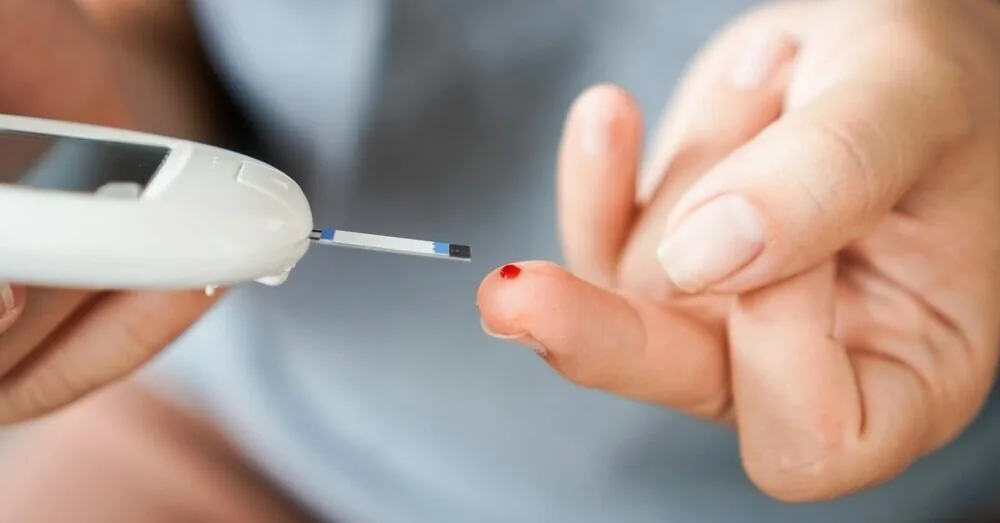
If about half of the people participate in them, we need to think about how to reach the other half. If we reached at least 70%, we could expect completely different results. When oncological or cardiovascular diseases are diagnosed early, a person’s chances are completely different.
People sometimes fear hearing a diagnosis, but a diagnosis is not a sentence. The earlier a disease is identified, the more opportunities there are to help the person and preserve their quality of life.
– What can the state do to ensure more people actually participate in prevention programs?
– Several things are needed for this. First, resources for family doctors and their teams so they can actively invite people. Motivational measures are also important for teams that manage to achieve good prevention indicators.
Another part is public communication. We need to reduce people’s fears and clearly explain why it’s worth getting checked even when you feel well. Science and medicine today offer many opportunities, and our task is to ensure that they reach people on time.
– When it comes to treatment, we often hear criticism about queues and drug accessibility. However, we also have a very strong medical community. Do we value it enough?
– We certainly have many good things – in processes and technologies, and in some areas, we are among the leaders in Europe. We have much to be happy about.
It is also important to understand the context: in Lithuania, public funds allocated to the healthcare system, calculated as a percentage of the gross domestic product, are less than the European average. Our financial capabilities are smaller, but even under such conditions, the system and the people working in it manage to achieve very good results.
At the same time, we need to shorten the time it takes for new medicines to become available and reimbursed for Lithuanian patients. This is one of the tasks we have set for ourselves.
– If the healthcare system had more funds, where would you allocate them first?
– To ensure services are as accessible as possible to everyone, it is important to have a strong public sector. District, regional, and university hospitals must be able to fully carry out the mission entrusted to them.
Read more VMI warns residents: do not open these links
More investment would be needed for nurses – both for their salaries and to increase the number of nurses, as there is a significant shortage. Also, more opportunities would arise for medicines, treatment technologies, and service accessibility.
But even with the current budget, we need to look at management. We see that some medical institutions manage very well, their processes are organized efficiently, while others still need stronger managerial input. The patient’s journey must be as clear and fast as possible.
– And how do you see the future of healthcare services in the regions? Is concentrating everything in major cities truly the best path for the patient?
– Two logics clash here. According to one view, to have the highest quality service, it needs to be concentrated in centers where there are many patients and specialists. According to the other, certain services should be as close as possible to a person’s place of residence.
I support the view that certain services must remain in the regions so that people feel safe. This means that in some cases, we need to allocate additional basic funding not only for a specifically provided service but also for, for example, a certain department in the region to be able to operate at all.
We do not want all people to have to travel only to Vilnius, Kaunas, or Klaipėda for every service. The healthcare network is constantly transforming, but we must maintain a balance between service quality and accessibility.
– We talk a lot about adult health, but habits are formed in childhood. What are the biggest challenges you see when it comes to children’s health?
– One very clear signal is childhood overweight. We need to address what we can do through the family and the education system.
One of my goals is for children in schools to be able to receive state-funded healthy food. I like the examples of Scandinavia and Estonia. If a child chooses healthy food daily at school, it is likely that they will carry these habits into adulthood. This is an investment that later returns through better health and a person’s quality of life.
– Another big topic is screens and phones. Should there be a national decision on their use in schools?
– I am in favor of a national decision. It seems to me that we should not leave each school or each family to struggle separately and solve the same issue.

Screens affect all of us, and temptations are especially great for children. Both parents and schools need help. Children’s activities – sports, artistic activities, clubs – are also important. When a child has real activities, they naturally have less time for the phone. However, here we also face an accessibility problem: not every family can afford paid clubs, so the state and municipalities must think about how to provide more such opportunities.
– Lithuania, like the rest of Europe, is aging. Are our healthcare and social services systems prepared for this?
– Systemically, we are not prepared for an aging society. There are still too few such services, and the number of older people is increasing.
Previously, families often took care of their elderly themselves, but today the model of society’s life has changed. If there is a person in the family who needs constant care, someone has to reduce their working hours or withdraw from professional life altogether. Therefore, for a person to be able to live in their home for as long as possible, a team of specialists is needed to come and help the family.
Today, such help is often still insufficient. We need to develop a long-term care system where health and social services work together, and the person and their family do not have to wander between different systems and figure out what they are entitled to.
– What kind of Lithuanian healthcare system would you like to see at the end of your term?
– I would like us to act faster. For people to have a clearer understanding of where to turn and what help they can get. To invest more not only in treatment but also in what helps prevent illness – public health, prevention, healthy habits for children.
We also need to prepare for an aging society. We aim for a system where a person is not left alone to navigate between different services, but help comes where it is truly needed.
Health is not solely the responsibility of the doctor or the ministry. Each of us must start with ourselves, but the state’s task is to create conditions so that it is as simple as possible for a person to live healthily, get checked on time, and receive the necessary help.
Read more Economists: annual inflation could approach a double-digit number after six months