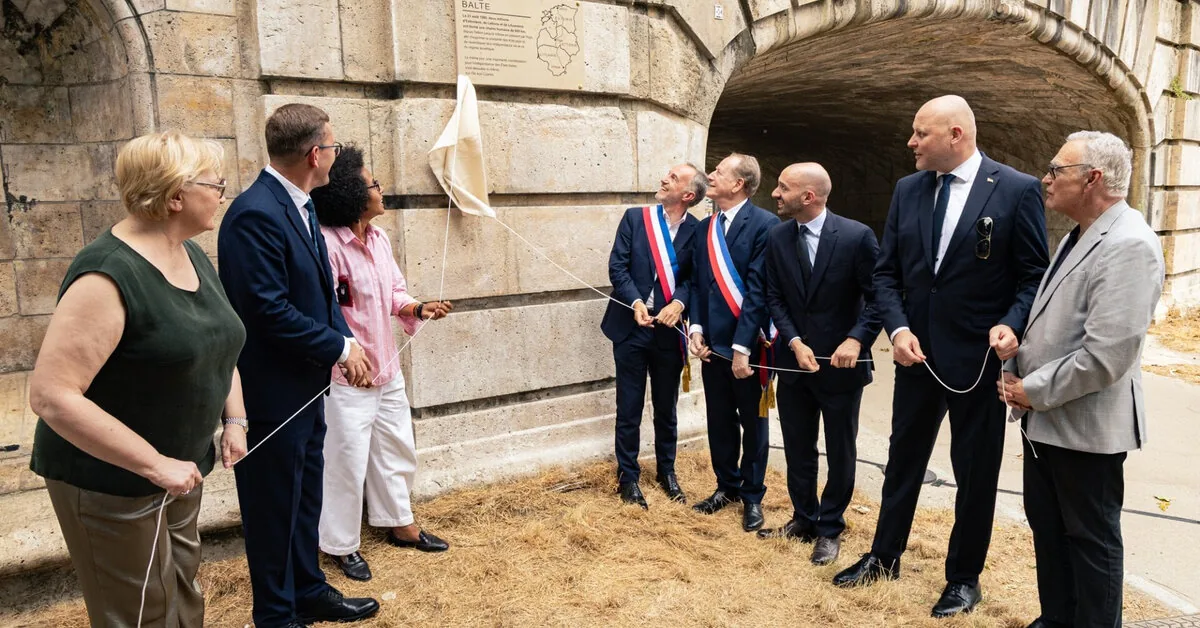
As reported by the Ministry of Foreign Affairs (MFA), the unveiling of this memorial plaque crowned a joint project of the embassies of Lithuania, Latvia, and Estonia in France and the city of Paris, which began back in 2020.
Read more Bringing souvenirs from abroad? You may have to say goodbye to them and pay a high price
Its purpose is to commemorate one of the most vivid symbols of peaceful resistance in European history and to preserve the living memory of the Baltic nations’ struggle for freedom for future generations.
“There is no more fitting day to unveil the memorial plaque dedicated to the Baltic Way than on the eve of Bastille Day. Let this symbol of Baltic unity inspire everyone and remind us that we can only resist tyranny by acting together,” said Rasa Budbergytė, Deputy Speaker of the Seimas, who participated in the plaque unveiling ceremony.
The ceremony was also attended by Estonian Prime Minister Kristen Michal, Latvian Prime Minister Andris Kulbergs, French Minister for European Affairs Benjamin Haddad, and Paris Mayor Emmanuel Gregoire.
According to the ministry, in their speeches, the participants emphasized the significance of the Baltic Way not only for the history of the Baltic states but also for all of Europe.
It was also recalled that France has consistently supported the Baltic states’ quest for freedom and that France never recognized the occupation of the Baltic countries.
Read more Russia protests the removal of a Soviet monument in Estonia
Among other things, the ceremony highlighted the unity of nations, peaceful civil resistance, and respect for international law, which remain relevant today as Europe stands united in supporting Ukraine.
On August 23, 1989, marking the 50th anniversary of the signing of the Molotov-Ribbentrop Pact, about two million Lithuanians, Latvians, and Estonians joined hands in a protest action called the Baltic Way, forming a living human chain over 650 kilometers long from Gediminas Tower in Vilnius to the Hermann Tower in Tallinn.
At that time in Paris, the Baltic communities in France, together with Baltic youth participating in the World Youth Congress, organized a solidarity march from Trocadero Square to the Statue of Liberty on the Île aux Cygnes.
The march participants called on the international community to support the Baltic nations’ quest for freedom and not to recognize the Soviet occupation.
According to the MFA, the memorial plaque to the Baltic Way was unveiled at the place where the march ended, and the nearby Statue of Liberty symbolically reminds of the values that once united the Baltic nations and France and today unite Europe in defending freedom, democracy, and international law.