„Milita was admitted to the Kaunas Clinics Children’s Rehabilitation Clinic in infancy, when the first signs of movement and developmental disorders appeared after a traumatic brain injury. At that time, she was already diagnosed with a high risk of cerebral palsy, and later the diagnoses of cerebral palsy and epilepsy were confirmed. Consistent rehabilitation started from the first years of life became an important part of Milita’s treatment,“ says Associate Professor Indrė Bakanienė, head of the Kaunas Clinics Children’s Rehabilitation Clinic, as stated in the Kaunas Clinics press release.
It is still difficult for father Mindaugas to remember the first months after his daughter’s injury. „When we started rehabilitation, it seemed that everything would have to start from scratch. Milita did not sit, did not roll over, did not pick up objects by herself. We learned everything – to sit, eat, hold an object, and later to take the first steps,“ he recalls.
Before the last intensive rehabilitation phase, Milita still did not walk independently – she could only walk when led by the hand, had difficulty maintaining balance, stood unstably, and did not stand by herself using support.
„In children’s rehabilitation, we treat the child, not the diagnosis. Our main goal is to help the child become as independent as possible in everyday life. Therefore, individual goals are set for each child together with the family, which the entire team of specialists strives to achieve,“ emphasizes Associate Professor I. Bakanienė.
Milita was monitored by a team of specialists from Kaunas Clinics since infancy. As the girl grew and her progress was assessed, the individual rehabilitation plan was adjusted. Alongside other rehabilitation measures, robotic gait therapy „Lokomat“ was applied – a special device that helps children repeat correct walking movements.
Justina Žemaitė, a physiotherapist at the Kaunas Clinics Children’s Rehabilitation Clinic working with Milita, says that the most important role on this path was played not only by the team of specialists but also by the family.
„Milita has always loved walking. She never needed extra motivation – walking was her favorite part of therapy. The involvement of her father was also very important – what Milita learned during therapies, he consistently continued at home,“ says J. Žemaitė.
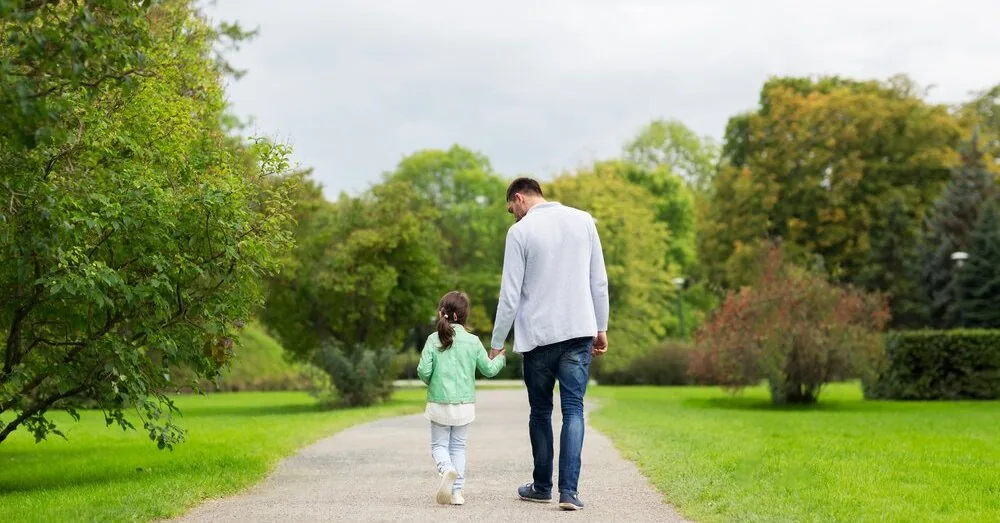
Rehabilitation did not end when leaving the clinic. What Milita learned during therapies was repeated daily at home by the family. „For about eight months, we practiced taking steps every day. At first, nothing worked. But the next day we tried again. And again. Gradually, we started to let her go more confidently, watch, and believe that she would succeed. Until one day Milita just walked,“ recalls Mindaugas.
Read more Exotic travel can turn into a nightmare: experts advise how to protect yourself from rare diseases
According to him, most of the rehabilitation took place not in the medical facility but at home. „The child spends only part of the time in specialists’ offices. Everything else happens at home. Therefore, we repeated daily what Milita learned in therapies,“ says Mindaugas.
Today Mindaugas says that the greatest victory is not only the first independent steps of his daughter but also what they mean for the whole family. „For others, walking may seem like a given. But for families raising a child with movement disorders, it is a huge victory. Previously, I had to carry Milita everywhere in my arms. When the child starts walking on their own and no longer needs your hands, it feels like a huge weight has been lifted off your shoulders,“ Mindaugas confides.
Mindaugas openly expresses gratitude to the entire team of specialists at Kaunas Clinics who accompanied Milita on this journey – the social pediatrician, physical medicine and rehabilitation doctor, physiotherapists, occupational therapists, speech therapist, psychologist, art therapist, and other specialists.
„We feel at home in this clinic. They know us here, always talk to us, encourage us. I am sincerely grateful to everyone for their persistent work and belief in my daughter,“ he says.
According to Associate Professor I. Bakanienė, Milita’s story reminds us of the great importance of early and consistently continued rehabilitation and active family involvement. „We consider this achievement exceptionally encouraging, but at the same time, we understand that rehabilitation must continue. It is important to further improve her balance, gait quality, independence, and participation in daily activities,“ says Associate Professor Indrė Bakanienė.
The Kaunas Clinics Children’s Rehabilitation Clinic works with children with various needs – those who have suffered injuries, have movement or developmental disorders. In the first year of operation, more than 3000 consultations with doctors and development specialists were provided here, nearly 7000 early rehabilitation day hospital bed days, about 17 thousand medical rehabilitation procedures were performed, and more than 200 children were treated in the inpatient department.
Read more Is it possible to write off debt to a former spouse through personal bankruptcy?
Information from Kaunas Clinics