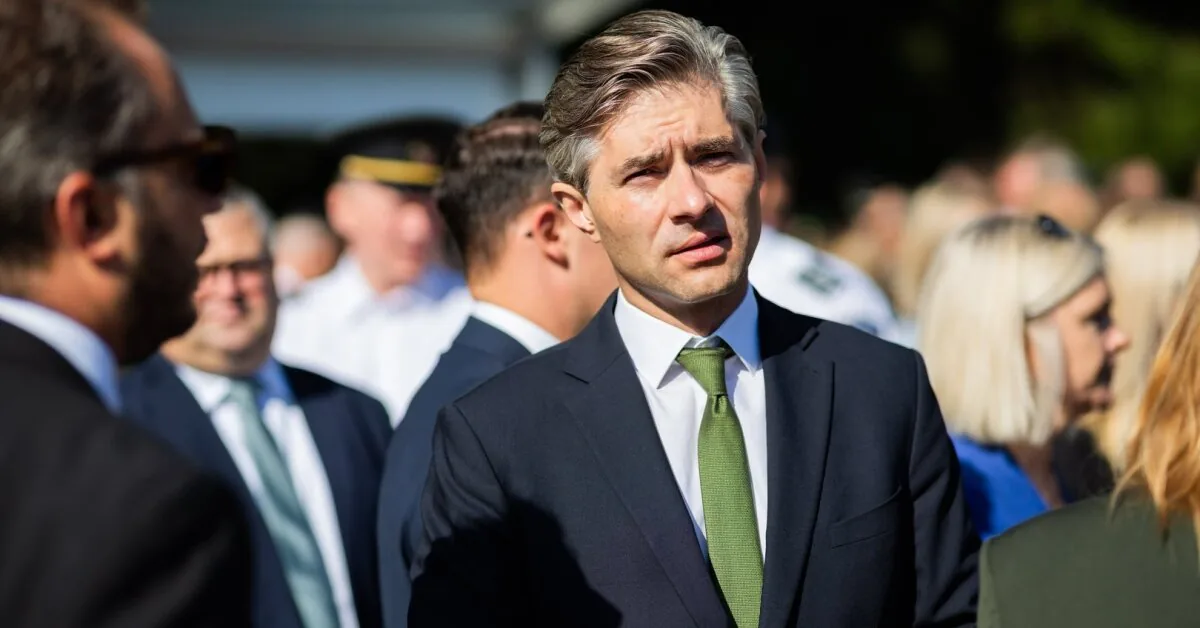
„This example very clearly shows that this is not an isolated relationship, just a bilateral relationship between Lithuania and China. We are a member of the European Union and NATO, and those circumstances related to the decisions of these organizations also have an impact,“ Kęstutis Budrys told the portal „Verslo žinios“.
„At this point, the retaliatory sanctions on various companies, including some of ours, one laser manufacturer, we understand are related to previous European Union decisions to sanction Chinese companies that contribute to enabling aggression against Ukraine,“ he added.
The minister emphasized that China aims with sanctions to limit the entry of Chinese products into the EU and to disrupt supply chains for European companies.
„They (the sanctions – BNS) are also related to sending a signal and message from the Chinese side that they know which of your companies depend on supplies from China. Because this is not about exports to China or access to the Chinese market. It is more about restricting the entry of Chinese products into the European Union market and specifically for companies, it is about disrupting supply chains,“ he said.
K. Budrys said that it is necessary to analyze how to reduce dependence on component supplies from foreign companies.
„For our economic security, we need to draw conclusions about how our supply chains, especially in technology-intensive areas such as lasers, depend on China and how we should also reduce these dependencies with state tools. By looking for alternatives or opportunities to produce certain components in Lithuania, or in the region, or among countries with which we do not face political risks that they will simply stop supply just because they decide to send you a message,“ the minister said.
Read more The soul of «Armonika» Stasys Liupkevičius sent off on his last journey: white flowers in the crowd
According to a statement from the Chinese Ministry of Commerce, „Ekspla“ is among 14 EU companies included in the export control list.
As BNS wrote, the Chinese Ministry of Commerce imposed sanctions last August on two small Lithuanian banks – the commercial Urbo Bank (formerly Medicinos Bank) and the specialized Mano Bank, and lifted them in April this year.
The sanctions were then introduced in response to the EU’s adoption of the 18th sanctions package against Russia, which also applied restrictions to two Chinese banks. The latter were accused by the West of links to Russia’s war industry.
Both Lithuanian banks did not operate in China, so Beijing’s move was then considered symbolic.
Read more Superstitions and wisdom of August 5th: what did the elders avoid to attract success?