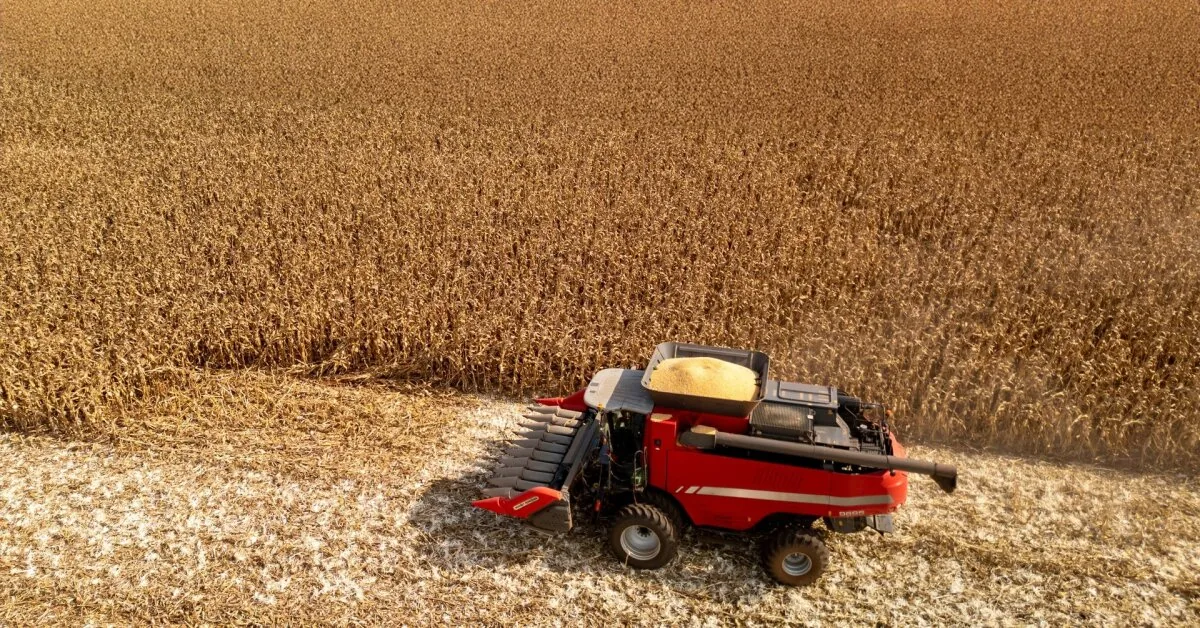
800 hectares in 17 days
Farmer Z. Ričkus from the Kėdainiai region organizes work on his farm with Swiss watch precision. This year has been exceptional for him – the entire harvest was gathered from the fields in a very short time, and the machinery returned to the barns even before the traditional mid-August celebration.
Read more Where are the most intensive road repair works taking place?
“I think, or maybe I dare say, that I was one of the first in the district to finish the harvest. Of course, it is hard to say exactly, as there are smaller farms that need to harvest less, but my farm covers 800 hectares – a solid area. We practically finished everything yesterday, today only a symbolic couple of hectares remain. Cutting 800 hectares in 17 days, especially with some rain interfering, is really a good result. In many years, I don’t remember a case where we finished the harvest before Žolinė. Usually, this time was the peak of the working season,” – says Z. Ričkus happily.
The farmer emphasizes that such a pace was determined not only by luck but also by strict management. According to him, the crops this year were even very good, although barley was somewhat lodged in places. “On average, with two combines, we harvested about 70 hectares per day.
The situation with peas also turned out well. Last year, part of them remained in the fields, but this year we harvested all 40 hectares on time and without losses,” – the interlocutor recounts.
The harvest pleases, but the economic reality weighs down
Although the grain barns are full, Z. Ričkus does not hide – the overall economic situation in agriculture causes concern. Compared to last year, yields have jumped up, but increased costs consume most of the profit.
“This year all crops are pleasing. If last year we harvested just over five tons of spring barley and wheat, this year we reached an average of seven and a half tons.
I sowed wheat into plowed land – although it is now popular to say that plowing is bad, I see that it suits spring crops very well.
Rapeseed yields are also stable – for many years we have been harvesting more than three tons per hectare,” – the farmer lists the figures.
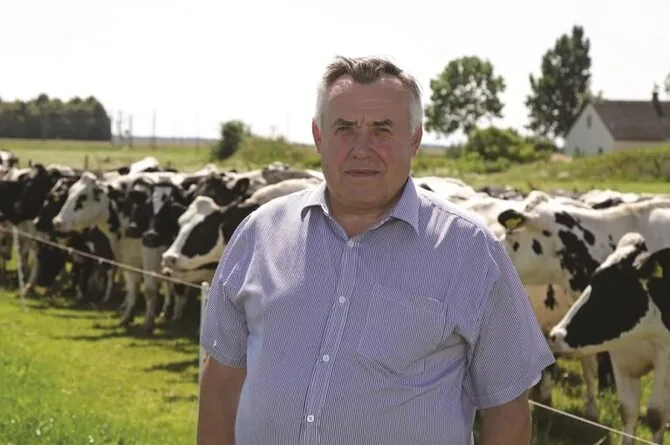
However, when talking about the financial side, Z. Ričkus becomes much stricter. According to him, the farmer today has become the weakest link exploited by everyone.
“I have been farming for 55 years. I have worked the land almost all my life, but I don’t remember such a situation.
The price of fertilizers has reached unprecedented heights, nitrogen costs about 500 euros per ton, mineral NPK fertilizers about 700 euros. Meanwhile, the price of wheat has hovered around 200 euros for three years. A decade ago, from the farm’s annual income, I could buy a new John Deere tractor, but today I would have to work for three years for that.
Imagine, today I have barely 800 euros in the farmer’s cash register, and fuel is no longer delivered to me because I am in debt. This is unprecedented,” – the farmer confides.
Companies treat farmers unfairly
One of the biggest grievances Z. Ričkus names is the rules set by grain buyers, which, in his opinion, favor only large corporations but not the grower. The farmer is outraged by the constantly tightening quality requirements and artificial class divisions.
“Now there are countless grain classes: extra, first, second, third, fourth… The price difference between them is only a few euros, but the requirements to grow the ‘extra’ class are huge. The most expensive chemicals and fertilizers are needed.
And what do the companies do?
They buy feed grains, mix them with higher class grains, and sell them as second class. We farmers cannot do that.
Read more US begins historic «Meta» court case
The same goes for moisture – if the standard is 14%, and you deliver 14.2%, they already deduct money from you, although all the grain is poured into the same pit.
That is a huge nonsense,” – says the farmer from the Kėdainiai region.
After the scandal, trust in state institutions is gone
No less criticism is directed at the controlling institutions. Z. Ričkus does not hide his frustration over the competence of state inspectors, and trust in the State Plant Service after the huge corruption scandal that shook it has sunk to unprecedented lows.
“Inspectors come from the Plant Service. You never know who will come each time. And after the scandal, it is generally unpleasant even to expect them.
In my whole life, I have bought only one gold ring, but it turned out they accumulated both gold and money… Moreover, they come, supposedly to inspect, but you feel that the person knows nothing about farming. In the last 15 years, I have met only a few smart women, and the others seem picked from the middle of the street. They have a sheet with questions and read it without understanding the essence. I tell them straight: kids, first learn about agriculture, then ask questions.”
The backbone of the farm – a reliable team
Despite all the challenges, Z. Ričkus is happy to have strong support. Six reliable employees work on his farm, and a new generation is growing nearby – his grandson, who is already adopting the latest technologies and preparing to take over the entire farm in the future.
“My employees are a dream. Four mechanics and two helpers work flawlessly. My grandson farms with me; he has his own 120-hectare plot. Although formally these are two farms, we manage everything together. I am preparing him to replace me. Young people now quickly master new technologies, that is their strength,” – says the farmer.
Zigmas recalls the times when the farm still kept cows but admits that it was work “out of an idea,” bringing only losses. Unfortunately, it seems that some farmers still work out of an idea, as hard work is not sufficiently financially rewarded.
“When I had cows, employees asked me not to get rid of them because they were afraid of losing their jobs. But milk always brought a loss, and crop farming saved us.
Eventually, I gave up livestock farming.
Now, when everything is organized, we have our own dryers, warehouses, farming is a pleasure. If you have your own machinery, buildings, and don’t need to borrow anything – you can live. People in the city sometimes work much harder,” – the interlocutor does not hide his love for his work.
After a short rest, back to work
Although Žolinė was celebrated on Z. Ričkus’s farm and all employees could take a break, the farmer’s thoughts are already on the next season. Before the harvest was completely finished, half of the planned winter rapeseed area was already sown.
“We don’t wait for anything. Today we have already sown about 120 hectares of rapeseed, which is half of the planned area. We will start the second stage in a week.
I have been sowing rapeseed at the same time for many years; it is one of my success principles.
I also want to praise my partners – I have been working with Dotnuva Baltic for 30 years, I am one of their first clients, and their machinery never disappoints us. I am also very grateful to the company Žvalguva. They receive the harvest very orderly, honestly evaluate quality, and the unloading process is excellently organized. I transport grain to many places, but the order there is the best,” – sums up Z. Ričkus.
After a short break during Žolinė, the farmer from the Kėdainiai region will return to the fields. Although the farmer’s bread is bitter and financial challenges do not allow relaxation, Z. Ričkus remains optimistic: “When you do what you know and see the growing replacement, all problems become manageable.”
Read more Sanctions tailored for companies also affect employees: what is important to know?