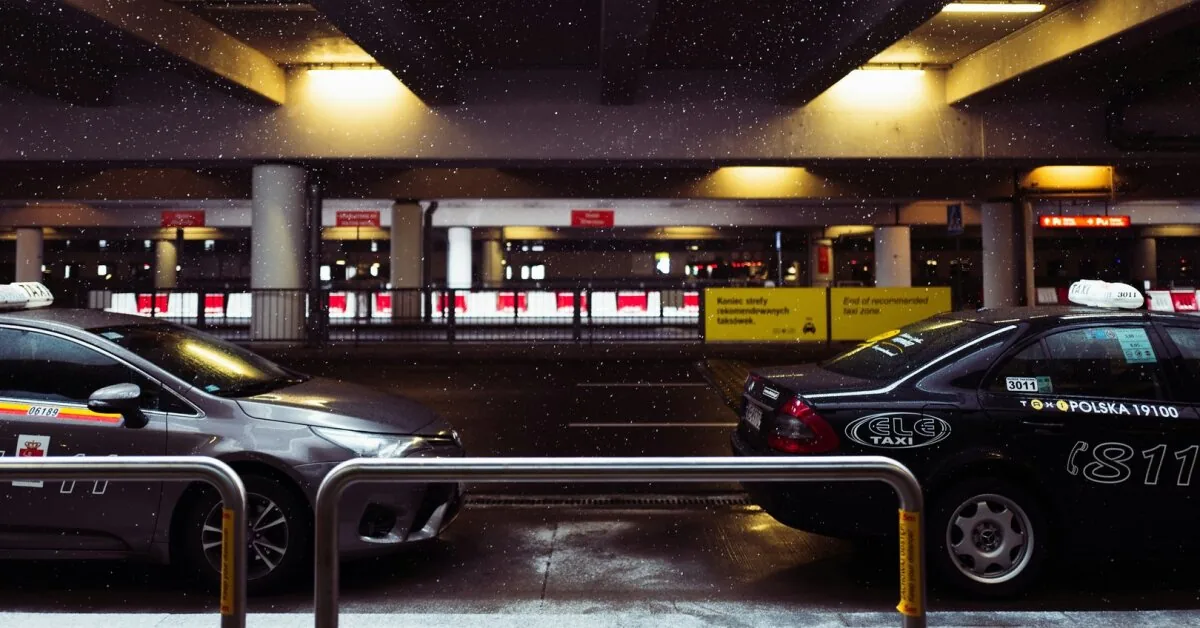
The photo is presented as another alleged proof that Ukrainians are becoming less welcome in Poland, which has taken in war refugees. Recently, this narrative has been increasingly exploited by Russian propaganda.
However, the photo circulated by propagandists is not an authentic image of a Warsaw taxi salon.
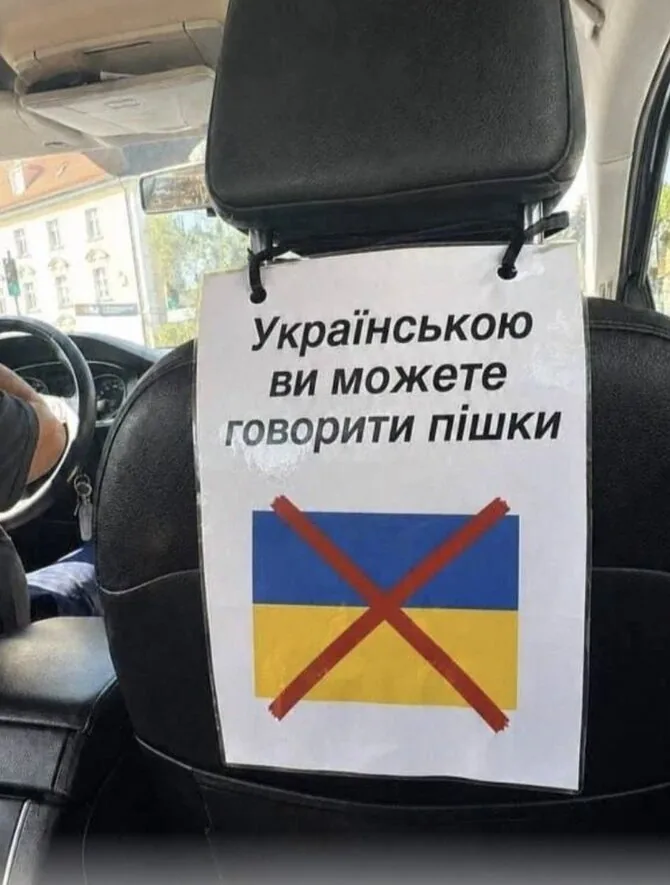
The photo was checked using OpenAI’s artificial intelligence generated image detection tool, which detected an invisible “SynthID” watermark.
Upon inspection, it was found that the file contains a digital “SynthID” watermark invisible to the human eye.
This is a special digital marker embedded into the image using artificial intelligence systems. It cannot be seen by the human eye, but it allows identification that the picture was generated or at least significantly edited using AI tools.
Detection of such a mark is not an absolute proof that the entire photo was completely created from scratch. However, it is an important indicator that the image is not an authentic, unprocessed photograph.
In other words, it means that the image was digitally manipulated.
This allows the conclusion that it is very likely the photo was either fully generated or at least edited using generative artificial intelligence tools.
Thus, the image circulated by propagandists was created using artificial intelligence.
Moreover, there is no data that Polish taxis systematically prohibit speaking Ukrainian or that even isolated similar incidents have been recorded. No information about such cases was found in either Polish or Ukrainian media.
Read more Evans, who returned to the «Žalgiris» family, talked about his condition
Therefore, the artificially created image is presented as proof of a real event and is used to strengthen the narrative about allegedly growing hostility towards Ukrainians in Poland.
Over a million refugees in Poland
Poland remains one of the main countries hosting Ukrainian war refugees. Currently, nearly 1 million Ukrainian citizens with valid temporary protection status, the so-called PESEL UKR, are registered in the country, and this number has remained fairly stable in recent months.
The actual number of Ukrainians living in Poland may be even higher, as this statistic does not include persons with other legal statuses (in total, about 1.56–1.6 million Ukrainian citizens have a valid residence permit in Poland).
In 2026, Poland began changing the special legal regime introduced for Ukrainians after the large-scale Russian invasion: from March 5, a law came into effect abolishing the 2022 “specustawa” procedure, and their temporary protection legal basis changed – it is now based on the general Foreigners Protection Act, not the 2022 special law. However, the already acquired PESEL UKR status remains valid until March 4, 2027.
The Polish authorities present these changes as a transition from an exceptional war refugee regime to a more usual and long-term regulation of their status.
15min verdict: manipulation. The photo circulated on Russian propaganda channels is not reliable evidence that Warsaw taxi passengers are prohibited from speaking Ukrainian. The detected “SynthID” mark indicates that it was created or significantly edited using artificial intelligence tools.
Furthermore, no reliable reports were found in either Polish or Ukrainian media about systematic or isolated such prohibitions in taxis.
Publication prepared by 15min in cooperation with Meta, aiming to stop the spread of misleading news on the social network. More about the program and its rules – here.