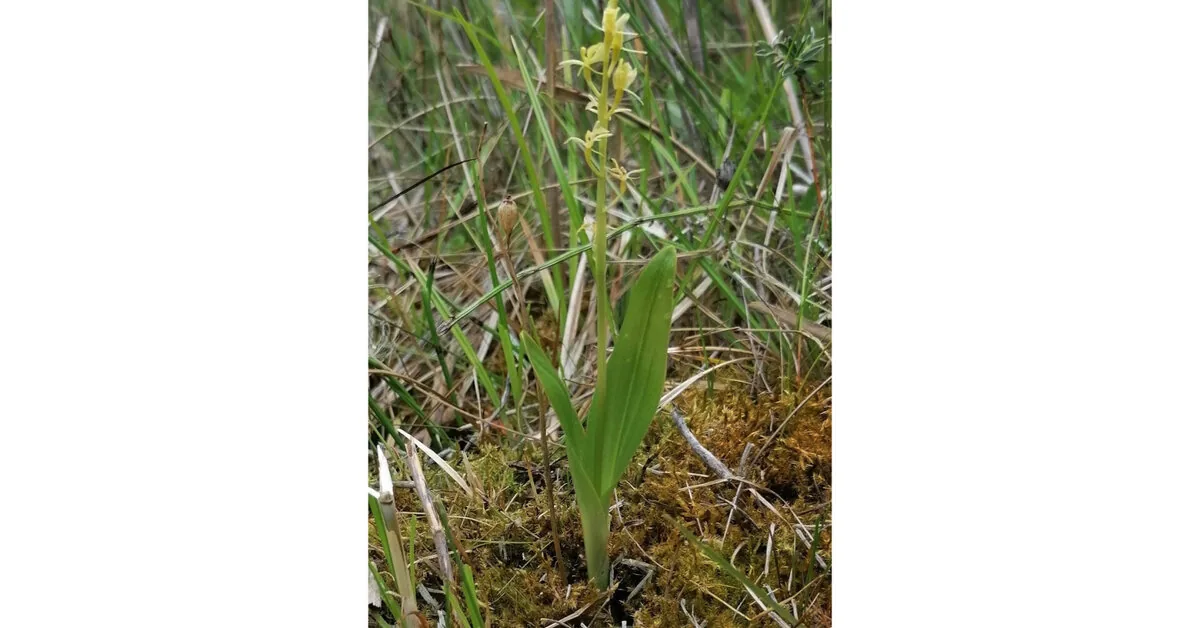
As said by Dalius Dapkus, head of the Methodical-Analytical Center of the State Protected Areas Service, humans must intervene, otherwise meadows and marshes left to fate will become overgrown with willows and then turn into forests.
“Both marshes and meadows will lose their form, plant species that have long been established here will lose their characteristics,” D. Dapkus told BNS.
According to him, the nature management plan is designed to preserve natural values that are still found in Lithuania, but very rarely, and their condition is poor.
“Measures are planned to restore or improve this condition – works. If meadows that were once mowed are now abandoned, they become overgrown, artificially drained, the two-leaved marsh orchid or the shining bladderwort can no longer live there,” said D. Dapkus.
Almost 6 ha of blueberry marshes in the Šakeliškės meadows are protected because they are specific – they form in more or less wet, nitrogen- and phosphorus-poor, acidic or carbonate-containing soils. Blueberry and other rare species grow there: the common gladiolus, various orchids of the orchid family, for example, the two-leaved marsh orchid. Also, irises, cloudberries, and gentians like the blueberry community.
Blueberries, which prefer poor soils, also form a unique community of insects, birds, and animals. Such blueberry marshes are found in the districts of Ignalina, Kupiškis, Zarasai, Rokiškis: “There are not many of them, only fragments remain, so they are protected.”
Read more Captured the apocalypse in the heart of Vilnius: the storm laid everything down
One of Lithuania’s smallest orchids found in the Šakeliškės meadow marshes – the two-leaved marsh orchid – is protected because it is very rare – it is disappearing due to both environmental pollution and drying marshes and swamps: “There are several reserves where only this plant species is protected, for example, Vyžuonos Forest in the Utena district.”
The yellow-flowering two-leaved marsh orchid can also be found in the southern and eastern parts of Lithuania, in Samogitia. These flowers can be found in an area of 1.3 ha in the Šakeliškės meadows.
“It is completely absent in central and northern Lithuania, where agriculture is developed,” said D. Dapkus.
The shining bladderworts require a high and constant water level. These mosses are found in southern and eastern Lithuania – a cold and temperate climate region. The plantations in the Šakeliškės meadows can expand up to 80 ares.
The habitats of blueberry marshes, the two-leaved marsh orchid, and the shining bladderwort are protected not only in Lithuania but throughout Europe.
Read more Twice fainted during friendly matches Musiala explained his health condition