In restless, rapidly changing times, we look to the past to explain current events and political decisions. History helps us understand the choices of the state, the fears and resilience of society, and sometimes – the untold experiences of close people and families. Historical books are also changing – alongside academic research, there is an increase in diaries, memoirs, documentary stories, city and everyday life histories, and historical novels.
Read more Bužinskas changed his mind about dismissing the boards of Vilnius companies: «We are canceling»
This change will also be reflected in the Kaunas Book Fair program – the historical line will stretch from the heritage of the Grand Duchy of Lithuania, 19th-century serfdom to post-war deportations, the Soviet era, and the Restoration of Independence.

The history of exile that reached Tajikistan
One of the first historical-themed events of the fair is the presentation of the book “Great Deportations. Tajikistan, 1945” by Benas Navakauskas and Elvyra Mickevič, which will take place on September 18 at 11 a.m. The publication reveals the lesser-known geography of Lithuanian exile and reminds us that the repressions of the occupying regime pushed people not only to Siberia but also to other distant regions of the Soviet Union.
The book will be presented together with the authors, and the long journey of exile memories to the public will be discussed by Ramunė Driaučiūnaitė, director of the Museum of Occupations and Freedom Fights and historian. The conversation will be moderated by Kotryna Lingienė.
The complex history of 20th-century Lithuania will also be discussed on Sunday, September 20 at 12 p.m. during the presentation of Kęstutis (Casey) Kazlauskas’s book “Lithuanian Chronicles: before the Iron Curtain, life behind it and after it ended.” The conversation with the author will include historian Dr. Arūnas Bubnys, Vytautas Magnus University Lithuanian Emigration Institute researcher Dr. Daiva Dapkutė, and Lithuanian resistance participant and regime researcher Teresė Birutė Burauskaitė. The discussion will be moderated by Kristina Karlonė.

Independence up close
Readers interested in the latest Lithuanian history should be intrigued by the “Diary of the Restoration of Independence” by Albertas Šimėnas, a signatory of the Act of the Restoration of the Independence of Lithuania.
Authentic diaries allow us to view the most important state events differently – to see not only the final political decisions but also their circumstances, doubts, tensions, and the moods of the time. The book presentation on September 18, Friday, at 2 p.m. will feature the author A. Šimėnas, philologist and signatory Irena Andrukaitienė, and economist Dr. Stasys Kropas. The conversation will be moderated by lawyer Dr. Jonas Prapiestis.
Arvydas Juozaitis will also offer his perspective on one of the most important Lithuanian movements at the end of the 20th century. On the same Friday evening at 7 p.m., he will present the book “The True History of Sąjūdis.” The conversation with the author will be moderated by philosopher Gintautas Mažeikis.

The book’s title promises not only a chronology of the events of the Restoration of Independence but also a personal interpretation that could encourage discussion about how we tell the story of Sąjūdis today and who has the right to shape its memory.
Defend and consolidate
Today, the importance of ideas of civic responsibility and society’s readiness to defend the state is becoming clear again. This will be discussed on Friday at 12 p.m. in the discussion “Civic education: from the school bench to the university.” Participants will include Lithuania’s Minister of Education and Sports Raminta Popovienė, Chancellor of Vytautas Magnus University Education Academy Prof. Lina Kaminskienė, military historian and politician Dr. Valdas Rakutis, and entrepreneur Eduardas Jasas. The conversation will be moderated by Mindaugas Nefas.
On the same day at 1 p.m., the second volume of the publication “Documents of Lithuanian Foreign Policy” will be presented at the fair. The collection of documents from 1921–1923, compiled by historians Dr. Algimantas Kasparavičius, Dr. Vilma Bukaitė, and diplomat Vytautas Žalys, reveals the period when the young Lithuanian state sought to consolidate its independence in the international arena. Historian and diplomat Vytautas Žalys will discuss the book with its compilers.
The fair will also invite rediscovery of the personality of Vladas Putvinskis, a public figure, writer, and one of the ideologists of the Lithuanian Riflemen’s Union. The book “Vladas Putvinskis. Life and Selected Writings,” compiled by historian Mindaugas Nefas, will be presented at 3 p.m. by M. Nefas and historian Jonas Vaičenonis. The conversation will be moderated by historian Simonas Jazavita.
Serfdom and the Kaunas flood
History becomes especially engaging when the places where important events took place are recognizable, and the storytellers can speak at length and interestingly.
One of the most prominent Saturday discussions is the debate “Serfdom – living Lithuanian history and its lessons for today,” which will take place at 12 p.m. Historian Alfredas Bumblauskas, together with entrepreneurs, architectural heritage enthusiasts, and art collectors Karolis Banis and Petras Gaidamavičius, will consider why the legacy of serfdom remains important when discussing Lithuanian society, its relationship with authority, property, and social responsibility. The discussion will be moderated by journalist and book author Žilvinė Petrauskaitė.
Historian Dr. Gediminas Kasparavičius’s book “City Under Water: The Great Kaunas Flood of 1946” will take readers back to a time when a natural disaster changed the usual city life, and people could move through the streets of Kaunas only by boat.
At the presentation on Saturday at 12 p.m., the book’s author G. Kasparavičius, historian and book author Dr. Mindaugas Balkus, and hydrologist Raimundas Baublys will discuss this impressive episode of the city’s history. The conversation will be moderated by museum specialist Dr. Dainius Elertas.
Personal stories and the city’s memory are also connected by the Book of the Year, Viktorija Vitkauskaitė’s “Homes and Fates.” At its center are the wooden houses of Kaunas Žaliakalnis and the stories of the people who lived there. Kotryna Lingienė will discuss the book with the author and architect, wooden architecture enthusiast Povilas Konkulevičius at 2 p.m.
History – through taste and memory
The Kaunas Book Fair program will confirm that the past can be understood not only by reading documents or biographies. On Friday at 5 p.m., designer and initiator of the “Secret Love” project Julija Janus will consider in the discussion “From archives to tastes and design: how to rediscover the heritage of the Grand Duchy of Lithuania in a new way?” how history returns to contemporary life through cuisine, fashion, design, and everyday culture.
On Saturday at 7 p.m., Julija Janus’s book “Invisible Hand” will be presented. The event will be moderated by Daina Žemaitytė.
The book’s compilers, Gabrielė Radzevičiūtė and Kotryna Markevičiūtė, along with the director of the Lithuanian National Museum of Art Arūnas Gelūnas, will invite a look into the cultural memory of the Nordic countries. The conversation on Friday at 2 p.m. will be moderated by philosopher Laurynas Peluritis.
Ernst Hans Gombrich’s book “A Little History of the World” is intended for young readers and their parents. On Friday at 5 p.m., publicist D. Puslys and historian M. Nefas will discuss how to tell the complex history of humanity in an understandable, lively, and engaging way.
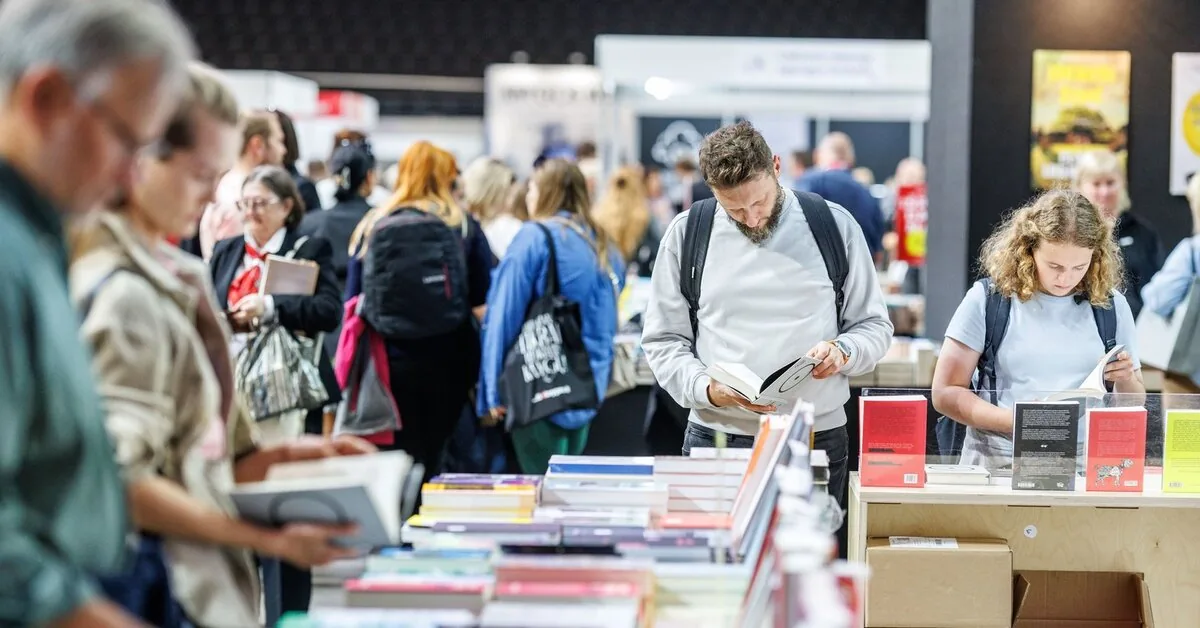
The second Kaunas Book Fair will take place from September 18–20, occupying the entire “Žalgiris” arena. Meetings and discussions with readers and authors will be held in the 450-seat “Pegasas Amphitheater,” the Lithuanian Publishers Association space, and the Libraries Forum. The Kaunas Book Fair is organized by the Lithuanian Publishers Association and the “Exhibition Center.”