









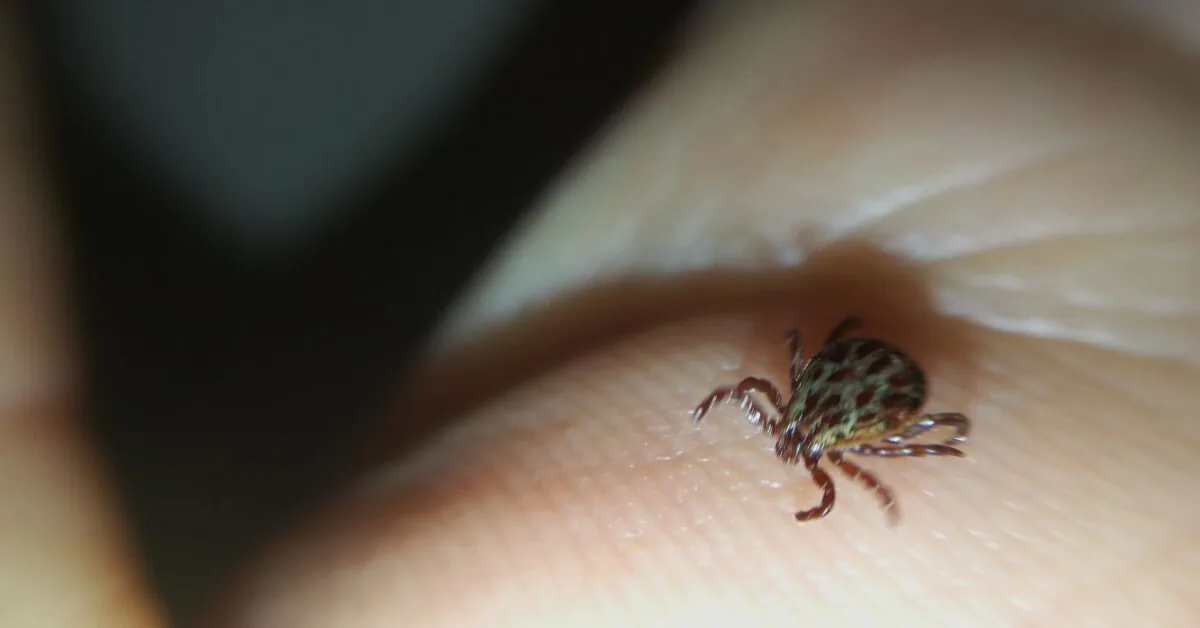
According to the center, 92 cases of tick-borne encephalitis were confirmed in the country from January to June, while last year there were almost half as many – 176 cases were registered.
Read more UK Prime Minister Andy Burnham supports the idea of a written constitution
NVSC reports that cases of Lyme disease have also decreased – 2.6 thousand were registered in the first half of this year, while last year 4.3 thousand cases were diagnosed.
One death from tick-borne encephalitis was registered this year. Last year, two people died from this disease.
According to the center’s data, the highest incidence of tick-borne encephalitis is registered annually from May to October, during which almost 90% of all cases are detected.
NVSC indicates that tick-borne encephalitis is more common among rural residents, while Lyme disease is more often diagnosed in cities. It is reported that Lithuania remains among the European countries with one of the highest incidences of tick-borne encephalitis.
Although tick activity is most pronounced during the warm season, due to climate change their active season is lengthening, so the risk of infection remains higher for most of the year.
“There is still a widespread myth in society that ticks are dangerous only in forests. In fact, they are well adapted to live in urban green areas – parks, squares, gardens, or forest edges. Therefore, every time after being in nature, even after a short walk in a city park, you should carefully check your body and remove any ticks found as soon as possible,” said Milda Žygutienė, senior specialist of the Infectious Diseases Management Department at NVSC, quoted in the statement.
Read more Man pulled from the sea drowned during the festival
The center emphasizes that the most effective measure to protect against tick-borne encephalitis is vaccination. Reliable immunity is formed after three doses of the vaccine, and later it must be maintained with booster doses every 3–5 years.
NVSC reminds that if a tick is found attached, it must be removed as quickly as possible with tweezers, grasping as close to the skin as possible and pulling out with a sharp movement.
Ticks should not be squeezed, smeared with oil, cream, or other substances, as this may increase the risk of infection transmission. After removing the tick, the bite site should be disinfected.
After a bite, you should monitor your condition for a month. If spreading skin redness appears, fever rises, or general condition worsens, it is necessary to consult a doctor.
Tick-borne encephalitis is a viral infection of the central nervous system that can cause meningitis, encephalitis, or even death. Meanwhile, Lyme disease is caused by bacteria also transmitted by ticks.
Read more 15 points: what is happening in Seuta