Psychologist Viktorija Ivanauskaitė from Kaunas University of Technology (KTU) says in a press release to the media that the biggest mistake is to consider loneliness and solitude as the same phenomenon.
Loneliness is a state when a person feels rejected, abandoned, when being alone is not their choice. It is an inner feeling that I am not really with another, that there is no one who would see me, hear me, understand me, and respond.
Read more «Meta» faces another very important court case in the US, facing impressive fines

“Solitude can be different. It can be a conscious choice – a time when we withdraw from external noise not because we have no other choice, but because we may want to return to ourselves. Such solitude can become an inner space where something begins to clarify, mature, grow,” she explains.
From the outside, these states may look similar – a person is alone, but inside they are experienced very differently. In solitude, we can be alone but still feel connected to our thoughts, body, memories, nature, and the world.
Why do we feel lonely among people?
According to V. Ivanauskaitė, in recent years we talk about loneliness not only in the context of psychology but also public health. The World Health Organization identifies social connection as an important factor determining health, linking loneliness and social isolation with a higher risk of heart disease, stroke, diabetes, cognitive decline, depression, anxiety disorders, and premature death.
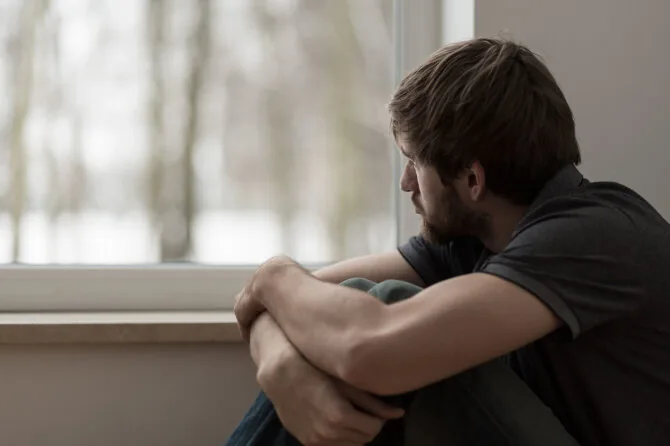
“However, the essence of loneliness is not just about how many people we have around us. A person can be in relationships, have a family, a job, and friends, yet still feel very lonely. Sometimes there are many conversations but little real connection, much being together but little feeling that the other truly knows what is happening inside me. Loneliness sometimes resembles standing outside a window: I see others, hear their voices, maybe even laugh along, but inside I remain separated, as if something in me does not reach the other, and the other does not reach me,” she says.
This feeling can arise after losses, divorces, illness, emigration, job loss, children growing up, or changes in social roles. But sometimes it comes without a clear external reason: you shouldn’t feel lonely, but you do. Then another layer adds to loneliness – guilt or shame: “I don’t have the right to feel this way,” “others have it worse,” “there is something wrong with me.”
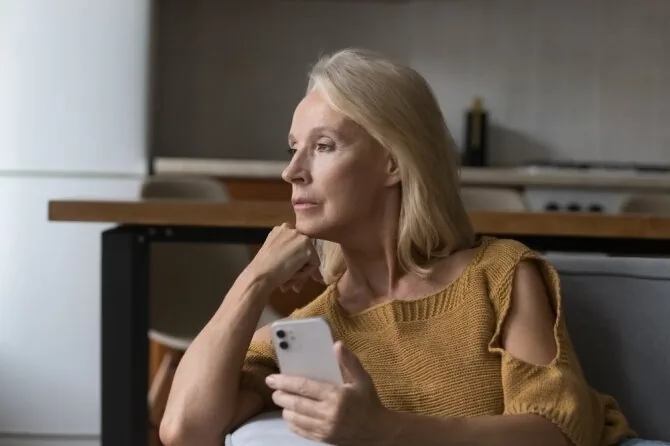
“But feelings do not always obey life circumstances. Sometimes we can have people around but no place where we can feel completely authentic,” notes the KTU psychologist.
Not all lonely people sit at home in silence
According to V. Ivanauskaitė, it is important not only whether a person is alone but also how they are alone. Does solitude become a space to be with oneself, or does it immediately turn into a feeling of abandonment, threat, and emptiness?
“If a person avoids being alone at all costs and constantly runs to noise, screens, meetings, or relationships, sometimes it is not a sign of vitality but an attempt to escape from oneself,” she says.
From the outside, this may look like an active life, but inside the person may feel increasingly scattered – not knowing what they want, what they feel, what they long for. Silence begins to seem dangerous because it reveals what the noise of the day drowns out.
If they find out who I really am, they might reject me.
“Sometimes loneliness doesn’t look like loneliness at all. Not all lonely people sit at home in silence. Some stand in the center of the room and make everyone laugh. There are people who seem very social and charming. They know how to enter a room, create an impression, be interesting. They may know how to be among others but not how to be with themselves. They may joke a lot, flirt, change companies, talk about everything, yet never truly get close to anyone. A deeper connection poses a threat: if someone sees me up close, they might be disappointed; if they find out who I really am, they might reject me,” says the KTU psychologist.
Sometimes behind the constant “I don’t like myself” hides a more painful feeling – “I don’t like myself.” When it is hard to accept oneself, it is hard to believe that another could accept me not only as charming but also tired, sad, angry, less impressive.
“Such a person is easy to confuse with a confident person. But sometimes it is not confidence but a highly developed way of not letting others in. If I don’t show anyone who I really am and what is important to me, no one can reject that. But then no one can accept it either. Then charm becomes not only a gift but also armor – it helps to be accepted in the room but does not allow being truly met up close. The person becomes visible but not discovered,” she notes.
Therefore, sometimes loneliness is not just a lack of contacts. Sometimes it is a lack of a place where I could be my unpolished self.
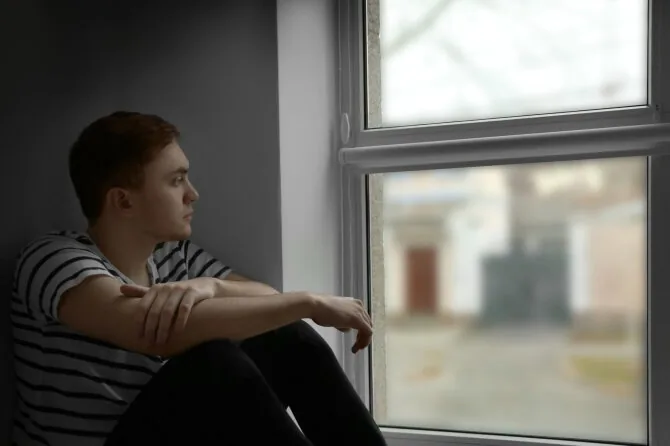
A person needs not only to be seen
V. Ivanauskaitė shares the thought of psychoanalyst Donald Winnicott: “It is a joy to be hidden and a disaster not to be found.”
“I think this thought very accurately describes one of the essential human paradoxes. We need privacy, inner space, the right to have our secrets, our world not fully accessible to others. Not everything inside us has to be translated into words, shown, or made public,” she says.
But at the same time, we need to be found and seen. Hide-and-seek is a game only when there is hope that someone will look and find. And when no one looks, the hiding place becomes abandonment and a trap.
“Perhaps that is why loneliness hurts not when there are no people around, but when it seems that no one notices us where we most need to be noticed. ‘There is no one to find me where I sometimes lose myself,’ says the KTU psychologist.
Read more Russia provocation against NATO: expert explained what risks the Kremlin faces
We more often see an image, not a person
V. Ivanauskaitė highlights the image of the “tragic man” described by psychoanalyst Heinz Kohut. According to her, it helps to think about modern loneliness not only as a lack of others but also as a pain of selfhood. It is a feeling when a person can function externally, work, communicate, but inside does not feel fully themselves, as if something inside is not alive enough, real, or recognized.
“In such a case, a person heals themselves through connection, through a relationship where they do not have to constantly prove their worth, where they can be not only their perfect version. When there is space in another person for our true experience, gradually more space appears for them in us as well. In such a connection, a person becomes not perfect but more real,” she says.
But when such connection is lacking, people often try to heal themselves not through connection but through compensatory things. They create a bigger version of themselves. Modern culture provides many means for this: money, status, beauty cult, demonstration of success.
“None of this is inherently bad. Wanting to look good or achieve professional success is not a problem. The problem begins when these things become not part of life but a way to compensate for an inner feeling of inadequacy.
Then we no longer live but construct ourselves – not so much becoming ourselves as trying to create and maintain a version of ourselves that should be more loved or desired. As if trying to fill the emptiness felt inside by appearing fuller, or being flawless because it is very hard to bear one’s vulnerability,” shares the KTU psychologist.
According to Kohut, we need not only to be seen but also reflected. Visibility means: I was noticed. Reflection means: I was felt, my inner experience became understandable and acceptable to another person.
“Perhaps one of the greatest modern sufferings is that we are increasingly seen as an image but less often met as people – with our strengths and fragility,” she notes.
Who hears themselves can hear another
V. Ivanauskaitė shares that conscious solitude can be one form of emotional hygiene.
“When we are constantly among screens, people, impressions, and duties, our inner life does not catch up with us. We react, respond, make decisions, but do not necessarily understand what is happening to us. In solitude, it can become clearer what we want, what we long for, what makes us angry. It can help better recognize our feelings and needs, and one who hears themselves better can often hear another better,” she says.
However, it is important not to romanticize solitude. Not every withdrawal is healing. Sometimes a person says: “I just need to be alone,” but in reality sinks into isolation, depression, shame, or disappointment. Healthy solitude gradually returns one to life. Destructive isolation narrows it.
“Solitude should not be romanticized, but it should not be shamed either. It should be understood. Learning to be alone does not mean suddenly going to the forest for the weekend without a phone. If solitude causes anxiety, it should start gently – not with large doses of silence, but with small, manageable moments: for example, ten minutes without a phone, a cup of tea, and permission to do nothing,” says the KTU psychologist.
It is very important to ask oneself not “why am I like this?” but “what is happening inside me now?”. The first question blames, the second invites a relationship with oneself. Solitude becomes easier when it has a form – walking, music, reading, nature, or prayer.
How to accept loneliness without shame?
According to the KTU psychologist, first it is worth acknowledging that the real question is not how to never feel lonely. Maybe it is impossible. Loneliness is part of the human experience – it sometimes comes even when everything seems fine in life.
“Second, it is important to distinguish: do I really want to be alone, or do I say I want to be alone because I am afraid of being rejected? Sometimes people withdraw from relationships not because they don’t need them, but because it hurts too much to want and not receive,” she shares.
Third, loneliness should not be suppressed but rather heard. And finally, sometimes loneliness needs not advice but another person – perhaps a friend, therapist, group, or community. “We are not made to live in complete emotional isolation. We need others, but we also need ourselves,” says V. Ivanauskaitė.