Treat what ails you with what caused it
Violeta Giknienė’s farm, managing 410 hectares, has today become a kind of open-air laboratory. Wheat and rapeseed are grown here, but their care methods differ significantly from the usual ones. Agronomist Edmundas Giknius is convinced that the key to success lies in the biological balance of the soil.
Read more What happens to the heart when you often eat grainy cottage cheese?
“Currently, we manage 410 hectares, grow wheat and rapeseed, and are glad that we can solve most of the emerging problems ourselves in our own yard. For several years now, we have been closely cooperating with microbiologists, biochemists, and laboratories. We constantly improve the products we create, which not only allow us to control slug invasions but also completely eliminate phosphorus and potassium fertilizers. Moreover, for the fourth year in a row, we have not used any fungicides in our fields,” says E. Giknius.
The farm’s philosophy is simple but brilliant: “treat what ails you with what caused it.” After all, many plant diseases are caused by pathogenic microorganisms. So farmers use microorganisms, beneficial bacteria, and fungi to protect plants and help them in other ways. Instead of buying expensive synthetic products, farmers isolate beneficial bacteria and fungi from their fields, multiply them, and return them to the soil. According to Edmundas, there are huge deposits of phosphorus and potassium in the soil that are simply inaccessible to plants. However, with the help of the right microorganisms, these substances are “released.”
“With the help of bacteria and fungi, we make phosphorus and potassium available to plants. Fungi help increase the root area, so the plant no longer needs such high concentrations of nutrients in the soil because it can absorb them more efficiently,” explains the agronomist.
Microorganisms – free workers in the fields
Giknius’ interest in microbiology began about 15 years ago. Looking for ways to optimize farm expenses, they realized that the biological products offered on the market are not only expensive but also not always adapted to local conditions.
“Fertilizer prices are constantly rising, and active substances in fungicides are being withdrawn from the market one after another. What was previously allowed to be used is now banned, and the price of the remaining products is skyrocketing.
We chose a different path – we grow pure cultures of bacteria and fungi. First, we cultivate them, then transfer them to another medium until we obtain the maximum amount of enzymes in the solution. These enzymes later allow us to naturally suppress plant diseases,” Edmundas reveals the production process.
The farmer himself has isolated three species of fungi from his fields that have a special effect on plants. Having noticed places where crops grow better and do not get sick, he took soil samples to the laboratory, where it was confirmed that “good” microorganisms dominate there. Now these fungi are multiplied in fermenters installed in the farm premises. Giknius produces about 20 tons of this living elixir per month.
Slug control succeeded without blue pellets
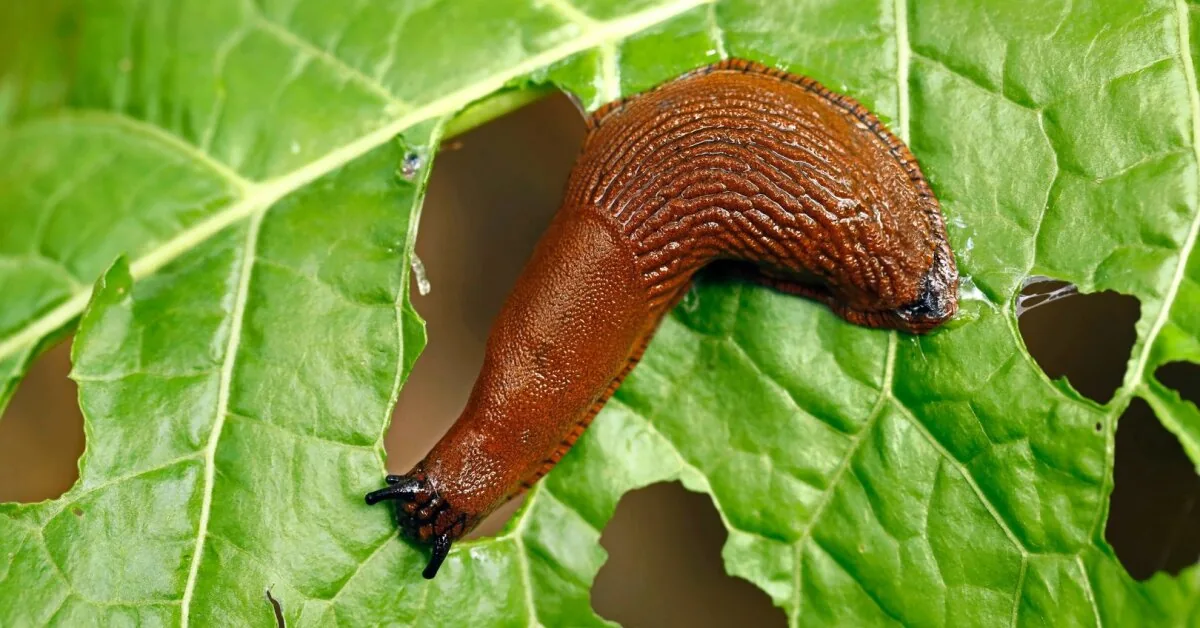
One of the biggest problems in Lithuanian farms in recent years is invasive slugs. Almost everyone who has a garden or greenhouse in their yard knows about slugs. And while it is still possible to control slugs in a home garden by generously using blue pellets (molluscicides), collecting, and salting them, a large farm does not have time for such manual work. Yes, slugs devastate not only small gardens but also huge rapeseed fields. Conventional pellets do not always help, and their price and availability often become as much of a headache as the slugs themselves. Edmundas Giknius found a solution that even surprised scientists.
“Slugs simply wiped out our rapeseed because we work the soil superficially, which is an ideal environment for them. Pellets did not help due to the huge concentration of slugs.
Often, we noticed the damage too late – they come out to feed at night, and in the morning, the newly sprouted plants are already nibbled.
So I started to delve into and read scientific articles, looking for all available knowledge about slugs. We took slugs to the laboratory, studied their natural enemies, stomach structure. Finally, I isolated a certain bacterium from dead slugs. After multiplying it and spraying the fields, we saw that the pests simply retreated,” the farmer shares his success.
This method works by contact – as slugs crawl through the infected soil, they pick up the bacterium, which stops their stomach function. The pests stop eating and retreat. Thus, Giknius have been naturally fighting slugs for six years. This innovation has also attracted the attention of colleagues – farmers from the Panevėžys region successfully buy the products from the farmers in the Kėdainiai district.
Read more This event shook NATO: a top-level response to Putin is being prepared

Latest scientific discoveries applied on a small farm
Although Giknius call themselves small farmers, their approach to technology is top-level. They cooperate not only with scientists from the Lithuanian Research Centre for Agriculture and Forestry (LAMMC) Institute of Agriculture but also maintain contacts with scientists from Kaunas, Vilnius, as well as laboratories in Germany, England, Italy, and China.
“Since spores and microorganisms cannot be seen with the naked eye, we constantly send products for testing. We check concentration under a microscope, perform water and nutrient medium analyses. It is important that the bacteria are viable. For example, bacteria of the Bacillus genus form spores that “sleep” under unfavorable conditions but activate again when in the field and start their work. However, there are other bacteria that are more sensitive and less viable. They require more care and specific conditions,” explains Edmundas, while his father Egidijus says that the farm produces the highest quality products. After all, they apply them to their fields, but their fellow farmers would not return every year if they sold a poor product.
True, innovations and a novel approach to farming are not to the liking of all Lithuanian farmers. Many colleagues were still skeptical about such experiments until recently, but the decade-long success of the Giknius farm forces even the biggest skeptics to change their minds.
For each crop – wheat, rapeseed, peas, or sugar beets – Edmundas creates a different “Lego” set of microorganisms. Bacteria such as Rhizobacteria, Bacillus subtilis, Bacillus megaterium, as well as fungi Trichoderma harzianum and Trichoderma viride are used.
Moreover, different problems can be solved with a single spray – saving a lot of time.
Innovative farming requires different technical solutions
The harvest philosophy has also changed on the Giknius farm. They are convinced that the combine harvester should harvest the crop, not chop the straw, as the chopper consumes up to 25% of the engine’s power. Instead, farmers leave tall stubble (about 38–40 cm) and treat it with microorganisms.
“Our greatest asset is straw. It needs to be infected with appropriate microbiological preparations. We have a sprayer with a tank installed at the front of the tractor and a disc cultivator at the back. In one pass, we introduce microorganisms to a depth of 6–10 cm. This way, the organic matter decomposes faster, pathogens are suppressed, and the risk of root diseases is minimized,” Edmundas explains the technical details.
This farming model, also called regenerative agriculture, is rapidly gaining popularity worldwide – from soybean fields in Brazil to the prairies of the USA. It allows not only to protect nature but also to drastically reduce costs, which is critically important in today’s market. It is wonderful that such farming has taken root even in the small village of Padotnuvys in the heart of Lithuania and is becoming an example even for the largest farmers in our country.
Will you be a prophet in your own land…?
Although it is said that you cannot be a prophet in your own land, the Giknius farm breaks this rule. Their experience shows that even a small farm, using science and patience, can become an example for others. Edmundas does not hide that the flow of information is enormous, and working with living organisms requires precision – too strong sun or drought during spraying can wipe out all efforts.
“Life forces you to be interested in such things. Every year we strive to improve our bacterial arsenal, read the latest scientific articles, participate in discussions. We offer colleagues not only a product but also experience,” says Edmundas, adding that all this goodness can only be shared with fellow farmers. These technologies are unfortunately too complicated for people who have a garden to fight slugs and diseases. – “Besides, we do not sell less than a ton – we simply have nowhere to pour it,” the agronomist laughs.
The success story of farmers from the Kėdainiai district once again proves that the future of agriculture will be biological, not chemical. And the creators of this future live right here among us, going out to the fields every day not to fight nature but to cooperate with it.
Read more Vytaras Radzevičius’ farm suffered a tragedy: «A brutal crime has occurred»