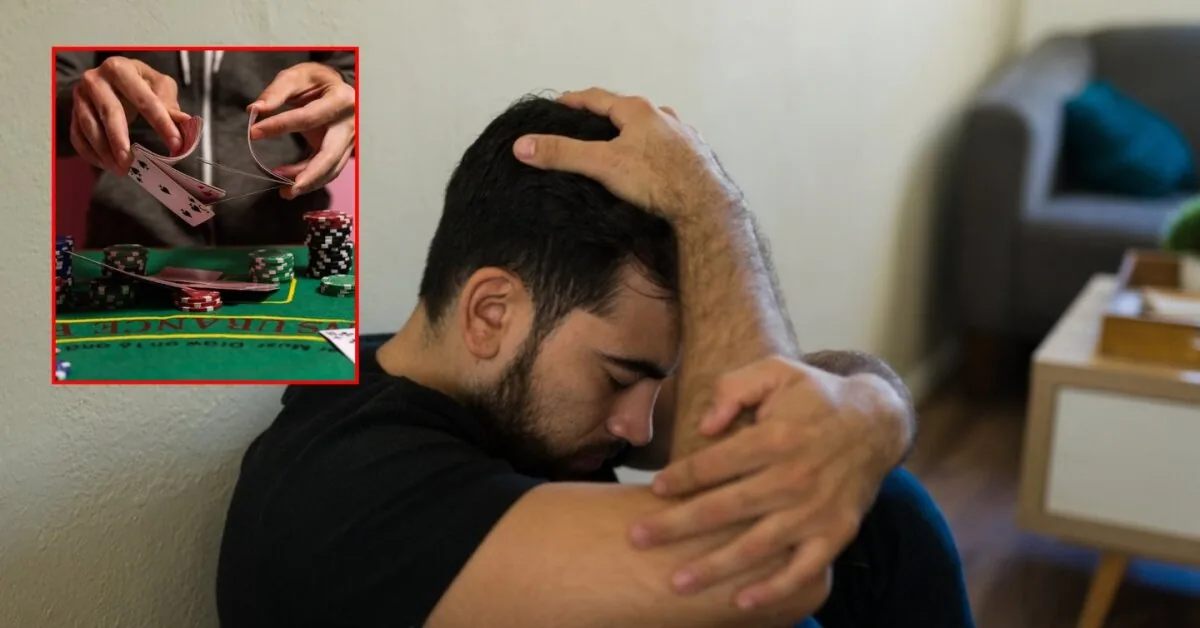
Sports betting in Lithuania has been popular for several decades, but discussions about the risks it poses are still ongoing. Psychologist O. Mackevičius explains the signs that show when betting as entertainment gradually becomes a problem, why there is such a strong urge to recover losses after a defeat, and why the first big win can be dangerous.
Read more Virginijus Sinkevičius. The register of sexual offenders should be a non-negotiable matter
– Many people do not even consider sports betting as gambling. Why does it still seem like an innocent pastime in society?
– The fact that people view betting exclusively as a form of entertainment is quite common. Primarily because betting is often associated with sports events – an activity generally viewed positively by society. Some people feel that they are not so much gambling as demonstrating their knowledge about sports, teams, or players’ abilities, and sometimes they want to “put that knowledge to work” and get rewarded for it. This can create the impression that the outcome can be predicted based solely on competence, although the final result remains uncertain.
The normalization of betting is also contributed to by how much it is publicized in the media. Advertising, sponsorship of sports events, expert predictions, and discussions about betting in the media create the impression that it is a normal part of a sports fan’s activities. Because of this, the risk is often underestimated both by the environment and the gambler themselves.
It is not just the type of gambling that causes problems, but how a person behaves.
In practice, we observe that the mechanisms of addiction development in sports betting are the same as in other forms of gambling: the urge to recover losses, increasing risk, constant thoughts about gambling, and difficulty stopping despite negative consequences.
Psychologists studying gambling problems often say that it is not just the type of gambling that causes problems, but how a person behaves. The most important thing is that it remains entertainment and does not become a goal to earn money from it, as the consequences of such a decision can often be quite painful for some people.
– When does a person who just occasionally bets on their favorite sports team or player already “get hooked”?
– The “hooking” itself happens when the gambler starts changing their behavior during gambling. For example, instead of occasional entertainment and rare bets, they begin to bet more frequently and increase the amounts wagered.
The first signals are often psychological rather than financial. The person starts thinking more about upcoming bets, follows odds more often, plans bets, and feels disappointment or irritability when unable to gamble. Wins cause a strong emotional high, and losses create a desire to recover as quickly as possible.
One of the most important signs is that gambling gradually becomes not a choice but a need. If previously a person could easily skip a game without betting a single euro, but now feels that watching sports without betting is “no longer interesting,” this may be a sign that the relationship with gambling is changing.

– What first signs should a person or their close ones notice that sports betting is taking up too much space in their life?
– Speaking about close ones, they usually notice not the gambling itself but its consequences. The person becomes more irritable, withdrawn, avoids talking about money, starts hiding their bets or downplaying their scale. Sometimes interest in other activities decreases, and sports events become important mainly because of the opportunity to gamble.
Regarding gamblers, I would pay the most attention to when a person can no longer maintain their self-imposed limits or starts changing them. For example, they planned to bet once a week but bet more often, intended to allocate a certain amount but exceed it, decided to stop for a while but keep postponing this decision. At the same time, they always find new justifications for why they failed.
– Does the first bigger win often become the hook that draws a person deeper?
– It is important to emphasize that not everyone who has won something in gambling necessarily becomes addicted, but a win can influence changing attitudes toward this pastime and turning it into a “successful income.”
Read more 7 quick stretching exercises to reduce stress that you can do right now
From a psychological perspective, a person receives a very strong emotional reinforcement – joy, excitement, pride in themselves, and sometimes even the belief that they have special abilities to predict outcomes.
The problem is that people tend to “not remember” unsuccessful gambling cases, but they usually do not forget the win. An expectation forms that similar success can be repeated, so they want to try again. The stronger the emotions experienced when winning, the stronger the desire to relive them can be.

A win can strengthen the illusion that success depends exclusively on the gambler’s skills or knowledge, although this is not the case.
Not every big win leads to addiction.
It is important to understand that not every big win leads to addiction. The risk increases when a win becomes not a pleasant coincidence but an experience that a person believes in and seeks to repeat.
– What usually happens after the first serious losses – why does the desire to recover losses appear?
– Based on the experiences of gamblers, I could say that after the first serious losses, a person often experiences not only financial loss but also strong emotional discomfort – disappointment, anger, guilt, or shame.
There is a natural desire to get rid of these feelings as quickly as possible. Usually, this is resolved in the worst way – by betting again and trying to win back. It is hoped that a supposedly successful bet will fix both financial and emotional consequences.
Many people who gamble problematically find it difficult to notice a rational connection between their behavior and the consequences.
– What would you say to a person who says: “I’m not a gambler, I just follow sports and sometimes place bets”?
– I would like to emphasize that an interest in sports and occasional bets certainly do not indicate that a person gambles problematically. Many people are interested in this pastime and have no problems with it.
If bets are just an occasional pastime, the risk is usually low. However, if the pleasure of watching games depends on the need to gamble, mood or emotional state changes, it is worth stopping and assessing the situation.
It is not important that a person gambles, but how and for what purpose they gamble. In practice, many people who later face serious gambling problems describe themselves for a long time exactly like this: “I’m not a gambler, I just like sports.” Therefore, it is important to observe not what the gambler says but their behavior.
Funded by the State Public Health Promotion Fund (state budget) resources.
Read more In the heat of the divorce – an intriguing proposal from Mindaugas Lipnius