








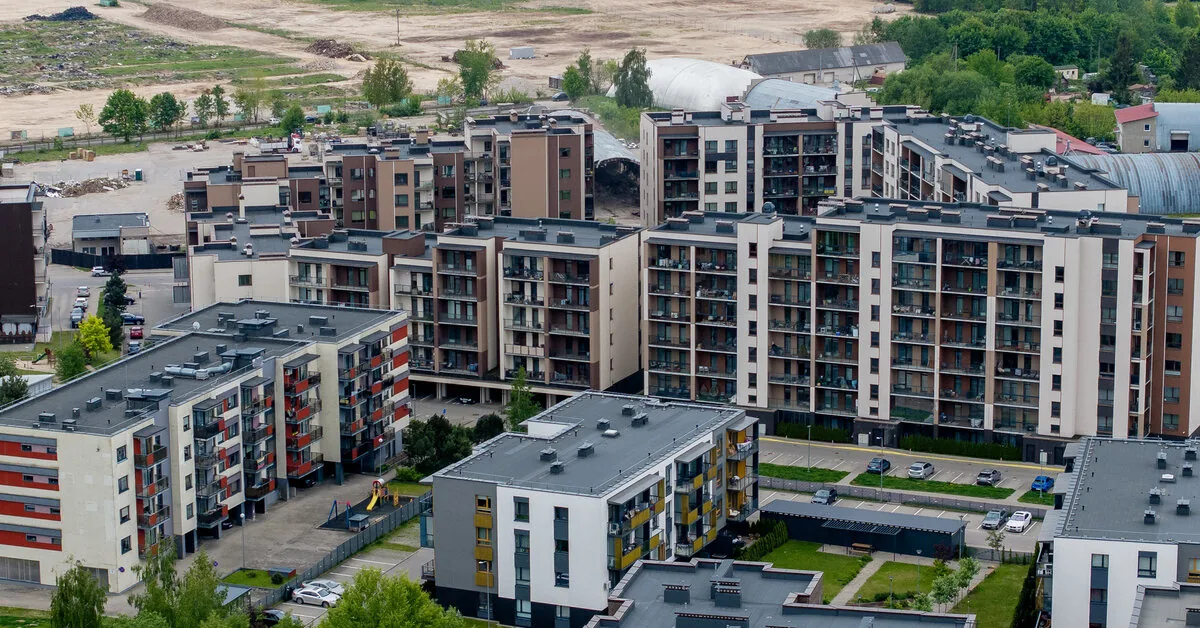
Stronger growth was recorded in the primary apartment market, where sales volumes were 10% higher than a year ago, according to data from the real estate company “Ober-Haus”. Experts say that a changing buyer behavior is also emerging – due to worsening housing affordability, more and more residents are choosing more economical housing options.
Read more New businesses amaze with results: fastest growth in three sectors
The cheapest housing is appreciating the fastest
According to “Ober-Haus” calculations, in the first half of 2026, apartment prices increased in all major cities of the country, with Vilnius maintaining a particularly rapid growth rate. In the first six months of this year, the average sales prices of old and new apartments in the capital increased by 5.5%, and the annual price growth at mid-year reached 11.7%.
It is noted that the cheapest housing segment appreciated the fastest. According to Raimondas Reginis, head of Baltic market research at “Ober-Haus”, housing prices have recently been rising faster than residents’ incomes, so more and more people are looking for more affordable housing.
“For this reason, demand for old apartments in residential areas and new economic class projects has increased significantly, allowing sellers to raise prices of such housing faster,” says R. Reginis.
Economic class as an alternative to old housing
Remigijus Pleteras, head of the Swedish capital residential development company “Bonava Lietuva”, says that in recent years, with the rapid increase in prices of old housing, a new trend is emerging in the market – more and more buyers are beginning to see economic class new housing as a more accessible and economically justified alternative.
“It is noticeable that more buyers value not only the initial housing price but also its overall value and prospects for appreciation in the future. While previously old housing was more often chosen due to its lower price, today more people decide to purchase new economic class housing. Although its purchase price may be slightly higher, in the long run, it pays off due to higher energy efficiency, lower operating costs, more modern living conditions, and almost guaranteed appreciation in the future,” says R. Pleteras.
According to him, changing buyer priorities are also reflected in overall market statistics: in the first half of 2026, half of the apartments sold in the primary market in Vilnius were in economic class projects.
Read more Experts predict another change in phones: this common feature may disappear
More new projects, but fewer completed housing options
Analysis by “Ober-Haus” also shows that after developers significantly increased investments in new project development last year, more new apartment supply appeared on the market this year, but a larger share of them is still only on paper.
“Over the past two years, the total supply of new apartments for sale in the capital has increased by about 40% and by mid-year reached about 5,000 apartments. However, the majority of the supply is concentrated in projects still under construction or just starting development. Meanwhile, the choice of already built and available housing has significantly decreased during the same period – from about 1,600 to about 700 apartments,” says R. Reginis.
The most active development – in western and central districts
The highest activity of new projects is currently recorded in Pašilaičiai, Naujamiestis, Lazdynai, Žirmūnai, Justiniškės, and Verkiai eldership. These are the areas where most new apartments are being built and sold.
Second half forecast: activity will remain, but affordability will worsen
Experts assess that the results of the first half of the year allow expecting that the housing market will remain active in the second half of the year, although it will continue to be affected by factors suppressing buyer activity – rising housing prices, inflation, and again increasing housing loan costs.
“The natural demand for housing will continue to be one of the most important factors supporting the market, so a significant decrease in activity is not expected in the near future. However, worsening housing affordability will mean that the greatest demand will continue to concentrate in the most economical market segment,” predicts Raimondas Reginis, head of Baltic market research at “Ober-Haus”.
Meanwhile, “Bonava Lietuva” head R. Pleteras says this means one thing: economic class housing will remain the most in demand. “Consistently rising housing prices and worsening affordability will encourage buyers to choose more affordable housing even more actively,” says R. Pleteras.
Read more Tomas Varenbergas promises a review of the «Artea» strategy