









Flagship-class smartphones that operate only with eSIM technology have been sold in the US market for several years. This is considered one of the most important signals indicating the market’s movement towards fully digital mobile activation.
Read more Tomas Varenbergas promises a review of the «Artea» strategy
According to Kristijonas Nalivaika, Telia’s product manager, every physical part removed from the phone’s design means more space for the battery, better resistance to environmental impact, and greater freedom in creating new devices. That is why it has been said for several years that more and more manufacturers will eventually abandon the plastic SIM card, and activation will become completely digital.
“Looking at the evolution of phones, the physical SIM card today appears at the same turning point as the wired headphone jack once was. For users, the card is still familiar, but for engineers, it is a part that takes up space, limits design, and requires compromises. When technology allows the same function to be performed digitally, the question is usually not if, but when such an element will disappear,” says K. Nalivaika.
According to him, eSIM also changes the very relationship with the mobile service. If previously connecting to the operator’s network was inseparable from receiving a plastic card, today the connection can be activated remotely in the operator’s self-service in just a few minutes. This means less logistics, faster service, and much greater flexibility for users.
Changes are driven by manufacturers
That eSIM technology is gradually becoming a market standard from a niche solution is also shown by the latest international data. The technology market research company Counterpoint Research notes that eSIM is already rapidly being implemented in mid-range and lower-priced devices, which should become one of the most important factors for eSIM development in the coming years.
Read more After the brutal Russian attack – Zelensky’s request to allies
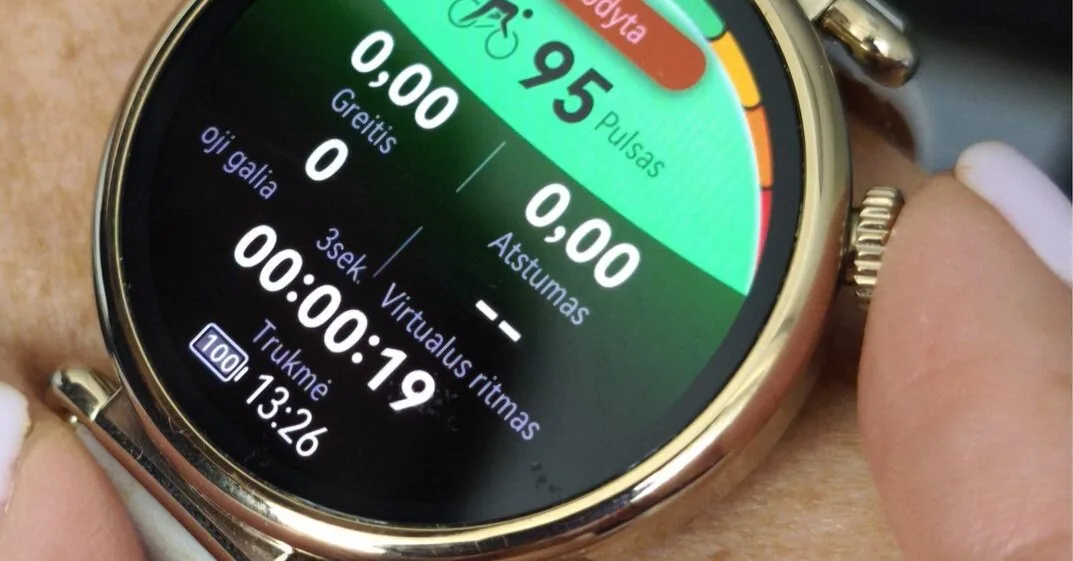
A similar trend is noted by the Trusted Connectivity Alliance (TCA), an international organization uniting participants of the SIM and eSIM technology ecosystem. According to its assessment, about 605 million eSIM modules were introduced worldwide in 2025, or 18% more than in 2024, and the number of user eSIM activations grew by as much as 43% in one year. According to TCA, eSIM growth is also driven by the fact that the technology is increasingly used in smartwatches or Internet of Things devices.
According to K. Nalivaika, eSIM technology opens up more practical possibilities for people. Multiple numbers can be stored on one phone, different plans can be easily switched, and separate numbers can be used for work, personal needs, or travel. eSIM also provides additional security. For example, if the phone is lost, the physical SIM card can be removed and used in another phone, but since eSIM is integrated into the device itself, it cannot simply be pulled out or replaced.
However, a mass shift has not yet occurred. The majority of users still use physical SIM cards because they work and require no additional actions. However, according to K. Nalivaika, market history shows that technological changes usually happen when they are driven by major manufacturers.
“As long as everything works for the user, there is no reason to change anything. But it only takes one big market player’s decision, and what seemed like an alternative yesterday becomes the new standard tomorrow. This happened with the headphone jack, with phones with physical keyboards, and there is a good chance that the same will happen with the SIM card,” summarizes K. Nalivaika.
Read more Spanish officials: Flames have almost disappeared near Madrid