Looking for help for his son, Arnas closely saw the problem of the shortage of specialists and the difficulties experienced by similar families. It was then that the idea was born to become the specialist himself, whose help his own family once sought.
Read more Want to see the World Cup final at the stadium? You’ll have to pay an impressive amount
The first professional choice was a mistake
After finishing school in Ukmergė, Arnas was one of those students who did very well academically. Exam results allowed him to choose various fields of study, but at that time he did not have a clear professional plan.
“I only knew one thing for sure, that I wanted to move to a big city, I wanted to study in Vilnius or Kaunas,” he recalls.

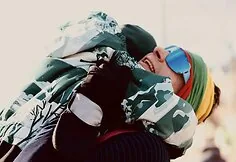
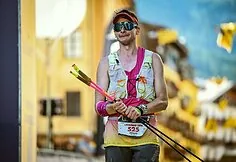
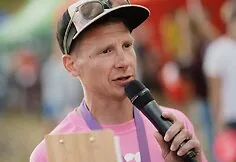
At school, A. Šimonis hosted events, acted in theater, considered acting, but hesitated whether this profession could ensure a more stable future. Looking for a more promising option, he chose communication studies. However, it became clear already in the first year that the choice was not successful.
“It wasn’t interesting, and I didn’t feel any motivation to study. I lived the student life – worked, had fun, and didn’t pay much attention to studies. But when it came time to write the bachelor’s thesis, I realized I couldn’t just drift along,” he says openly.
At that time, Arnas immersed himself in work – hosting events, refereeing basketball games, so the university remained unfinished.
It was a decisive sign
The decisive turning point came later, when he and his wife decided to adopt a child. The decision was conscious and well thought out. Before becoming adoptive parents, they completed a preparation program for future adoptive parents, and soon received news about a baby just a few weeks old who needed a family. Today their son is already eight years old.
Growing up, the boy faced various developmental challenges – speech developed more slowly than peers, it was difficult to maintain attention. The family’s daily life included speech therapists, physiotherapists, consultations with other specialists, and searches for appropriate educational environments.
“We changed kindergartens one after another, the child didn’t fit in, we looked for the necessary specialists. Sometimes it seemed that educational institutions found it difficult to find ways to work with a child who follows a different developmental path,” Arnas says.
The deeper he dived into this experience, the clearer the problem of the shortage of specialists became. At the same time, his attitude towards work began to change. Events, which previously gave him a lot of energy and excitement, became just work for money.
“I always told myself: if the day comes when I no longer feel any excitement before an event, I will know it’s time to change something. And that day came,” he smiles.
One morning, while driving his son to kindergarten, Arnas heard a report on the radio about the shortage of specialists in Lithuania. It was said that about 100 special educators and 150 speech therapists were missing in Vilnius.
“I thought maybe this is some kind of sign. At that time, I had already started to consider that events no longer brought joy as before, so I decided to try and accept this professional challenge,” Arnas recalls, submitting documents that same spring to apply to the VDU Education Academy’s Special Pedagogical Assistance: Speech Therapy study program.
I thought maybe this is some kind of sign. At that time, I had already started to consider that events no longer brought joy as before, so I decided to try and accept this professional challenge.
Studies did not reduce but strengthened motivation
Unlike the first studies, speech therapy became a conscious choice for Arnas, not a formal one. However, when applying, he did not yet fully understand how broad this profession is.
“It seemed that I knew what a speech therapist does, but the first semester completely changed my perspective. Lectures about working with disabilities, children with various developmental difficulties, and the situation in Lithuania made a big impression. Then I realized that speech therapy is much more than speech disorders. Studies helped me look at a person not through a diagnosis, but through their possibilities. If motivation quickly disappeared in the first studies, here the opposite happened – it only grew,” the interviewee says.
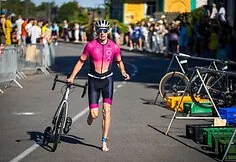
One of the most vivid memories of the studies is related to the first practice at school. At that time, Arnas was intensively preparing for Ironman competitions and considered himself physically very strong. But after a few hours of working with children, he realized that the emotional and psychological load could be no less than in sports training.
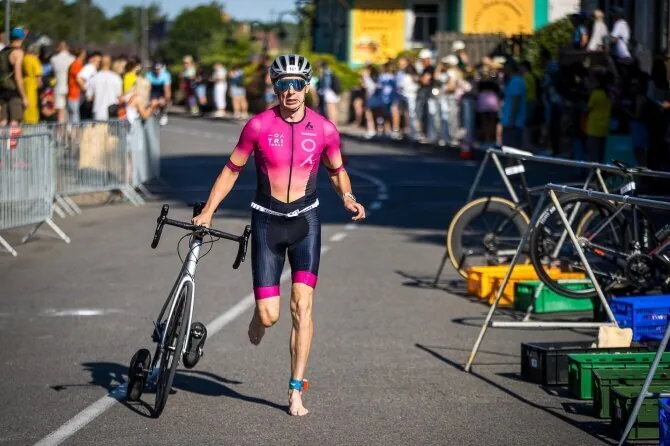
“I went to school thinking I was ready for the biggest challenges, but after a few hours with the children I felt completely exhausted. And still, the next day I wanted to go back there,” he recalls.
Being older than most classmates, he tried to gain practical experience as quickly as possible – volunteered, participated in conferences, looked for his professional direction. During internships, he also received encouragement from mentors to start working independently as soon as possible.
Read more Four people needed medical help at the Tallinn SPA center due to carbon monoxide poisoning
The most important thing is not the methodology, but the connection
Today Arnas works as a special educator at a private humanistic school in Vilnius, where his son also studies, and after classes he consults children in his private speech therapy office.
The beginning was not easy: like many young specialists, he had questions about whether he would find clients, whether he had enough knowledge, whether he would succeed. He was most afraid of the first meetings with children – not because of lack of knowledge, but because of whether he would be able to establish a connection.
According to Arnas, it is the relationship that determines all further work: “If a child feels safe in a relationship with you, everything else becomes solvable. You can have the best methodologies and tools, but if you don’t notice the child’s needs and don’t create a safe relationship, there will be no real work or desired results.”
Therefore, he tries to avoid prejudices. “Every child comes with their own story. For me, it is important first to get to know them, not their diagnosis,” the interviewee says.
Every child comes with their own story. For me, it is important first to get to know them, not their diagnosis.
Today his office operates at full capacity, and he increasingly has to tell new clients that there are no available spots.
Volunteering changed the attitude towards people
An important part of Arnas’s professional path was volunteering at the Lithuanian Autism Association “Children of the Rain.” The first camp where he worked with autistic children became one of the strongest experiences of his life.
“I saw very strong families. I saw parents who do every day what many do not even notice. And I saw children who reveal themselves completely differently in the right environment than often imagined,” he emphasizes.

Working with children also changed his attitude towards other people’s success: “Before, I didn’t really care about other people’s success. Now, when a child succeeds, when he takes a small step forward, I sincerely rejoice. Probably, it was working with children that taught me what I didn’t have before – to sincerely rejoice in another person’s success.”
A dream was born in Italy
During his studies, Arnas participated in an intensive international program in Italy together with students from Lithuania, Latvia, Greece, and Italy. However, the greatest impression was not the lectures, but the inclusion center visited in Turin.
“In Turin, we visited a day center that has been operating for more than three decades, where inclusion is not just declared – it is really visible every day. The center has a swimming pool, a café, play areas open to all children. Everyone spends time together there, collectively. Funds received from the activities are used to subsidize services for children facing difficulties. It was one of those places that helps understand that inclusion can be very natural. It doesn’t start with documents or projects – it starts with being together,” shares A. Šimonis, adding that such experience inspired him to dream that similar models could appear in Lithuania in the future.
Sports became a school of character
How did intensive sports appear in Arnas’s life alongside these professional changes? It turns out the biggest influence was the pandemic. During quarantine, when the event sector stopped, he started to exercise more, gave up bad habits, and discovered endurance sports.
Two years ago, A. Šimonis completed the Ironman distance, and this year he became the Lithuanian off-road running champion. His nearest goal is a 100-mile (about 160 kilometers) mountain ultramarathon in Spain.
“The greatest joy is not so much the finish itself, but the preparation process – when you see that you can do more than yesterday, when you get stronger, when things that seemed impossible before no longer seem utopian,” he says. It is precisely the process, not the finish medal, that taught him not to give up in professional life.
A world where there are no strange children
Asked about his life credo, Arnas laughs: “It used to be very simple – to have fun.”
However, speaking about life motivation and inspiration, today the answer would be different. Last summer, at a camp where he volunteered and worked with autistic children, Arnas heard a rule that still seems most important to him.
“It was said that in this camp there are no strange children. I think this idea best explains both my professional choice and why I work this job today. I am for a world where there are no strange children.”
Read more The President of Hungary has signed a constitutional amendment allowing his removal from office