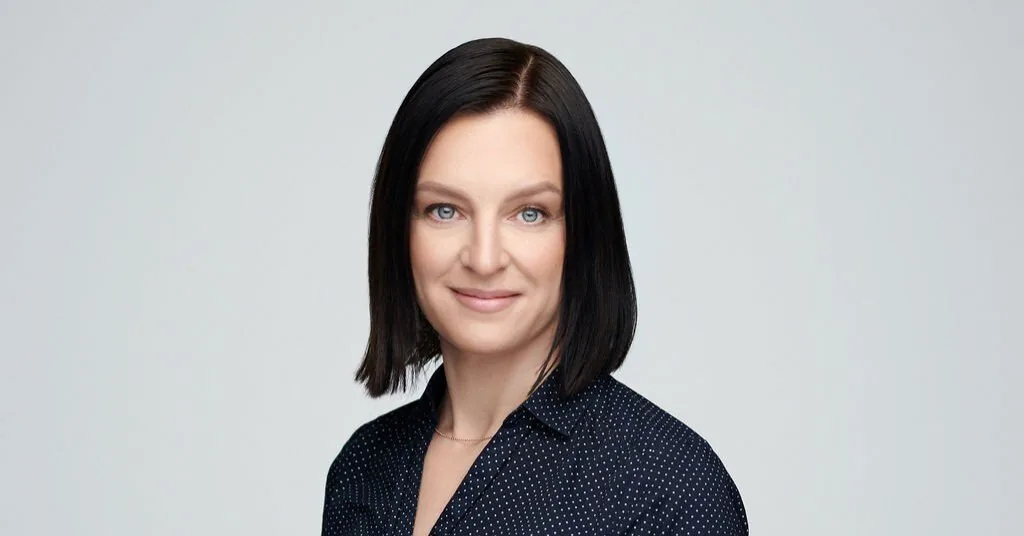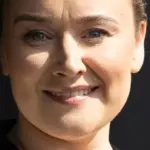




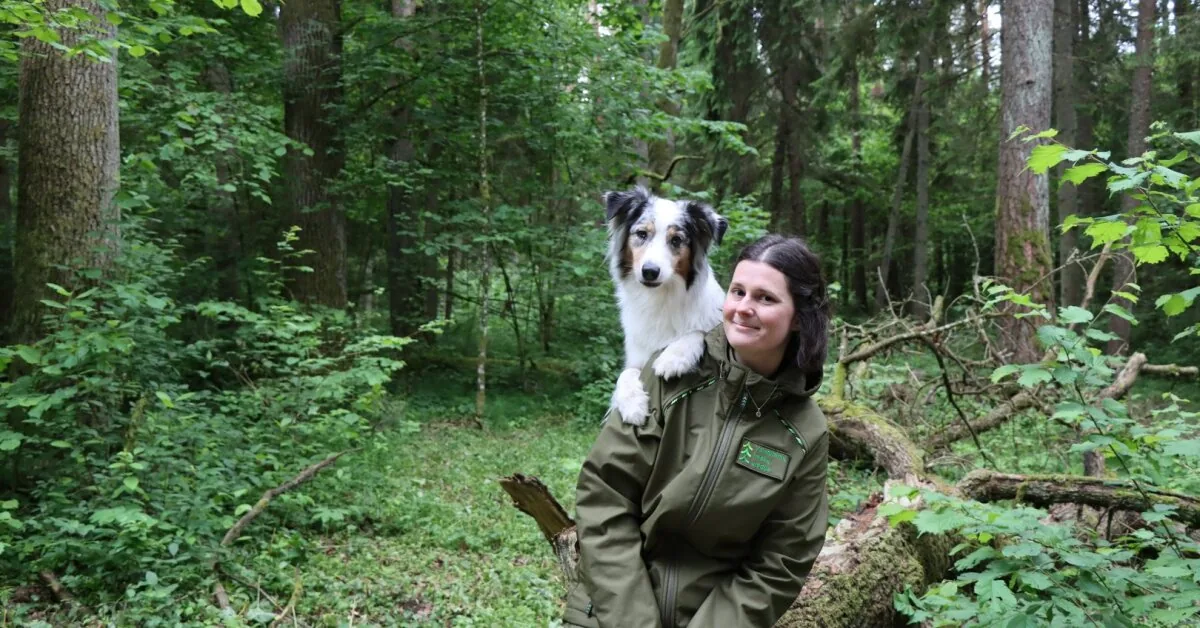
Today Agnė says she has finally found a profession where she has to learn, observe, and seek answers every day. And after work, she faces another challenge – the sport of “Agility,” in which she and her Australian Shepherd Mela strive for the highest results, according to a press release.
Not a forest child, but chose the forest
From the age of two, Agnė grew up in an apartment near a park. Although nature was close by, in her childhood she was more drawn to animals than trees.
“When I went to the countryside, I recognized all the cats, kissed the dogs. I always thought I wanted to be a veterinarian,” she recalls.
The idea of forestry came unexpectedly when Agnė learned that her grandfather, who died early, worked in forestry. She began asking relatives what his job was and what foresters actually do.
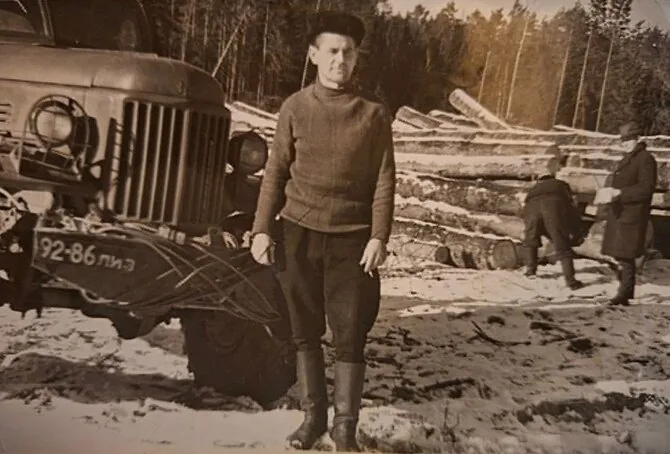
The interest soon turned into a concrete choice. It turned out that forestry studies combine areas close to Agnė – biology, chemistry, nature knowledge, and the opportunity to work not only in an office.
“I was not raised in the forest and did not have a clear family plan to become a forester. But after I started to get interested, I realized that this profession has many things that are truly important to me,” Agnė says.
She studied forestry at Vytautas Magnus University Agriculture Academy and completed her master’s studies at the University of Copenhagen. In Denmark, Agnė contributed to a long-term scientific study analyzing carbon sequestration in forests.
The study had been ongoing for about seventy years at that time, so Agnė’s study period was only a small part of a long process. According to her, this experience helped her understand even more clearly that forest processes take decades and far exceed one person’s professional career.
“It’s nice to contribute to work whose scale far exceeds one person’s studies or professional path. In the forest, processes happen differently – sometimes you have to wait decades for the results,” she says.
Goes to work every day where she wants to stay
After finishing her studies and returning to Lithuania, Agnė did not immediately start working as a forester. For a while, she worked in a bank, later as an environmental specialist in a private company. However, the thought of working in her trained specialty never disappeared.
In 2025, Agnė joined the Žėroniai Forestry team at the VMU Trakai regional branch.
“I came thinking: give me, show me how to work in forestry. I wanted to see as much as possible, learn, and finally try what I prepared for while studying,” she says.
When she started working, the support of colleagues became especially important. In the Žėroniai Forestry, according to Agnė, she found an environment where she could ask questions, learn from more experienced specialists, and take initiative herself.
“Now I finally feel in my place. There is no inner desire to keep looking for something else. Only the desire to learn remains,” Agnė says.
The most important thing in a forester’s work is to observe
A forester’s work involves much more than being in nature. You need to plan work, monitor the condition of stands, assess changes, fill out documents, and make decisions whose effects may only be visible after many years. Therefore, this profession requires not only specialized knowledge but also responsibility, meticulousness, and the ability to see the bigger picture.
Read more Audra showed no mercy to Lithuania’s neighbor: it uprooted trees and tore off roofs
Agnė smiles that she really has to walk a lot in the forest, but every outing has a specific goal and requires attentiveness. Although some tasks repeat, they are performed in different places, under different weather conditions, and in different stands.
“One pine forest is not like another, although there are mostly pine forests in our forestry. One day you push through nettles, another you walk through a pine forest that resembles Vingis Park. Sometimes it feels like you went not to work but for a walk, but at that time you have to constantly observe the environment and evaluate what you see,” the forester says.
The rhythm of work is determined by the seasons. At one time, more attention is paid to planning, at another – to work in the forest, monitoring stands, or assessing a specific situation. It is precisely the combination of clarity and change that Agnė likes the most.
“Monotony is not for me. I like order and want to know what I am aiming for, but at the same time, it is important that there is room for new discoveries at work,” she says.
When she sees an unfamiliar plant, Agnė photographs it, looks for information, and consults with colleagues if necessary.
“How can you not be curious in nature?” asks the forester.
Therefore, it is important for a forester not only to know but also to be able to observe, ask questions, and admit that you cannot know everything immediately. The forest is a complex system, so one answer often opens up even more questions.
To the forest – together with Mela
Sometimes the forester is accompanied to the forest by her Australian Shepherd Mela. She is not only Agnė’s pet but also her “Agility” partner. The interest in this activity began when Agnė saw online how a Border Collie completes a dog agility course.
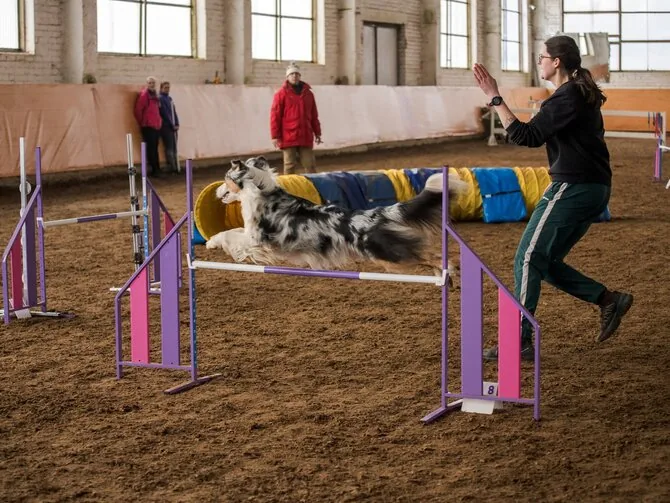
“I thought: dogs can do that? And I want to too!” she recalls.
First came the desire to try the sport, and only later – Mela. Agnė was looking for a smart, energetic, and active dog suitable for the activity. Choosing an Australian Shepherd, she began to build a connection, without which it would be impossible to perform successfully on the course.
Before the start, the handler has only a few minutes to memorize the course set by the judge, and then must run to precisely show the dog the direction, the sequence of obstacles, and the necessary turns.
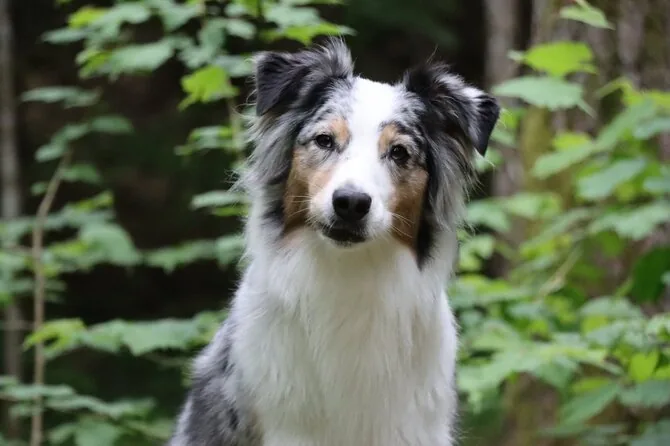
“Many think it’s just a dog’s sport and the dog does everything alone. In fact, it’s a team effort. The person runs, thinks, makes decisions, and works just as much,” explains Agnė.
Agnė and Mela have already reached the highest – A3 – “Agility” class, have stood on the winners’ podium in Lithuania and abroad, and also participated in the selection for the world championship.
Behind the short performances on the course lies a lot of work. Mela regularly performs physical fitness exercises, but one of the most useful trainings takes place without special equipment – in the forest. Here the dog has to step over branches, climb over stumps, move on uneven surfaces, and maintain balance.
Agnė says that work in the forest and sport with Mela have a lot in common. Both activities require attentiveness, patience, quick reaction, and the ability to trust your knowledge. It is important not only to see what is in front of you but also to anticipate what might happen next.
“My brain is constantly tickled – something is always happening and there is always something to figure out. Probably that’s why I feel in my place in forestry,” Agnė says.
Read more Three unusual signs in your body: indicate dangerously high cholesterol levels