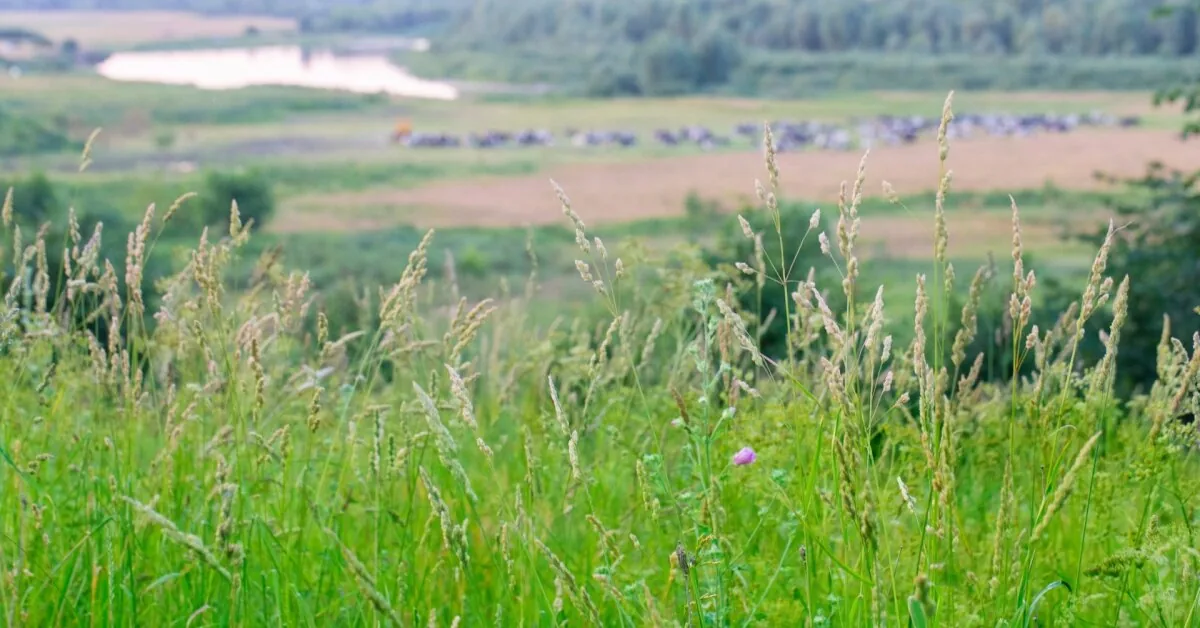
Some abandoned land plots are overgrown with naturally grown trees or shrubs, and in some cases, the data needs to be clarified because the actual situation on site has already changed.
Read more «Apple» removed the Russian government-backed messaging app from its store
According to 2022 data, 34,387 ha of abandoned agricultural land was identified in the country, in 2023 – 33,954 ha, in 2024 – 31,276 ha, and in 2025 – 29,577 ha.
Important for landowners: data may affect the tax
The areas of abandoned agricultural land are determined by the state enterprise Agricultural Data Center. This data is used to calculate the land tax.
According to the Land Tax Law, an increased rate may be applied to those owners whose agricultural land plots, located in agricultural land areas, are overgrown with naturally grown woody vegetation – trees or shrubs occupying more than 10 ares.
“Sometimes the landowner has already cleaned up the plot, but in the data it may still be marked as abandoned. Since this information is used to calculate the land tax, we invite owners to check the data and report any inaccuracies to the Agricultural Data Center,” says Gintautas Vasiliauskas, Director of the Land Management and Geodesy Department of the ADC.
The most abandoned land is in the eastern part of Lithuania
The largest areas of abandoned agricultural land are recorded in the eastern part of Lithuania.
According to the latest data, the largest abandoned land areas were identified in Vilnius district – 2,618 ha, Molėtai district – 2,275 ha, Zarasai district – 1,507 ha, Trakai district – 1,467 ha, and Utena district – 1,404 ha.
The smallest areas of abandoned agricultural land, excluding city municipalities, were identified in the municipalities of Visaginas, Pagėgiai, Joniškis, Marijampolė, and Skuodas districts. In these municipalities, abandoned agricultural land does not exceed 100 ha.
How is abandoned land determined?
Abandoned land areas include agricultural land plots overgrown with naturally grown woody plants – trees or shrubs, excluding plantations.
Throughout the territory of Lithuania, abandoned agricultural land areas are determined by remote mapping methods – by evaluating orthophotographs or satellite images and other state data sets.
Read more Andrius Kubilius assessed the quarrels in the Conservative party and the turning wheels to the right
The dataset of abandoned lands can be refined upon receiving a report from a municipal administration employee, land plot owner, or another person about inaccuracies – for example, changed area, boundaries, or the actual situation on the plot.
What to do if the plot is marked as abandoned?
First, landowners are recommended to check where on the plot the abandoned land is marked. If it is marked where there are actually no agricultural lands – for example, in plantations, swamps, shrublands, damaged or other unused land – this should be reported to the Agricultural Data Center. In such cases, the data can be corrected, and inaccurately marked areas removed from the abandoned land dataset.
If the land is indeed overgrown with naturally grown trees or shrubs, it can be cleaned by removing the woody vegetation. Before starting work, it is important to find out if there are protected trees on the plot. To cut protected trees, permission from municipal authorities is required.
Another possible solution is to use abandoned agricultural lands overgrown with trees and shrubs for afforestation. In this case, the landowner applies to the National Land Service for permission to afforest non-forest land, and upon receiving permission, submits the afforestation and growth project for approval to the State Forest Service.
The landowner can also contact internal forest management project developers for an inventory of naturally grown trees. If the forest is registered in the State Forest Cadastre of the Republic of Lithuania, no land tax is paid for forest land.
Why is July 1 important?
The dataset of abandoned lands for the current calendar year, used to calculate the land tax for the current year, is refined based on reports of inaccuracies received by July 1.
Reports received from July 1 to December 1 are also used to refine the abandoned land dataset. If due to inaccuracies the owner unjustifiably pays an increased tax for abandoned land, this amount will be refunded to them at the beginning of 2027.
Where to turn if inaccuracies are noticed?
After carrying out plot maintenance work or noticing that the abandoned land data does not correspond to the actual situation, this should be reported to the Agricultural Data Center.
Read more Pam Bondi is no longer – she will be replaced by Trump’s personal lawyer