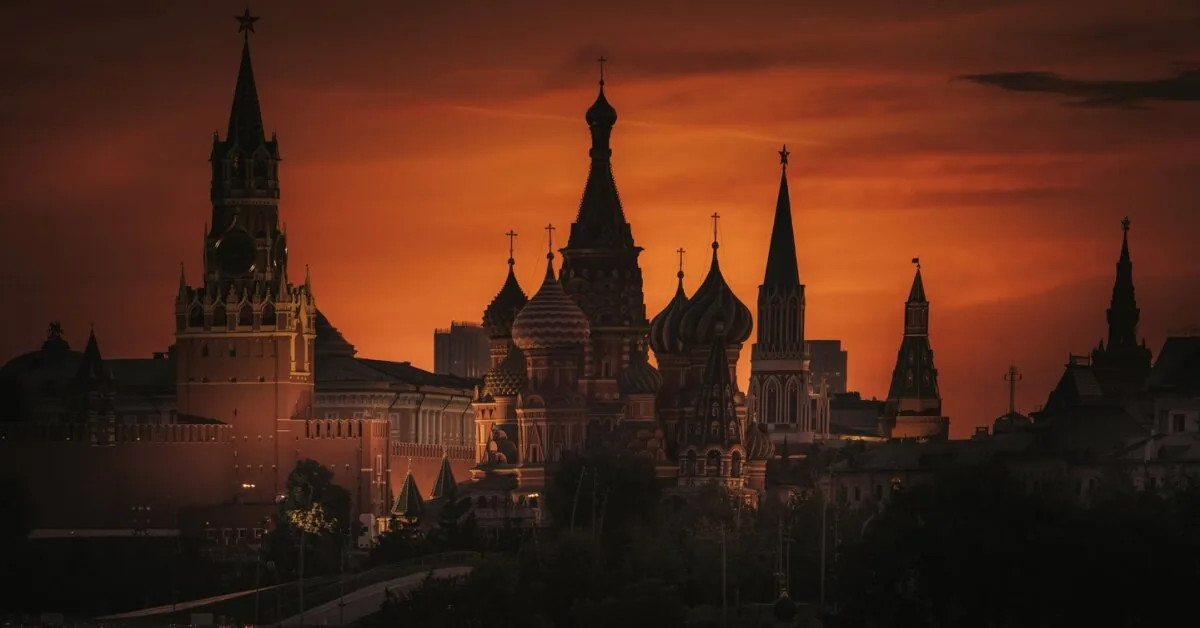
The court, in its decision, satisfied the claim made by a pro-Kremlin nationalist party and took away from voters who do not support the war in Ukraine that has been ongoing for five and a half years the last chance to see at least one candidate opposing the war on the ballot.
Read more Arūnas Valinskas proposes a drastic solution for politicians regarding the scandal in the Church
If the Supreme Court’s decision remains in force after the appeal is considered, these elections will become the first since 1993 in which “Yabloko” will not participate.
As the news portal “Laisvės radijas” writes, opposition politicians and political scientists link the court’s decision to struggles among various groups within the ruling elite and their fear that a legal election campaign would allow opponents of the war to assess the extent of mutual support.
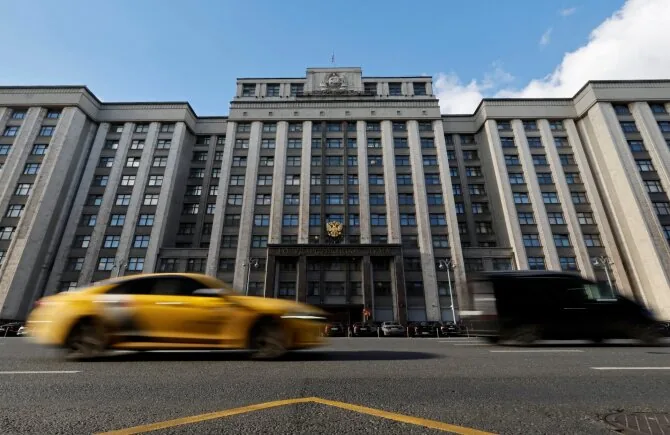
Poll data indeed showed that the potential electorate of the party is larger than its usual rating. According to the Russian Public Opinion Research Center (VCIOM), on June 26, 18% of respondents did not oppose the possibility of voting for “Yabloko” (referring specifically to the possibility of such a choice, not the intention to vote for the party).
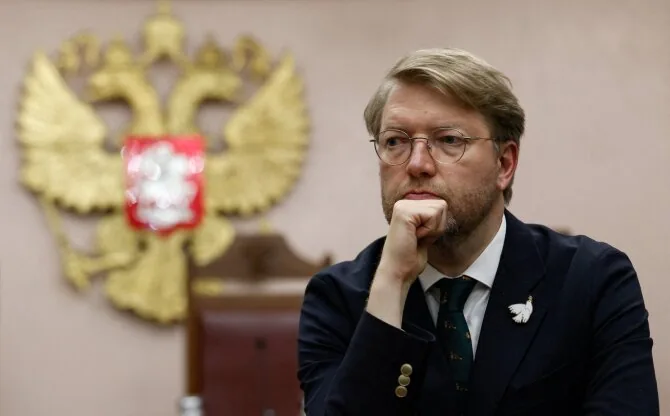
“The essence of our disagreement is that we are for peace, and they are for bloodshed. But they understand that people want to vote for peace. And they are afraid of that. Therefore, they want to remove us from the elections,” explained the chairman of the “Yabloko” party, Nikolai Rybakov, at the Supreme Court regarding the desire to remove the party from the ballot.
“Shame!”
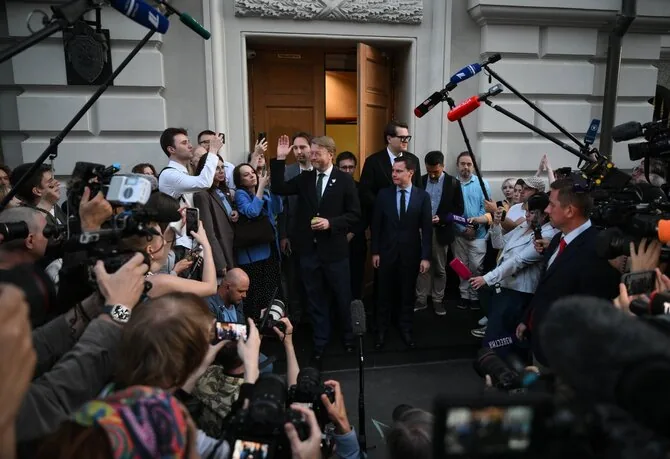
On the day of the court session deciding the fate of “Yabloko,” people gathered near the Supreme Court building from early morning, among whom were several hundred party supporters, mostly young people.
Information technology analyst Sergei Serov (name changed for security reasons) told “Laisvės radijas” journalists that he spent several hours near the court.
“People came and went, so it’s hard to say exactly how many there were. But I was surprised that there were almost only young people. The impression was that at least 90% of those gathered were under 25 years old. There were many very young people – 18, 19, 20 years old – they were ordinary city dwellers, mostly probably Muscovites,” the man said.
Peace symbols, apples, and anti-war slogans were drawn in chalk on the Supreme Court sidewalk. One of the inscriptions, according to Sergei, was in Ukrainian: “Ne mamy strachu, mamy liubov” (lit. “We do not know fear, we have love”). Another phrase he remembered from the asphalt was “Better stagnation than movement” – a reference to a well-known saying of Kremlin master Vladimir Putin.
Several people came to the court building with Russian tricolor flags.
“At first, it even surprised me. But then I thought: this is their country, and they consider themselves its patriots. A friend lifted one boy above the crowd. He held the Russian flag and had an apple in the other hand. They were handing out apples there, so someone was constantly chewing them around,” Sergei recounted.
According to him, the police initially stood on the other side of the street and behaved calmly. Among the gathered, as usual, were plainclothes officers who occasionally approached law enforcement officers. When people started singing, the police asked them not to make noise and not to interfere with the court’s work. There was no conflict.
The decision was awaited for more than an hour. When it became clear that the court had removed the party from the election list, people began shouting “Shame!”, he recalled.
A senior police officer demanded that the chanting stop and gave the crowd two minutes to disperse, threatening that otherwise it would be done by force. Party representatives asked everyone to disperse in different directions so that law enforcement officers would not interpret the events as “uncoordinated marches.”
“Party activists tried to avoid any escalation. But they expressed their anti-war position very clearly. I think that is the most important thing they did. And the people standing around did not look like party officials at all. It was just young people who came voluntarily,” Sergei said.
What the party is accused of
The “Rodina” party, which filed the claim to remove “Yabloko” from the elections, is led by State Duma deputy Alexei Zhuravlyov. The plaintiffs claimed that there are signs of “extremism” in “Yabloko’s” program and publications.
They pointed out at least several of them: calls to violate Russia’s territorial integrity, material intended to “incite social, racial, national, or religious discord,” as well as “humiliation of national dignity.”
To substantiate the accusations of “extremism,” the plaintiffs relied, among other things, on old “Yabloko” website publications mentioning Alexei Navalny and organizations associated with him.
Moreover, “Rodina” tried to find signs of “extremism” in “Yabloko’s” election program. It consists of only 43 words: the party advocates for a ceasefire agreement, diplomacy, prevention of nuclear war, freedom from fear and political repression, and a “prosperous democratic Russia.”
“The plaintiff tries to blame us just because our program differs from other parties’ programs, that we criticize their political course and openly declare the need for peaceful changes. The plaintiff went as far as the absurd claim that the slogan ‘For peace and change’ humiliates the dignity of those who vote for other parties,” N. Rybakov stated.
“Yabloko” also faced fabricated accusations of alleged copyright violations. They were reproached for allegedly illegal use of Russian song lyrics in the film “War and Peace” frames, photos, and “ChatGPT”-created illustrations.
Party supporters posted posts and videos on social networks supporting the “Yabloko” party. “Rodina” estimated the possible commercial value of this campaign at more than 88 million rubles and stated that the agitation was conducted bypassing the election fund. The defenders argued that the party did not order or pay for these publications, and citizens have the right to campaign for candidates for free.
Lawyer and politician Ivan Zhdanov noted on the “Laisvės radijas” broadcast that copyright infringement claims are regularly used to remove candidates from elections, although he does not recall another case of this scale.
“Registration is often canceled due to copyright violations. It’s a very simple accusation because if you used the words of some song, music, or some picture, it is automatically considered a copyright violation, and candidates are removed. Of course, we have never seen anything like this in State Duma elections, but it is a fairly common accusation during the election process,” the expert said.
The official court statement says that the “Yabloko” party violated intellectual property laws by using foreign texts, images, and videos without the permission of the rights holders. The court also indicated that money was received from individuals who themselves received funds from foreign sources, and that materials supporting the party were distributed through foreign platforms.
Read more One after another: revealed the true Russian losses in Ukraine
Meanwhile, the Supreme Court did not consider the accusations of “extremism” in this case, stating that they require a separate process.
Why it was allowed initially
Lawyer, Doctor of Law Elena Lukyanova called the “Rodina” claim absurd in an interview with “Sever.Realijami.” One of the lawyers representing the “Yabloko” party at the Supreme Court, St. Petersburg resident Vitaly Isakov, was her student at the Higher School of Economics.
“This is obvious abuse of law when a completely absurd claim is filed,” she said. “Exactly the same accusations can be made against practically all parties.”
Why the party was initially allowed to participate in the elections and later decided to be removed, J. Lukyanova did not dare to speculate. According to one of her versions, initially the authorities might have expected the party to get minimal results and thus show that opponents of the war lack mass support, but later it turned out differently. Another possible reason is conflict between various groups within the government itself.
“We do not have a magnifying glass and enough information about what is happening inside. Until the position of the Central Election Commission and the prosecutor’s office, the result was not obvious. When they supported the claim, it became clear how it would end. During those ten days when ‘Yabloko’ was registered, the party’s ratings began to grow. This could have frightened the authorities even amid internal struggle. It’s hard to say why they allowed it at first but eventually decided to cancel the registration,” the lawyer said.
She views the Supreme Court’s decision as part of the consistent destruction of political institutions in Russia.
“Everything corresponds to signs of dictatorship: illegal decision-making, liquidation of institutions. The system has been slowly but persistently moving toward one result for 25 years,” she added.
“Now something will happen”
Former “Yabloko” member, politician Maxim Kats also calls this decision political.
“The claim was very poor – even ordinary claims for candidate removal from local elections are better. But this is a political decision, so the quality of the claim is not so important here. ‘Yabloko’ already refuted the main accusations in the middle of the session, but it still ended as it did,” he said.
The politician guessed that security forces, outraged that “liberals” were allowed to participate in the elections, might have intervened here.
“There is chaos there. What to do now for those who oppose the war – we will see. I think people will figure out what to do themselves; they don’t need instructions now. ‘Yabloko’s’ ratings suddenly jumped in a week and scared everyone. Now something else will happen. We’ll see,” said M. Kats.
Another politician, former State Duma deputy Dmitry Gudkov expressed the opinion that the danger to the authorities was not so much the possible “Yabloko” result in the elections but the very possibility of conducting a legal anti-war campaign for several weeks.
“Even if the ‘Yabloko’ party had participated in the elections, the result would have been clear in advance. There are no elections in Russia; it’s a deception, you can’t win in a casino, you always lose. But if we had six weeks of legal anti-war campaigning in Russia, it could have been popularized.
There would be hundreds of thousands of volunteer agitators across the country handing out leaflets, etc. It would be a powerful campaign that could be even more influential than Boris Nadezhdin’s at the time. Perhaps later this campaign would have influenced public opinion, and there would be fewer radical war supporters in the country,” D. Gudkov pondered.

In his opinion, the removal of “Yabloko” means the victory of supporters of further tightening of the political regime: “Everything must be paved over. There must be no breath of freedom in the country.”
What remains of the campaign
In turn, “Yabloko” stated that it will appeal the Supreme Court’s decision in the appellate panel. While the appeal is being considered, the party urges supporters not to consider the campaign over.
The August 10 decision concerns the federal list and does not automatically cancel the registration of “Yabloko” candidates in single-member districts. The party has nominated 135 candidates in single-member districts across the country. Decisions on their registration are made by district commissions: some candidates are already registered and formally continue the campaign.
Regional parliamentary elections are held separately. According to the party’s data, “Yabloko” lists are registered in the Novgorod, Kaliningrad, Sverdlovsk, and Tomsk regions.
Among other things, the party entered these elections already significantly weakened by repression. Even before registering on the federal list, party leaders were consistently removed from the election campaign. According to “Yabloko,” more than 40 party members lost the right to participate in elections for various reasons, including “foreign agent” status and administrative penalties. Thirteen party members were prosecuted for “displaying extremist symbols” – such a penalty also deprives them of the opportunity to run.
“Yabloko” indicated that another 12 party members became defendants in criminal cases, and 8 of them ended up in prison.
It was the only registered party in Russia that participated in federal elections with a demand to stop the fire. After the court decision, N. Rybakov wrote that the fight will continue: “They are wrong if they think that with one stroke of a pen they can erase millions of people who want peace, freedom, and a normal future for their country. Politics is not a line on the ballot. Politics is us with you. It is our values, our persistence, and our right to speak the truth.”
“No one will take away our voice because this voice is alive. Nothing ends. Everything is just beginning,” the party chairman N. Rybakov inspired hope for Russians.
Read more The «Žalgiris» coaching staff was joined by a 26-year-old Dane