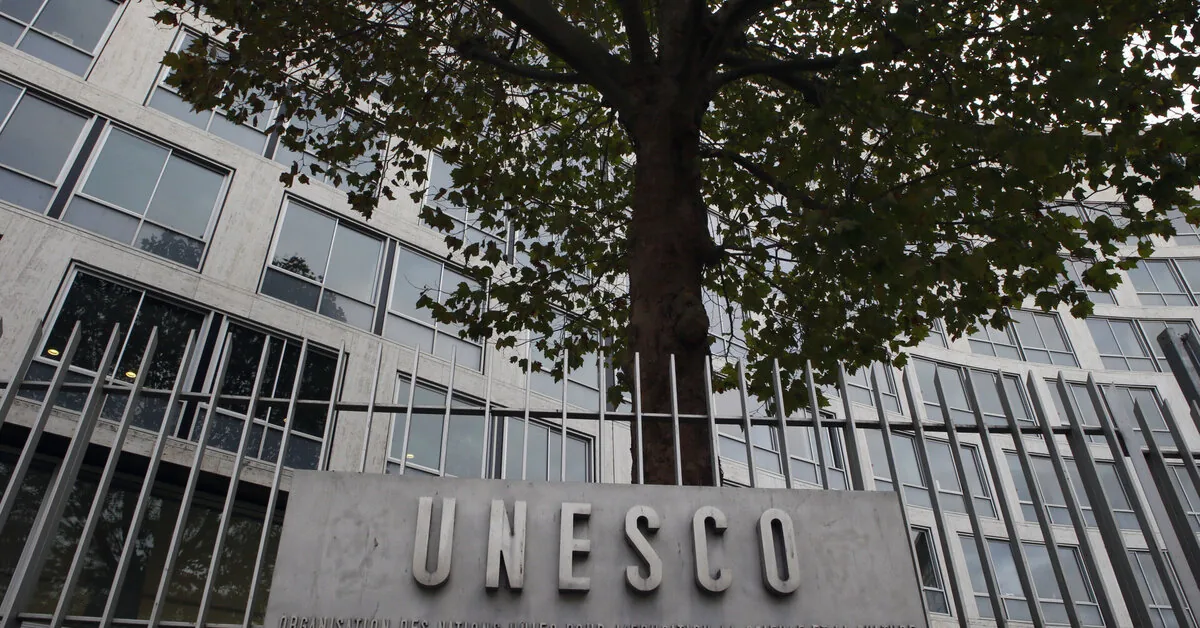
The 196 member states of the United Nations Educational, Scientific and Cultural Organization (UNESCO) will vote next Friday on the inclusion of new sites in the World Heritage and World Heritage in Danger lists when they meet in Busan, South Korea.
Read more You can no longer enter Krakow so easily: you will not only have to register but also pay
“We may not have the means to deploy peacekeepers (…), but we can send a message to the whole world,” UNESCO World Heritage Centre Director Lazare Eloundou Assomo told the AFP news agency.
“These sites are important, so everything must be done to prevent their destruction,” he said.
Preserving heritage “allows communities traumatized and affected by conflicts to begin to return and rebuild,” he added.
About 1,200 sites worldwide are included in the UNESCO World Heritage list.
Inclusion in the heritage list often promotes profitable tourism and can help secure funding for sites threatened by pollution, war, and neglect.
According to L. E. Assomo, listing a site as endangered is not a reprimand but a tool to help states “find funding, partners, and attention” to better preserve it.
Urgent inclusion in the “in danger” list
Three sites, which have not yet been included in the list, are expected to be considered urgently and directly added to the endangered sites list.
Among them may be the archaeological site of Sebastia, identified with biblical Samaria, located in the Israeli-occupied Palestinian territory in the West Bank.
The site itself is in the part of the West Bank controlled by Israel.
However, residents of the neighboring village, jointly controlled by Israel and Palestinians, have long relied on tourists visiting the ruins and fear that Israel may completely cut off access.
Israel withdrew from UNESCO in 2017 but remains a member of the World Heritage Committee, which makes the final decision on which sites are listed on each list.
Priority will also be given to five castles in southern Lebanon – a territory shelled by Israel. One of them – Beaufort Castle – was occupied by Israeli soldiers in May.
UNESCO members will also vote on the direct inclusion of the Boma-Badingilo grasslands and forest savannas in South Sudan as a site threatened by both war and climate change.
Read more ASVEL aiming to take advantage of Panathinaikos is monitoring Francisco’s situation
Every year, a million animals, including antelopes and gazelles, migrate through the vast wilderness between the White Nile and the Ethiopian border, leaving footprints visible from the sky in the grasslands.
Besides these priority cases, some sites already on the heritage list may now be additionally designated as endangered.
Among them are the Roman bath ruins, a second-century triumphal arch, and a hippodrome in the southern Lebanese city of Tyre, which has been heavily bombarded by Israel in recent months.
Another potential candidate is the ancient Greek settlement of Chersonesos on the Crimean Peninsula, which Russia annexed from Ukraine in 2014.
Ukraine claims this site is threatened by illegal excavations, large-scale construction projects, and artifact relocations following Russia’s invasion of Crimea.
“Ecological degradation”
Lake Baikal in Russia, the world’s deepest lake, may also be designated as endangered, as officials struggle to control damage caused by pollution, mass tourism, large-scale logging, and lower water levels due to a dam upstream in Mongolia.
The huge Siberian lake holds 20 percent of the world’s unfrozen fresh water reserves, according to Russia. The lake hosts a vast diversity of flora and fauna.
However, a 2023 report by the UN agency warned that if the “ongoing ecological degradation of Lake Baikal” is not urgently stopped, it will be classified as endangered.
“Some actions are being taken to address this issue, but the mission believes they are insufficient,” the agency stated.
Other sites are also candidates for simple inclusion in the list.
The Normandy beaches in France, where the Allies landed on June 6, 1944, during World War II, may finally receive UNESCO recognition.
Also potentially included are two theaters built in the Amazon forests in Brazil and the Tunisian village of Sidi Bou Saïd.
Read more Lebanese president departed for Washington to meet with Donald Trump