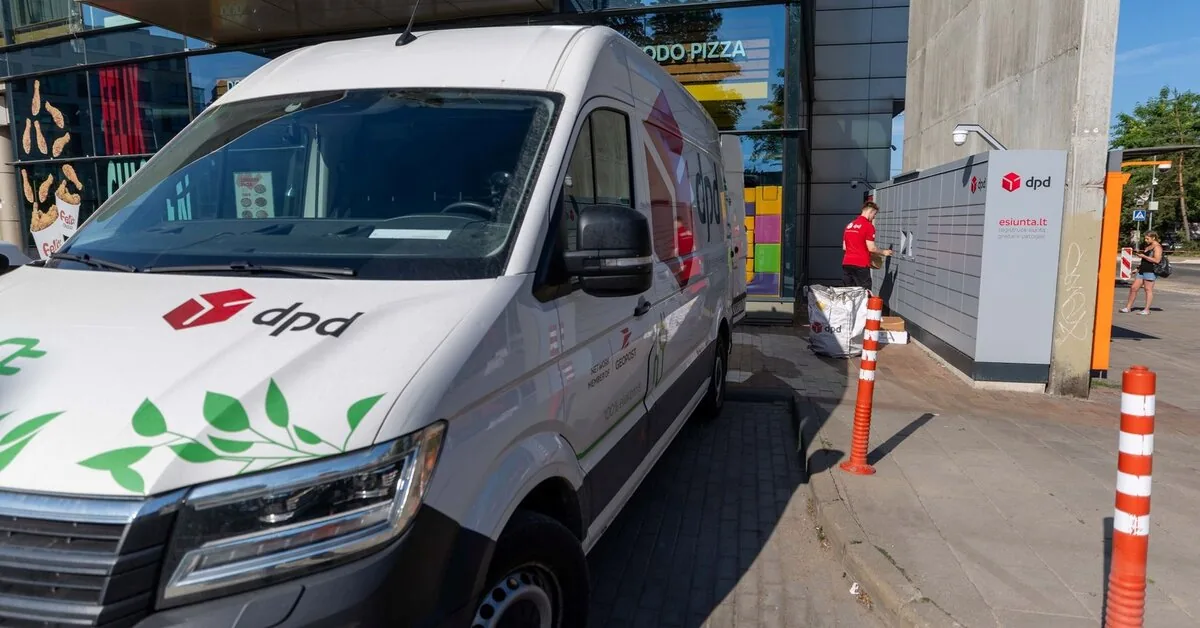
The majority of this year’s expansion is planned to be implemented during the first three quarters. At this stage, expansion to other cities is not planned, but the fleet will be increased in Vilnius, Kaunas, Klaipėda, Panevėžys, Marijampolė, Alytus, and Utena.
Read more A man who demonstrated weapons and threatened to kill a person has been charged
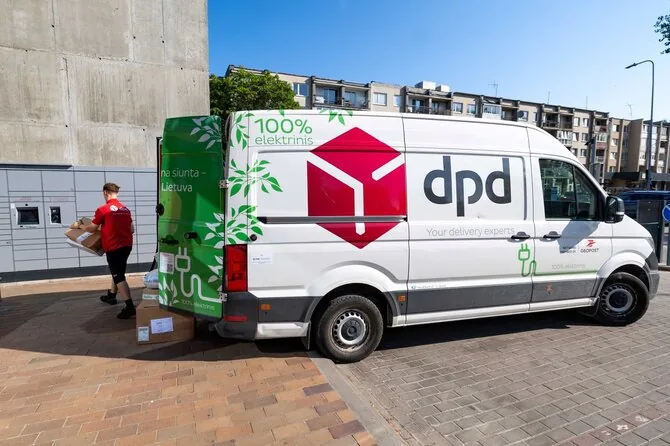
“The use of electric vehicles is one of the main directions of our strategy, helping to rapidly reduce CO₂ emissions and fulfill sustainability commitments. At the same time, it helps reduce air pollution in cities,” says Jurgita Čestauskaitė, Sustainability Manager at DPD Lithuania.
She adds that since 2021, DPD Lithuania has already delivered 8.3 million parcels with electric vehicles, helping to avoid 553 tons of CO₂ emissions. It is estimated that by the end of the year, with the fleet reaching 130 vehicles, about 1.5 million more parcels will be delivered by electric vehicles, avoiding approximately another 100 tons of CO₂ emissions.
Different models allow more flexible delivery planning
In 2021, the DPD Lithuania electric vehicle fleet consisted of Volkswagen e-Crafter models, but over the past few years, the fleet composition has become much more diverse. Currently, DPD uses e-Crafter, e-Ducato, e-Man, e-Master, e-Maxus, e-Toyota, and e-Transit models.
According to J. Čestauskaitė, using different models allows assessing which ones are best suited for daily routes in different cities and how weather conditions affect their operation.
Read more Expert warns: such a house may not be prepared for Lithuanian weather today
“Under extreme winter conditions, different models perform differently, so we consciously diversify the fleet – this way we can ensure smooth parcel delivery in any weather. Under milder weather conditions, we do not observe significant differences between models,” says J. Čestauskaitė.
She states that a wider selection of electric vehicle models also helps DPD allocate vehicles according to the specific needs of routes. As the share of electric vehicles in the entire fleet grows, this flexibility becomes increasingly important not only for organizing daily deliveries but also for planning further expansion.
The CO₂ footprint of a single parcel has decreased by more than a third
According to J. Čestauskaitė, expanding the electric vehicle fleet is one of the most important measures to reduce DPD’s environmental impact. By consistently electrifying the fleet and optimizing routes, the CO₂ footprint per parcel has decreased by more than 33% over the past few years.
“The results achieved are only part of a long-term plan. We aim for electric vehicles to make up 85% of our entire parcel delivery fleet by 2030, and 100% by 2035. This will require consistent investments, further route optimization, and the development of electric vehicle charging infrastructure,” notes J. Čestauskaitė.
Read more Volodymyr Zelensky proposes a deal to Donald Trump