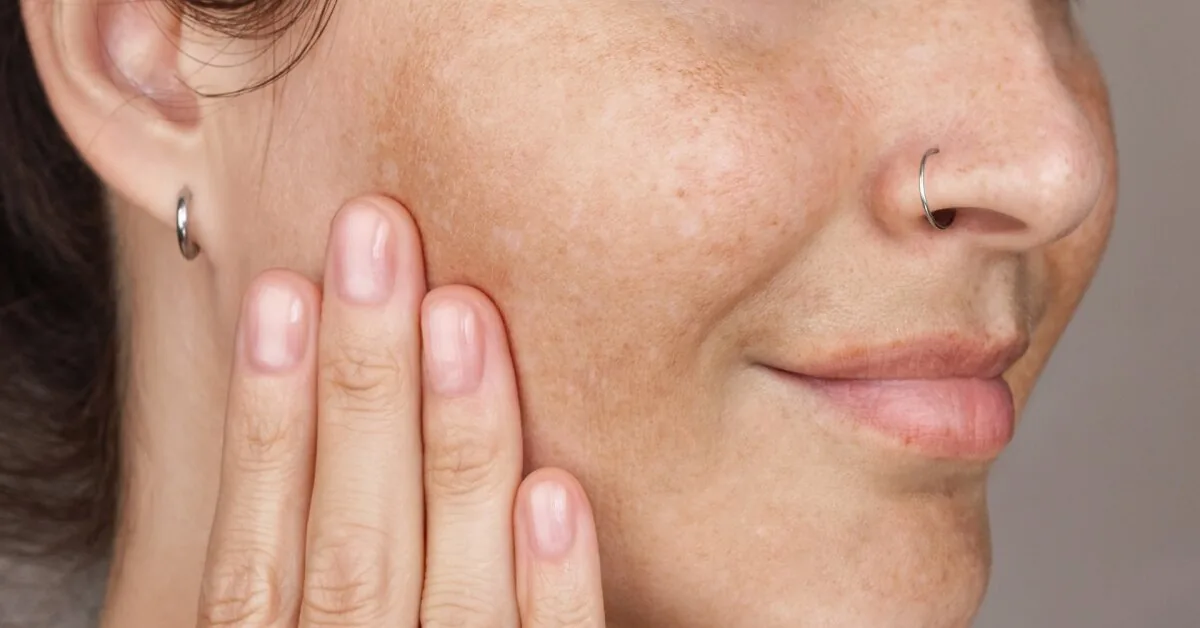
In a press release from Utena Diagnostic and Surgery Clinic “Meliva” (formerly “Kardiolitos Clinics”), dermatologist Tomas Petras Vileikis talks about which signs are worth paying attention to and when it is better not to delay a visit to a specialist.
Read more Will the ECB raise interest rates for the second time due to the Iran conflict?
“After summer, uneven skin tone, dryness, and wrinkles become more noticeable. Prolonged and repeated exposure to ultraviolet rays accelerates skin aging, and malignant skin lesions may appear in sun-damaged areas. Sun exposure is one of the most important risk factors for melanoma – the most aggressive skin cancer. There is still a common myth that melanoma always develops from an existing mole, but it often appears as a completely new skin lesion,” says the dermatologist.
ABCDE principle
The dermatologist points out that everyone can independently assess moles at home by following the ABCDE principle.
A – asymmetry. Dangerous moles are usually asymmetrical, while harmless ones are uniform and symmetrical in shape.
B – borders. Dangerous moles often have unclear or irregularly shaped borders.
C – color. Cancerous moles tend to have many different colors – from light brown to dark brown, black, pink, grayish, or bluish.
D – diameter. Moles with a diameter larger than 6 mm may raise suspicion. However, melanoma can also be very small, so size alone should not be relied upon.
E – evolution. Cancerous moles can change in size, shape, color, or structure over weeks or months.
“If a mole has at least one of these signs, it is worth evaluating it more carefully. However, in practice, one of the most important signals is that the mole begins to change or clearly stands out from others. If its shape, color, borders, or size change, or if a new, unusually looking lesion appears, it is advisable to consult a dermatologist,” says T. P. Vileikis.

It is also worth worrying if the lesion bleeds, oozes, ulcerates, flakes, grows rapidly, or changes color and shape sharply without a clear reason. However, malignant skin lesions can cause no symptoms for a long time, so it is better not to wait until the mole starts to hurt or itch. If there are any doubts about its appearance or changes, it is worth consulting a specialist.
Read more Good news for travelers in Vilnius: JUDU day ticket will also be valid for boats
Pigmented spot – not just an aesthetic problem
After summer, many people notice new pigmented spots on their skin. Spots caused by sun exposure are usually fairly uniform in color, have clear borders, and do not change for a long time. However, it is not always possible to reliably determine at home from appearance alone whether a lesion is benign.
“Just because a lesion resembles a common pigmented spot does not mean it is benign. More attention should be paid to a spot that grows, changes color, becomes uneven, or acquires irregular borders. Some melanomas, especially on the face, can resemble benign pigmented spots, so if in doubt, it is better for a specialist to evaluate the lesion,” explains T. P. Vileikis.
The dermatologist warns against removing skin lesions independently – do not burn, scrape off, tie with thread, or apply acids. Such actions can cause inflammation, skin burns, or scarring, as well as change the lesion’s appearance and complicate its evaluation. If the lesion is malignant, self-removal attempts can delay proper diagnosis, so it is first useful to consult a specialist to determine the nature of the lesion and only then decide on treatment or aesthetic procedures.
Not every mole is worth removing
For most people, it is enough to check their skin once a year preventively. More frequent checks may be relevant for those with fair skin, many or atypical moles, those who have been sunburned multiple times or spend a lot of time in the sun. Also for those who themselves or their family members have previously been diagnosed with skin cancer, and people with weakened immune systems. In such cases, the dermatologist may recommend checking skin lesions every six months, and for some – even more often.
During the examination, the dermatologist assesses the entire skin and the overall appearance of moles. A dermatoscope can reveal skin structures not visible to the naked eye, making it easier to distinguish benign lesions from suspicious ones. If any raise suspicion, a biopsy and histological tissue examination may be required for a final diagnosis.
“If a mole looks benign and does not change, it is usually enough to monitor it. However, if there is suspicion of melanoma or another malignant skin tumor, if the lesion changes, or if it cannot be reliably assessed, it may be decided to remove it and perform a histological examination. Sometimes lesions are removed due to constant trauma or aesthetic reasons. The decision depends on the lesion’s appearance, dermatoscopic image, its changes, and the person’s risk factors. The fact that a mole is large or looks unaesthetic to a person does not by itself mean it should be removed,” says the dermatologist.

Protecting skin from the sun is important even after summer
T. P. Vileikis emphasizes that UV radiation affects people all year round, including through clouds or car windows, so skin protection should not be forgotten even after summer ends.
“Sun protection is not only intended to prevent sunburns. It helps reduce the long-term effects of UV rays on the skin, photoaging, pigmentation changes, and the risk of skin cancer. For more effective protection, it is worth combining several measures – spending more time in the shade when outdoors, wearing skin-covering clothes and a hat, and using sunscreen. For everyday use, at least SPF 30 is suitable, and for children, people with fair skin, and those who have had skin cancer – SPF 50,” reminds dermatologist T. P. Vileikis.
Read more Russia will close the Goethe Institute cultural centers in Germany