In the program “On the Margins of Lifestyle,” scientist Edita Kondrotienė spoke with gynecologist Ramona Urbonienė from the Menopause Clinic and the Public Health Center Polyclinic about why a normal hemoglobin level does not necessarily mean that iron stores are sufficient, what happens when iron metabolism is disrupted, and why modern science is increasingly focusing not only on the amount of iron itself but also on the body’s ability to absorb, transport, and utilize it.

Identified initial symptoms
Iron performs many more functions in the human body than is sometimes thought. It is important for hemoglobin production and oxygen transport, is a component of myoglobin – a protein found in muscles – and is necessary for growth, neurological development, and many other processes occurring in the body.
According to gynecologist R. Urbonienė, it is not necessary to routinely send all people for detailed iron tests, but certain symptoms should prompt an evaluation of iron stores.
“If a woman complains of fatigue, shortness of breath, her heart starts beating faster after physical exertion, her pulse quickens, she appears pale, her hair falls out or breaks, nails become brittle, we perform a complete blood count, assess hemoglobin levels, and if necessary, other parameters,” the doctor explains.

Heavy menstruation – one of the main causes
There are several stages in a woman’s life when iron demand increases or more iron is lost. One of the most obvious is menstruation, so it is important for the gynecologist to determine the nature, duration, and heaviness of bleeding.
If menstruation becomes very heavy or prolonged, gynecological and ultrasound examinations are performed. Causes of heavy bleeding can vary – uterine fibroids, polyps, endometriosis, changes in the uterine lining, and other gynecological conditions.
In such cases, it is important not only to replenish lost iron stores but also to find out why the woman is constantly losing blood.
Women who engage in intensive sports may also have increased iron needs, and people whose diet lacks easily absorbable iron sources, such as those following vegetarian or vegan diets, may need closer evaluation of their iron stores.
Times when iron demand sharply increases
During pregnancy, iron demand increases because the woman’s body must supply not only herself but also the developing fetus and placenta.
According to R. Urbonienė, a significant number of women experience anemia during pregnancy, so monitoring iron stores during this period is especially important.
Severe and untreated anemia is not just a matter of feeling unwell. It is associated with a higher risk of pregnancy complications and can affect both the mother’s and newborn’s condition.
Increased iron demand continues during breastfeeding. A woman lacking iron may feel extreme fatigue and weakness – precisely at a time when physical and emotional strength is especially needed to care for the baby.
Therefore, according to the doctor, taking care of oneself during pregnancy and the postpartum period is not a secondary matter.
“Women are increasingly taking care of their health, conducting tests themselves or asking doctors to order them. It is necessary to think about oneself,” says R. Urbonienė.
Women are increasingly taking care of their health, conducting tests themselves or asking doctors to order them. It is necessary to think about oneself
“Burning” tongue and other unexpected symptoms
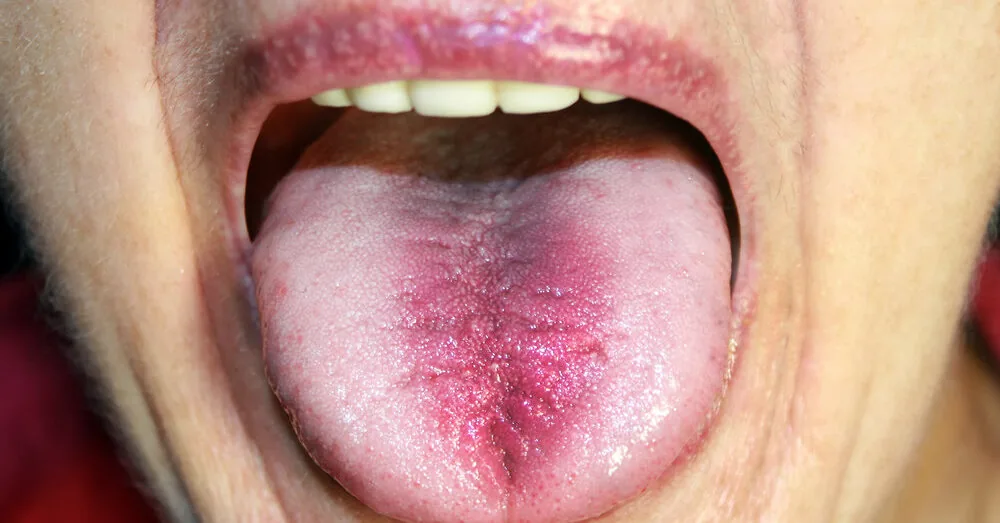
Iron deficiency does not always manifest only as fatigue. Sometimes there is talk of the so-called burning tongue sensation. However, the doctor warns against automatically associating this symptom solely with iron deficiency.
“If a patient says her tongue burns, we also consider neurological disorders, salivary gland pathology, hormonal changes. But this symptom can also be influenced by deficiencies of iron, zinc, or vitamin B12,” explains the doctor. This again reminds us why, when such symptoms appear, one should not self-medicate without necessary tests and without assessing overall health.
Ferritin can be not only too low
The program host, scientist Edita Kondrotienė, draws attention to another important aspect of iron metabolism: the problem is not always just a low ferritin level. Its indicator must be evaluated together with other tests and the person’s health condition. It is especially important to rule out chronic inflammatory processes and other diseases.
R. Urbonienė says that problems with iron absorption can be influenced by an unbalanced diet, deficiency of other vitamins and microelements, obesity, hypothyroidism, and chronic inflammation. That is why today there is more talk not only about the question “how much iron do we get?” but also about what happens to it afterward.

Just taking iron is not always enough
“Iron does not work alone in our body. There is a whole cycle of iron metabolism,” emphasizes E. Kondrotienė in the program. Iron must be obtained from food or supplements, but that is not enough. It must be properly absorbed in the intestine, transported in the blood, delivered to cells, used for body functions, and some stored for reserves and taken from them when needed.
Read more Just married Adrina and Donatas Tamašauskas have shared their first photo from the newlyweds’ car
Iron does not work alone in our body. There is a whole cycle of iron metabolism
Iron is necessary for oxygen transport, energy metabolism, and many other biological processes. If one part of this chain is disrupted, iron intake alone may not be sufficient.
A major problem is a disrupted iron metabolism cycle, where not only absorption but also transport and the body’s ability to use stored iron are impaired. If iron metabolism is disturbed, iron intake alone may not be enough to achieve the desired result. In such cases, it is important not only to replenish iron stores but also to evaluate the reasons why absorption, transport, or utilization of iron in the body may be impaired.
One important substance in this regard that helps regulate iron metabolism is lactoferrin.
Lactoferrin – a protein our body already knows
Lactoferrin is a natural protein of the innate immune system, composed of about 700 amino acids. It is found in various human and other mammal biological fluids – tears, saliva, and mucous secretions. Especially high amounts of lactoferrin are found in colostrum.
It is no coincidence that this protein is mostly found in places that first encounter the external environment and where the body needs rapid protection.
One of the most important properties of lactoferrin is its ability to strongly and reversibly bind iron ions. Its affinity for iron is very high, so lactoferrin participates in regulating iron availability.
This is also important during infections. Free, unbound iron can be available not only to human cells but also to microorganisms. By binding iron, lactoferrin can limit its availability to certain pathogens – part of its antimicrobial effect is associated with this property.
However, in the context of iron metabolism, scientists are particularly interested in another property of lactoferrin – its connections with the regulation of inflammatory processes.
Chronic inflammation can “lock” iron
Iron metabolism and inflammation are closely related. “Obesity, some women’s diseases – these are conditions that may be characterized by chronic inflammation. In such cases, iron metabolism is also disrupted,” explains R. Urbonienė.
When inflammatory processes are constantly occurring in the body, iron regulation changes: the body may limit its entry into the bloodstream and availability to cells. This can create a paradoxical situation – iron is present in the body, but it is not used efficiently enough.
This is where the role of lactoferrin becomes especially interesting to science. “Since I am a scientist myself, I find it very interesting to observe colleagues’ work and how scientific knowledge is applied in practice,” says E. Kondrotienė in the program.
Lithuanian scientists, analyzing problems of iron absorption and metabolism, have developed a liposomal iron formula with lactoferrin. In liposomal technology, the active substance is incorporated into a lipid structure. Such forms are created to achieve good bioavailability and better tolerance in the digestive tract. The combination of lactoferrin and liposomal iron is scientifically relevant when studying iron absorption and metabolism in the body.
Doctor’s message to women: the body speaks through symptoms
Although iron is vital, doctor R. Urbonienė emphasizes that one should not overemphasize a single microelement and forget the rest of the body.
The most important thing is a holistic approach to human health: balanced nutrition, sufficient amounts of necessary substances and their absorption, physical activity, preventive health checks, and timely recognition of signals sent by the body.
“No matter how important one substance is, I value a holistic approach – balanced nutrition, absorption of substances, timely preventive health checks, and consulting a doctor. And if problems arise, you need to come and take care of them. Take care of your health. The body cannot speak, so it reveals everything through symptoms,” summarizes gynecologist Ramona Urbonienė.
The host of the program “On the Margins of Lifestyle,” scientist Edita Kondrotienė, adds that the topic of iron perfectly illustrates how the modern approach to health is changing: it is important not only to identify what the body lacks but also to understand why it lacks it, how the substance is absorbed, and whether the body can use it.
Therefore, the liposomal iron formula with lactoferrin developed by Lithuanian scientists is interesting not only as a new form of iron. It reflects a broader direction – the aim not only to replenish iron stores but also to consider the entire iron metabolism chain: absorption, transport, utilization in cells, and maintenance of reserves.
And the most important message for women remains simple: constant fatigue is not a state you have to accept. Sometimes the body is simply trying to say that it lacks something.
Read more KUL opens Palliative Care Day Hospital