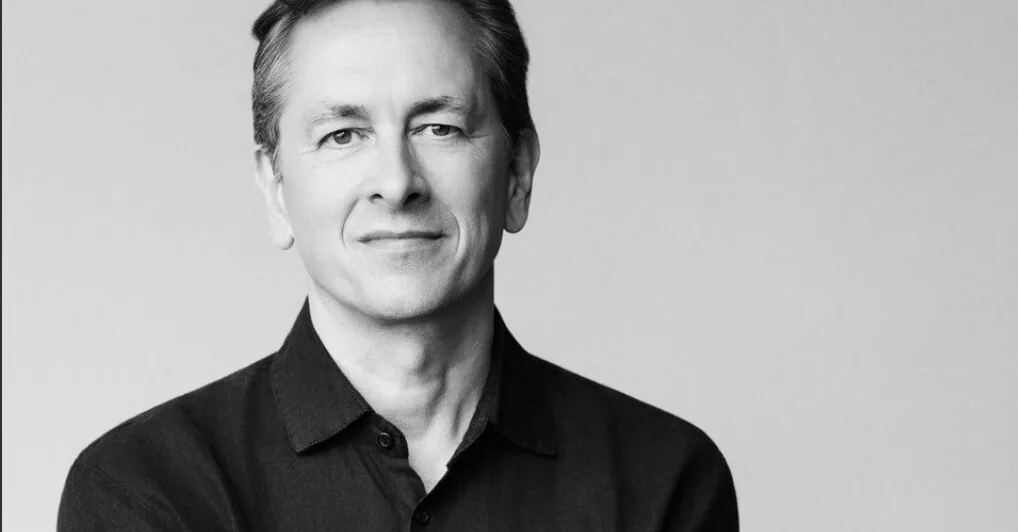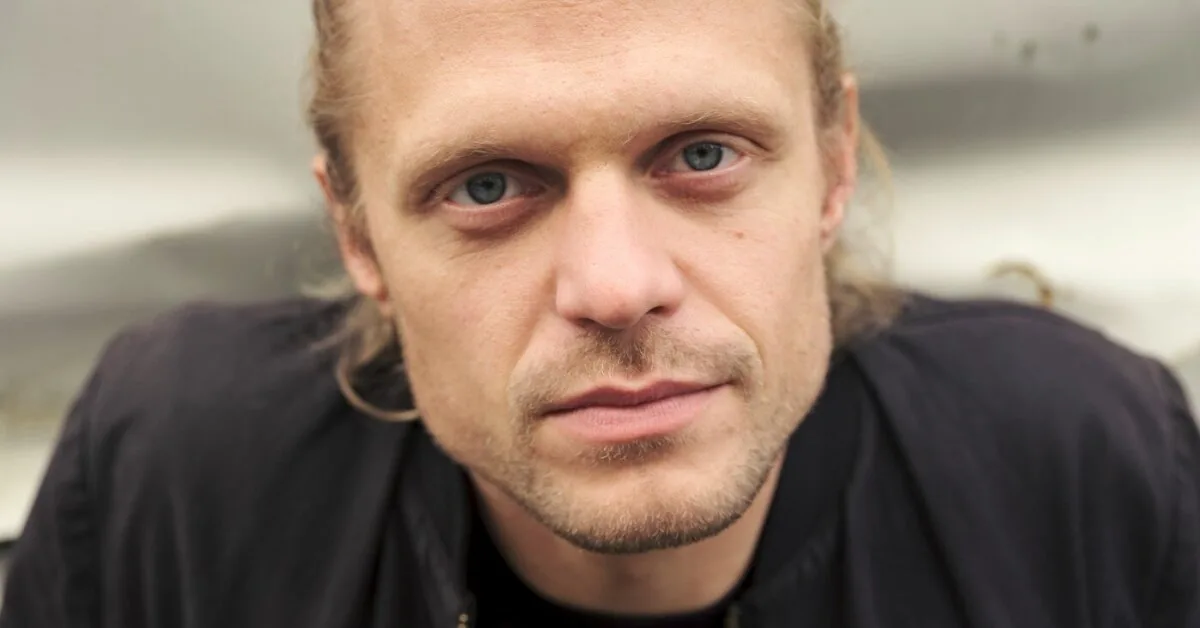
This time, the focus of the conversation is an unexpected premiere. On June 19, he will debut as an opera director at the Old Vilnius Theatre, presenting G.F. Handel’s “Acis and Galatea” – a pastoral opera based on an ancient myth about love, loss, and transformation. Having explored the Baroque era and ancient myths in his previous works, he brings his accumulated knowledge to this production: “In life, you sometimes go through various stages and don’t know where you’ll need them later. It seems there’s always some goal, even if you don’t see it yet.”
Read more Four people died in a plane crash in Croatia
Having admitted during the conversation that we are not fans of traditional opera, we talk about the debut in the genre of contemporary opera, escaping from the anxiety prevalent in everyday life, and how pastoral and Baroque density could be relevant to the audience.
– It’s unusual and interesting to see you debuting in opera. But in this genre, the director has less freedom than in drama theatre, right?
– Yes, in drama theatre, the director has their vision, and then, together with the team, constantly reviews, changes, and reworks everything during rehearsals. In opera, there is already an emotional, historical, and temporal framework set by the music. One needs to think about how to complement it, how to reveal what lies within the music, and at the same time help the soloists express the most important things.
– How is it working with the renowned music director and conductor Trevor Pinnock?
– Ana (Operomanija’s producer Ana Ablamonova – J.T.) had already staged this opera with Trevor in a slightly different format – more as a concert, a cantata-like performance, without a stage production. This happened quite recently, a few years ago. His interpretation is very close to what we are working with now, so that recording was an important starting point for us.
We’ve only had a few meetings with Trevor so far, but he made a huge impression. He is a person who simply lives Baroque music – from its grandest architectural solutions to the smallest ornaments and nuances. It seems to me that everything one can learn about Baroque music can be learned from him – he is a true encyclopedia of Baroque music. You listen to every one of his comments and try to catch not just individual details. This year is his jubilee, and in some way, he reminds me of Handel’s music itself: dynamic, restless, full of energy and surprises. Trevor simultaneously works with the choir, directs the performers, plays the harpsichord, and conducts.
Also very important is the set designer Ugnė Tamuliūnaitė, who is working on this production together with Paulina Turauskaitė. We have created several performances together, but she has much more opera experience than I do. Her comments and insights were very valuable while working on this production. Essentially, I have three people I can rely on – Trevor, Ugnė, and Ana. Their experience helps us stay on track and reminds us what is truly most important to focus on in this work.
– In Ovid’s myth, the cyclops Polyphemus unrequitedly loves the nymph Galatea, who chooses the mortal shepherd Acis. Out of jealousy, Polyphemus kills him, and Galatea transforms her beloved into a spring. What was your first encounter with this opera like? Did you immediately envision the future world of the performance?
– The first impression, after listening to the music, was: “Wow, how dense.” And at the same time – what will need to be done here? There’s so much in it: emotional rollercoasters, Baroque embellishments, various rules, and surprises.
Baroque theatre and opera were very alluring with their abundance of effects.
Having started working with set designer Ugnė Tamuliūnaitė, we began to think about what the visual language of this work could be. We started from the pastoral genre, which was once intended to evoke an idyllic life in nature. Over time, pastoral became our main starting point and a kind of pillar.
Baroque theatre and opera were very alluring with their abundance of effects. There is deus ex machina, and various stage machinery. Decorations move in and out, scenes change quickly, pyrotechnics are used, animals appear on stage. Many things that we would consider modern solutions today actually originated in the Baroque era; it’s hard to resist that density.
However, when thinking about pastoral, we always returned to the question of what such an idealized world means today? We live in times of constant anxiety, so we wanted to create a space where one could at least briefly catch their breath, allow their imagination to travel to a place where it is calm, beautiful, and bright. To create a reminder of why we live, strive, and create at all.
And the myth itself seemed exceptional to me. It comes from Ovid’s “Metamorphoses,” and it was characteristic of Baroque creators to turn to ancient tales and reinterpret them. Many Greek myths contain a motif of punishment or warning, but the story of Acis and Galatea seems different to me; hope is encoded within it. It speaks of the possibility to change, renew, and that dawn comes after night, even after the greatest loss. I think this is especially important to remember today. Every day we hear new disturbing news, so we want to not lose sight of the idea that alongside all of that, light also exists. This is what I found in this myth, and it seemed to be exactly what is most needed today.
– Since this is a love story, are there erotic motifs in it?
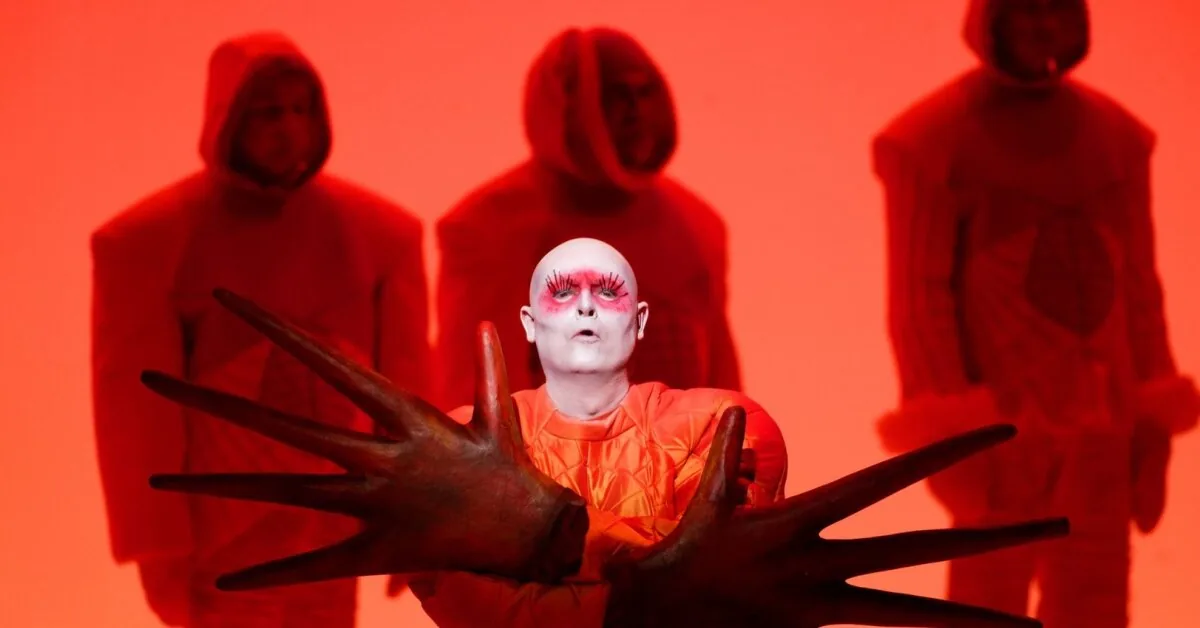
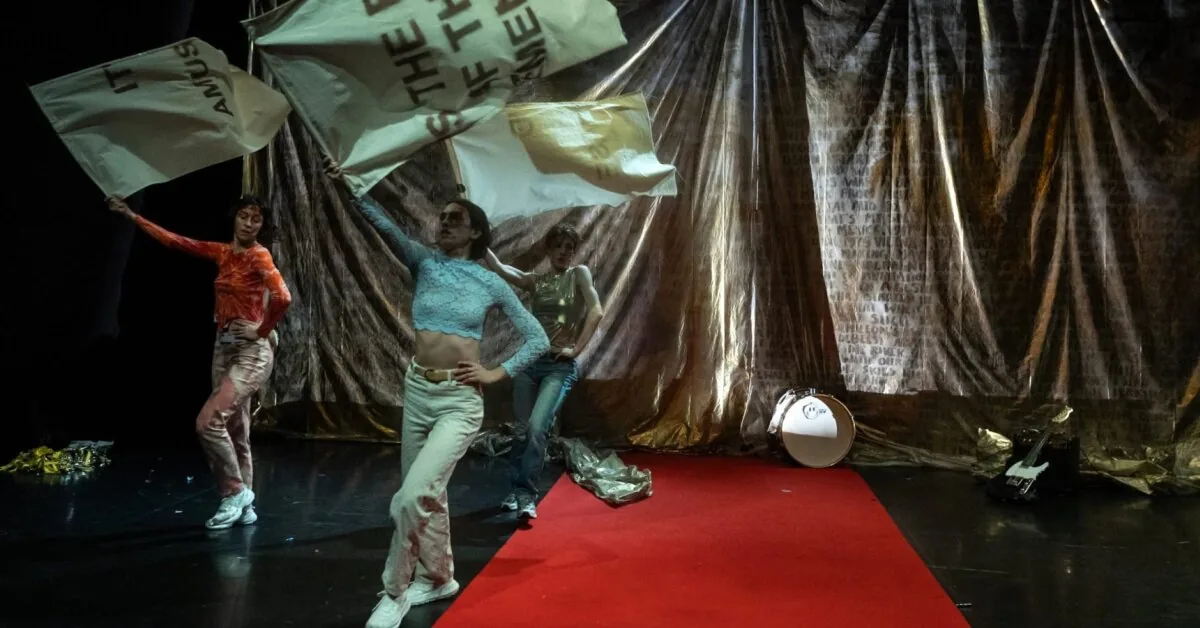
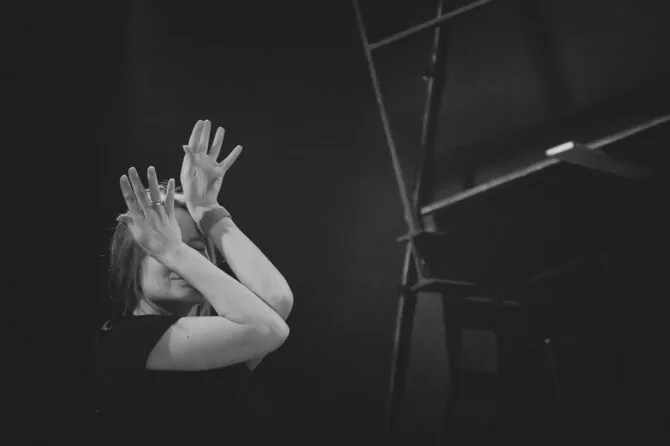
– Direct eroticism, I would say, is not present – there is little of it even in the myth itself. We are more concerned with interpretations of Baroque painting and sculpture, various visual images that emerge on stage. We are creating a dreamlike, symbolic world, a kind of fairy tale narrative. It features a lot of choreography, and through it, symbols borrowed from Baroque and antiquity emerge.
– In the narrative, the character of the terrible Polyphemus seems interesting – he is powerful, terrifying, cruel, but at the same time yearns for love. How did you see him?
– What’s very interesting in this myth is that Polyphemus differs significantly from earlier depictions of the cyclops. As far as we can rely on the chronology of myths, it seems that in earlier tales – both in the “Odyssey” and other myths – the cyclops is portrayed as a cruel, wild creature. Everyone fears him; he kills people, devours them, has no empathy. It’s almost purely animalistic force.
But in this myth, for the first time, we see a cyclops who has feelings, who falls in love. And it seems to me that this is precisely what makes this character interesting. He remains powerful, dangerous, terrifying, but at the same time becomes vulnerable.
This is new even for the character himself – we hardly see such characteristics in earlier ancient mythological tradition. In our performance, Polyphemus is also not merely the embodiment of evil, a cruel tyrant, or an inherently bad being. Rather, we viewed him as someone who, for some reason, doesn’t fit into the community, an outcast. Here, I even draw associations with today’s often-mentioned “cancel culture.” Sometimes we rush to decide that someone has done something wrong and no longer want to have anything to do with them. Of course, there are cases where such judgments are confirmed, but there are also situations where harsh conclusions are made too quickly. In this myth, Polyphemus occupies a similar position – he is not accepted, he is as if written off in advance. This is the story of an outcast – a person who experiences love for the first time and tries to understand what it does to him. Also, through Polyphemus, another important and relevant theme is touched upon in this myth – unrequited love. Sometimes it can become the most powerful destructive force.
– And how did you see Galatea? On the one hand, she becomes an object of love, but at the same time, she has the power to transform Acis into a spring after his death.
– She is a water nymph – a magical, unreal being. That’s how we left her. She appears and disappears, as if she doesn’t belong to the same world as the other characters. If we were to look for a Lithuanian equivalent, she would probably be close to a ‘laumė’ (fairy/nymph). In this production, Galatea is full of playfulness, vitality, and lightness. At the same time, she possesses a lot of dramatic and even capricious energy. To try to describe Galatea is like trying to frame eternity. She is eternal, like sunbeams playing on water waves. And yet, she brings purity and is capable of enjoying life.
– And the shepherd Acis? From the myth, he appears as a pure, gentle, loving character, lacking the aggression and brutality characteristic of Polyphemus.
– Brutality in this story is revealed not so much in Acis himself, but in his fate. A very Greek worldview is encoded here. The Greeks believed that a certain order exists in the world – all people, objects, and beings move along their designated path. And dramatic, usually tragic, stories begin when a person tries to create their own order that does not coincide with the greater order of the world.
To try to describe Galatea is like trying to frame eternity.
A similar principle operates in Acis’s story. He falls in love with an unearthly, divine being. In Greek myths, such relationships rarely end happily. Although there is joy and happiness in them, the choice itself comes at a price. As if for those brief, sweet moments, a person is doomed to a dramatic fate.
It seems to me that all of Acis’s drama lies precisely here. A person seems to sense that everything will not end well, but still wants it. Some desire takes over, and you surrender to that feeling.
– How many drama theatre actors participate in the performance and create its choreographic line?
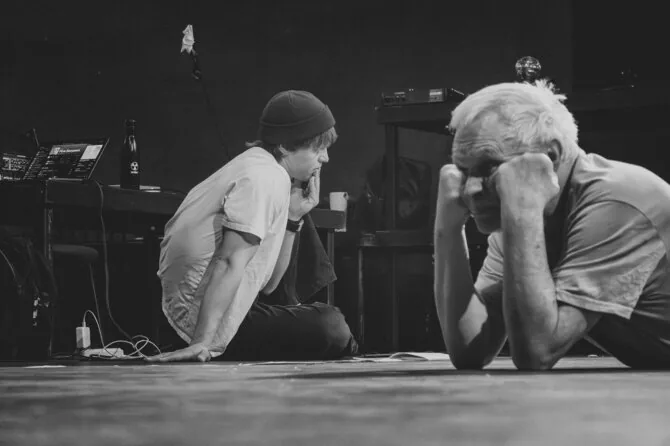
– We have ten actors. They don’t speak and have no text, which is quite an unusual experience for many of them. Some have worked with “Operomanija” in previous projects, so the opera genre is familiar to them, but for a significant portion, this is completely new territory.
Read more Hezbollah official: the group informed Lebanon it rejects the proposed truce with Israel
It’s interesting to observe how their working principles change. Actors are usually accustomed to focusing on text, dialogue, and a partner’s words, but here, music becomes the main starting point. They have to reorient themselves and look for entirely different ways of being on stage. The internal mechanism starts to work differently, and the relationship with time and space is created differently.
– Is this your first time working with actors from the Old Vilnius Theatre?
– I knew some of them before, but we met for the first time in rehearsals. So far, everything is going very well. I am fascinated by their openness, creativity, and willingness to play. Sometimes we find ourselves in not-so-comfortable situations, but that’s precisely when the most interesting things are born. I am impressed by how they surrender to the game, and this is very important in this performance.
We chose the actors so that they would be physically similar to the soloists. The theme of duality, of splitting, is important in the performance, so each main character has a kind of reflection or alter ego. Both the soloist and an actor resembling them – a kind of doppelgänger – are active on stage. It’s interesting to observe where one ends and the other begins, which of them is the real character, and which is their reflection. Probably, we can look at the myth as a story, a narrative. In this case, it acts as an invitation to meet oneself. I also wanted to give the myth’s characters themselves the opportunity to meet, talk to themselves, rely on themselves. After all, if we have anything in this world, it is ourselves. And then, everything else.
– You speak of a natural idyll, but at the same time, you choose a rather minimalist stage language. How do minimalism and Baroque meet in this case?
– I think that is what Baroque is. It has always been about opposites – death and luxury, light and darkness, earthiness and transcendence. That duality accompanied us in creating the performance.
We wanted to create a very clean, aesthetic, symbolic space on stage, where meanings would constantly appear and disappear. We wanted to open up space for the music and let it resonate at full capacity. Therefore, we chose a rather clean stage language, where the world is created through choreography, symbols, and dreamlike imagery.
I remember the first time I went to meet Trevor. I put on my headphones and thought I’d listen to some music on the way, maybe catch an idea. I went out into the city – fire trucks were driving, there was a traffic jam on the street, “Wolt” couriers were darting around, construction was underway; in short, it was full of noise. And then, little by little, I looked up at the sky. The clouds parted at that moment, a few sunbeams appeared, and the overture was playing in my headphones. At that moment, I very clearly felt the world of the performance. As if all our daily noise remained below, and somewhere above the clouds, another space existed – calmer, brighter, living by different rules.
– Like the Garden of Eden?
– That motif kept returning in rehearsals. We talked a lot and improvised on the theme of what life in paradise generally looks like. What is paradise? How would people live there? We quickly realized that paradise probably isn’t just constant singing or lying in sunbeams. After a while, it would get quite boring. So we started thinking about various paradisiacal pranks, games, surprises.
– And how then did you manage to weave tragedy into this world? After all, Acis still dies.
– Galatea’s aria of mourning is very important to me. She laments the lost Acis, and the choir reminds her that there is a time to grieve and a time to move on. Galatea possesses magical powers, so although her love ends with Acis’s body and his life, the feeling of love itself does not disappear. A spring emerges, becoming a symbol of their love.
An important idea is encoded here – that even after the most dramatic events, light and hope still emerge, capable of leading a person forward. Sometimes we joke about such a goldfish life in paradise: something happens, you forget, it’s sunny and beautiful all around, flowers bloom, you swim to see what’s happening elsewhere, and life goes on. Of course, first there is time to grieve, to experience the loss, but then comes the time to move on. It seems to me that this dramatic moment of the opera speaks precisely about this.
– How important is the motif of transformation in this story?
– Metamorphosis is very important here. Acis transforms from a human body into water, and Galatea herself is a water nymph. The motif of transformation, merging, and being one emerges. Love, as it were, finds another form and another way to endure. In the opera itself, little action is left for dramatic scenes. Much more attention is given to the transformations of feelings. Metamorphoses are present here at every step and in various layers: in the movement and actions of the actors, in the depth of the stage design, in the soloists’ arias, in music in general, and in the poetry of the libretto itself.
– What were the biggest challenges of this work? What seemed most interesting and most difficult compared to working in drama theatre?
– As is often the case, technical aspects prove to be the most challenging. One has to adapt to them and understand them.
– And this is your first time working at the Old Vilnius Theatre?
– Yes, it’s important for me to get to know the theatre itself and its history. After all, it was the first opera theatre in Vilnius. Many things from the time the theatre was built have survived to this day, so the building itself seems very interesting.
– Let’s talk about lights and video projections – how is it working with lighting designer Eugenijus Sabaliauskas and video artist Visvaldas Morkevičius?
– So far, we haven’t met in the hall with all the decorations, lights, and video projections at once, so it will be interesting for us to see how everything comes together. We have certain keywords coming from the Baroque era, painting, and its interpretations. Many visual solutions are born from Baroque imagery, but we rethink them through today’s perspective and modern technical capabilities.
Since the action takes place in a kind of paradise, we keep returning to the question of what light looks like in paradise. Is there sun, light, its changes? Probably not a disco, although maybe a disco. But most likely not. I am very happy to be working with Eugenijus Sabaliauskas. I have been following his work for a long time and always thought it would be interesting to meet in a joint project someday. It’s great that it happened here and in this genre. In the Baroque era, a lot of attention and a very specific space is given to light, and we want to maintain this principle in this work as well.
Overall, opera offers many opportunities for this. Time flows differently in it than in drama theatre. Baroque opera has many repetitions; themes are constantly developed, return, and instrumentation changes. After reading the libretto, you might think it’s just a few pages of text, but in music, those moments unfold on a completely different scale. Therefore, visually, we also try to react to the music, lean on it, and strengthen its emotional points.
And speaking of video – Ugnė and I had the idea from the very beginning to use projections in some scenes. We thought about who could create them. We talked to a few people – one couldn’t, another was busy, so that process dragged on a bit. At that time, Visvaldas and I started creating the poster for this performance. In one conversation with Ana, Paulina, and Ugnė, we realized that what he does is very close to what we are looking for in the performance. Then we asked if he would like to get more involved. It’s very interesting that he himself is currently undergoing a creative transformation. Having worked with photography and static images for a long time, he is now dedicating more and more attention to moving images, experimenting, and transforming photography. It seemed that our meeting happened at a very opportune time. He liked this idea, and so our joint work began.
– So, with what attitude should one come to this performance? For what kind of audience should it resonate?
– Just take the opportunity to come. Although “Acis and Galatea” was written and first staged in London in 1718, it is quite frequently performed and loved worldwide.
It seems to me that the sound of Baroque music alone might seem unusual to many today. This is a chamber opera, created in times when there were no large opera houses, so it has a different scale and intimacy. In our performance, the choir, orchestra, and soloists will be very close to the audience, so the music will sound very near, allowing one to feel its energy and intensity.
Historical instruments will also be played, which are rarely heard live. It seems to me that this is very dynamic, vibrant, and lively music. And the world created on stage could become a kind of refuge and a reminder of attentiveness to details, beauty, and the joy of life.
And in the context of “Operomanija,” this is a certain experiment. However, it seems to me that the performance can be interesting both for those who love and regularly attend opera, and for those who once tried it, were disappointed, and decided that opera was not for them. Perhaps this is a good opportunity to give opera another chance.
Read more Erika Vitulskienė stunned with bold appearance changes: showed everyone