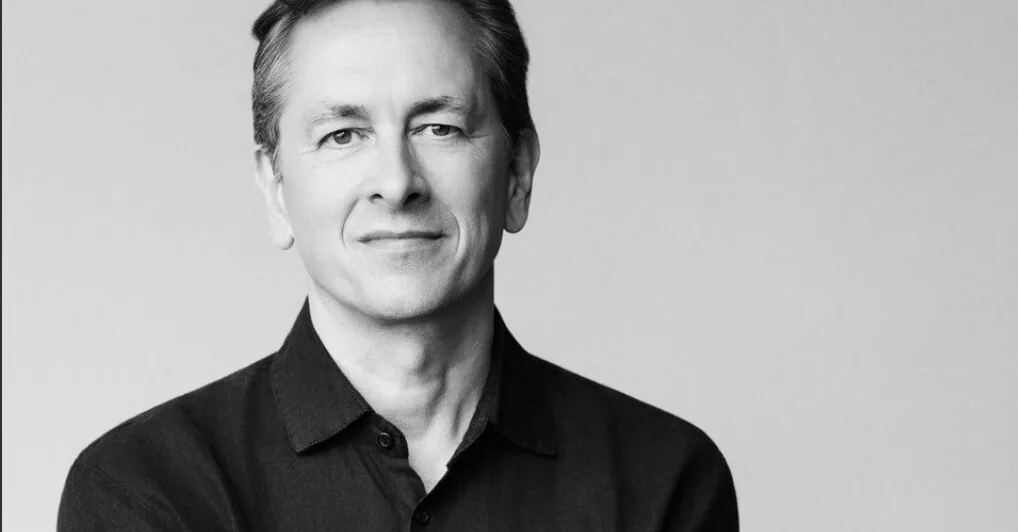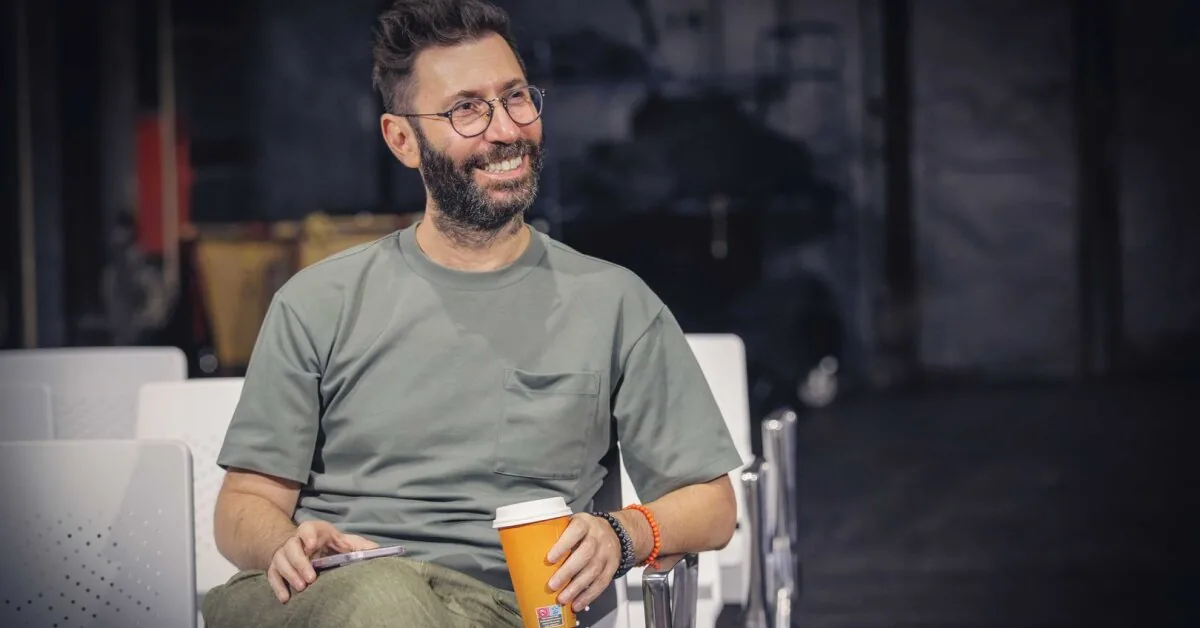
I. Moščickis is an Armenian theater director and curator, seeking new forms of communication between the audience, performer, and space in his work. He uses theater as a place for research and shared experience. After the war against Ukraine began in 2022, he left Russia and now works and lives in Yerevan.
Read more With increasing security threats, Germany opens a new drone defense research center
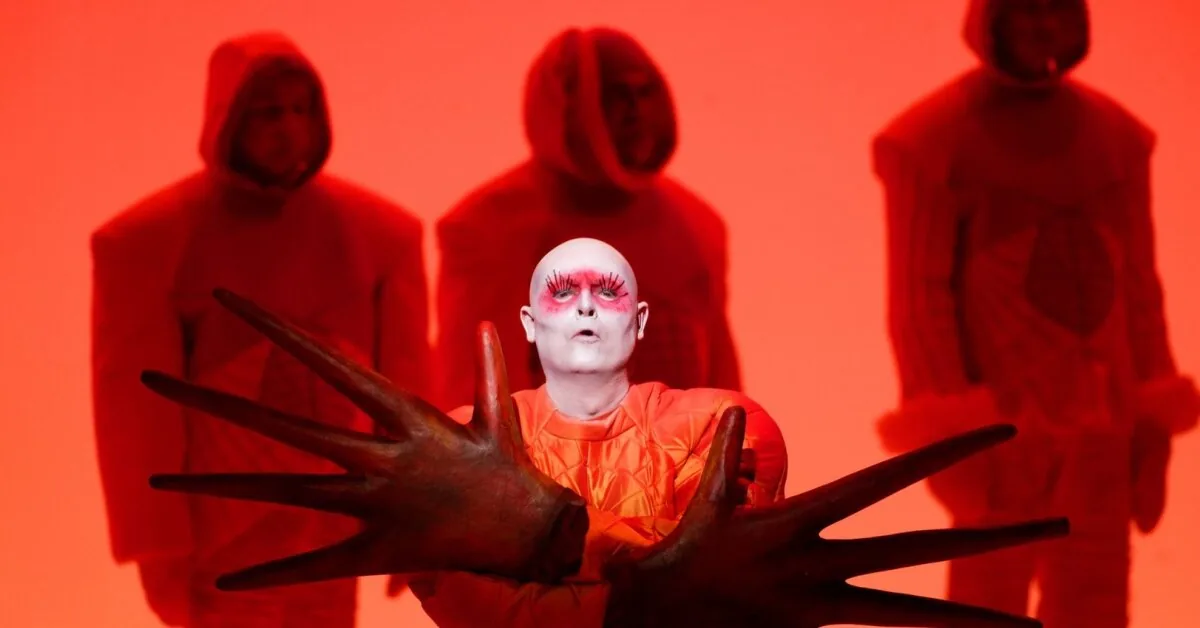
His notable directed performances include: “The Trial of John Demjanjuk. Holocaust Cabaret,” “The Book of Anxiety,” “Michael Craig Martin’s Oak,” “To Forget,” and so on.
The director was interviewed by Gytis Norvilas.
– What shaped you as a person? It is said that all the keys to personality lie in childhood…
– My personality is not yet fully formed; it is still developing and influenced by everything happening around me. The air, books, friends, fun and boredom, daily discoveries and routine.
I just remembered that my favorite record, which I listened to about a million times as a child, was “Peter Pan,” and my mother used to read Tolkien’s “The Hobbit, or There and Back Again” to me – I really liked it.
I remember that at school, when some kids, including me, got video recorders, we used to exchange tapes. I asked my dad which tape I should buy so that everyone would want to trade with me. He said: Akira Kurosawa’s “Seven Samurai.” I bought it, but the result was the opposite. No one wanted to trade. Everyone was interested in “Mortal Kombat,” “Rambo: First Blood,” and so on. I didn’t understand why my dad chose this boring, uninteresting film for me. Only many years later did I understand. It influenced me.
– And what directed you to the world of art? What does it mean to you?
– What does art mean to me? I think it is the only way accessible to a person to connect with the world. The only way to perceive, interpret, and accept it. Reality is hidden from us, and around us, we cannot find any other tool that would allow us to dig reality out from under a dose of ruins. Honestly, I am amazed at how people manage to cope with life without the help of art. Without theater. One could go crazy.
– We live in very unstable times. There is a brutal war against Ukraine, other regions are unstable as well. It seems that war is turning into a tool of “diplomacy,” power and instincts begin to dictate politics. Even Confucius was reluctant to live through upheavals. What can theater and art do in such times? Is it not a sin to enjoy them when cannons are firing and drones are buzzing?..
– Philosopher Merab Mamardashvili advised paying attention to how the ancient Greeks coped with such situations. The Greeks had two terms: “aporia” and “amechania.” Aporia is a period in the world when truth disappears. And when an ancient Greek realized that such a time had come, it was appropriate to follow amechania. This means refusing to fight for the truth. A sacred doing nothing. One had to engage in something beautiful and useless. For example, art, or one could devote oneself to growing olives. I, for example, engage in theater.
– You now live and create in Armenia. What is Armenian theater like, what challenges does Armenian culture, including theater, face? What moods prevail in Armenian society? I must admit, when I visited Armenia 10 years ago for a poetry festival, my impression was gloomy… For many reasons. One of them is geopolitical.
– Armenia is the best place in the world not only because it is warm and tasty there. Yerevan today is a great place to create theater. It is a place where there are no established and sanctified boundaries. Armenia may currently be the only place in the world where such carte blanche (French complete freedom – editor’s note) exists for non-normative art. For many reasons, here are a few: distrust of rules, trust in people, and millennia-old relationships with Chaos.
– What kind of theater is closest to you? Style, principles, what theater language is most understandable? What do you rely on when creating? Which theater tradition?
Read more «Drones are flying» and «everything is burning»: Russians rushed to ATMs
– I do not trust traditions. Essentially, I trust nature more than culture. Speaking of influence, at one time, my understanding of theater and life was completely changed by Eimuntas Nekrošius’s performances, but I was also profoundly affected by the beauty of the “Devil’s Gate” gorge in the mountains of the Krasnodar region, Russia.
It is hard for me to say about style and principles; I think the closest to me is Peter Brook’s division of theater into living and non-living. I believe that form and theater language can be anything. There is only one essential question: whether what happens on stage is related to existence or not.
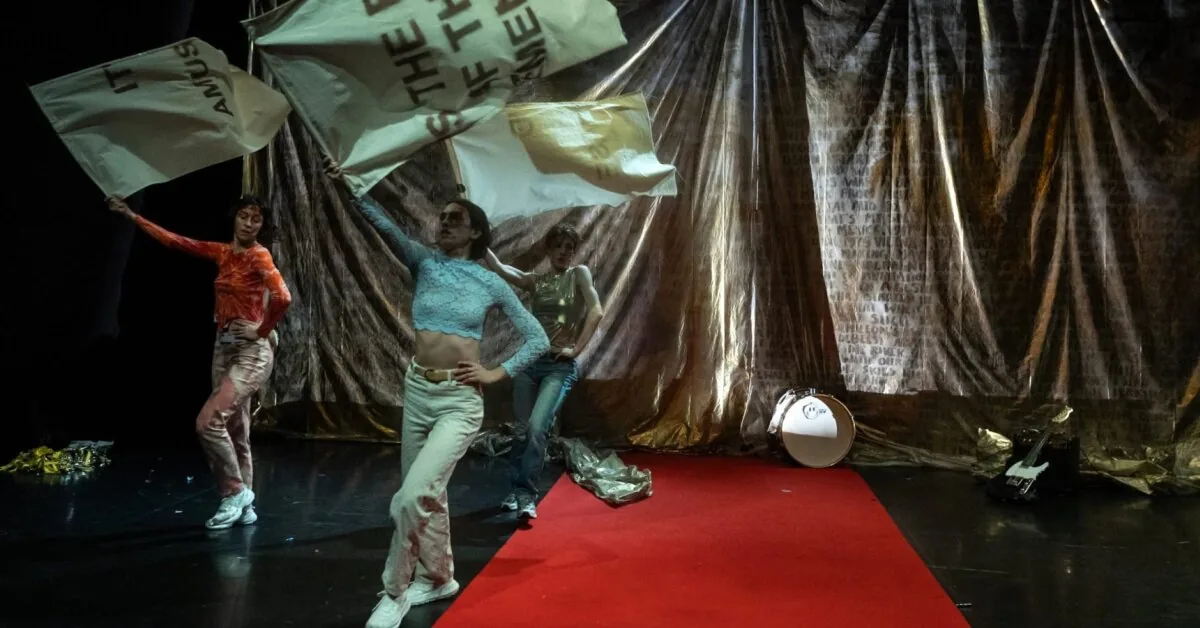
– Your premiere “LIMBO” will soon be shown at the Old Theater of Vilnius. What is it? There are countless definitions of Limbo. It is the first circle of Hell in the “Divine Comedy,” and also a British underwater bomb release device…
– “LIMBO” is a performance about the impossibility of avoiding both the horror and the beauty of life. About the absurdity of living life immediately, on the first try, without rehearsals and training. About the curse of repetition and about the fact that all our lives we will have to repeat the same words, whose number is limited and which have already been said a million times, and to understand what we really feel and want, we need new words, but there are none. So we will have to repeat.
– What did you want to talk about, what inspired you, what do you want to clarify with the performance primarily as a person? What is your working method, your relationship with the material, how do you find a relationship with the actor? As I understand, you construct the script and text yourself… What is your relationship with language?
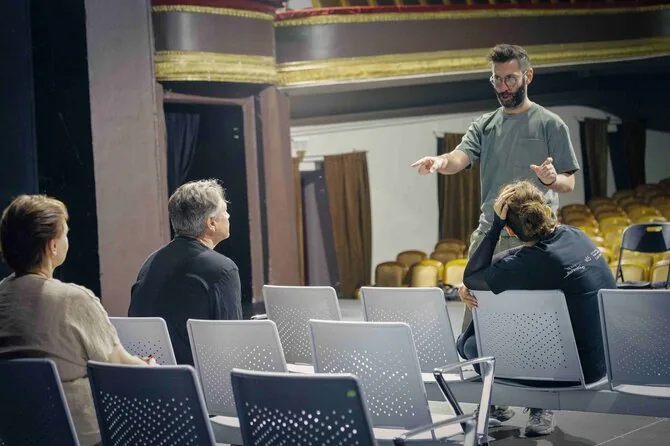
– I start the process of a common movement towards existence. If it succeeds, with the performance team, we get the opportunity to communicate on an essential level. Gradually, secondary, unnecessary, and insignificant things fall away. If we are lucky, we can go even further. But you have to be very lucky!
The result is an open work. Open to whom? Open by the creators of the performance to the audience. This means that we do not impose any single “correct” interpretation. Instead, the authors offer the audience to take the author’s position together with them both regarding the performance and the world beyond the theater’s boundaries. We offer and anticipate a variety of interpretations, and if we succeed, the audience will get material to engage in art with us. Each of them will create their own performance. And each of those performances will be wonderful.
– You lead the international theater platform “Chronotope,” founded in 2018. You are one of the curators of the international contemporary theater and performance festival “Chronofest.” What kind of phenomenon or platform is this?
– “Chronotope” is a theater troupe. We create and stage performances all year round in Yerevan. And at the beginning of summer, we hold a festival where, besides our works, our friends and colleagues – artists from all over the world who share our values and understanding of what theater is, its function and purpose today – participate.
A surrounding environment forms around the festival, where Reality becomes clear. There is an opportunity for essential, deep communication through layers of art. “Chronofest” is a utopia that, although very briefly, still comes true – a safe haven that reconciles with the surrounding chaos, a joy that conquers all that crap.
Read more Young man «earned» almost a thousand by selling a «copy» instead of a phone to a woman from Klaipėda