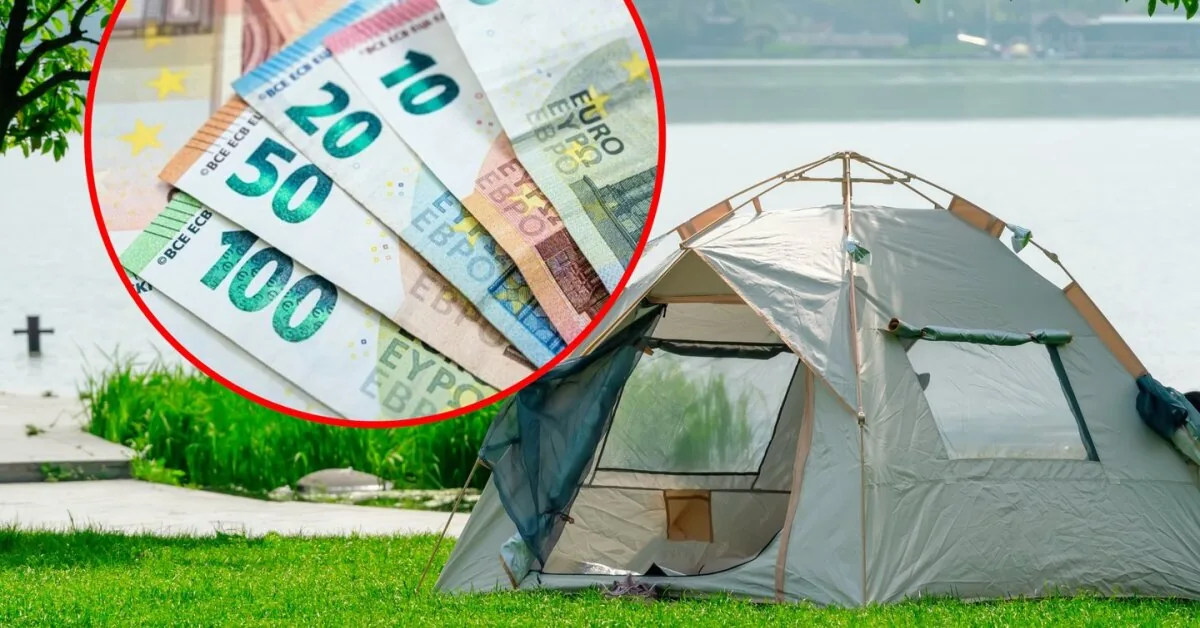
Portalo 15min reader Dalia started to be interested in the rules of pitching tents after a conversation with friends. The woman was surprised to hear that their family trip to nature ended not only with beautiful views but also with a fine for choosing an inappropriate place for the tent.
Read more Kremlin «expert» again stirs up chilling lies: organs of fallen soldiers are not traded
This made Dalia doubt her own plans – she intended to spend the weekend in Dzūkija, near Varėna, and spend one night in a tent with her family.
“It seems that in nature you just want to find a beautiful place, pitch a tent, and be with your family. But after my friends’ story, I started to think – how do you know where you can stay and where a fine is already threatened?” – asked the reader.
The Environmental Protection Department answered these and other questions for 15min .
A beautiful place alone is not enough
As emphasized by specialists from the Environmental Protection Department, one of the most common mistakes is to think that a tent can be pitched anywhere if there is no prohibition sign.
“You can stay for rest in forests only in designated public use recreation facilities – rest areas, respite places, campsites, campgrounds, and other recreational engineering structures,” the department representatives indicate.
They point out that not all these facilities are intended for overnight stays. In rest areas, you can only stop briefly to rest, but you cannot pitch tents or stay with campers there. Meanwhile, overnight stays with tents are allowed in campsites and campgrounds.
According to the department, official rest places are usually marked with special signs, and their locations can be found on the maps of the State Protected Areas Service and the State Forest Enterprise.
Rules apply in private forests too
Some residents think that restrictions apply only in state forests, but this is not the case.
“Forest visitation rules apply both in state and private forests. Camping in the forest is allowed in designated public use recreation facilities, and in other forest areas only with written permission from the forest manager,” explains the Environmental Protection Department.
Specialists emphasize that just because you can physically enter a private forest does not mean you are allowed to set up a camp there.
What if you want to stay overnight by a lake?
Another common belief is that you can pitch a tent anywhere by a body of water. However, as the department notes, this is not true.
“Just because a place is by a lake or river does not mean you can pitch a tent there. If the shore is on forest land, you can stay with a tent in an official campsite or another designated place, and elsewhere only with written permission from the forest manager,” the response states.
Environmentalists remind that although laws ensure people’s right to access water bodies, this does not grant the right to pitch a tent, make a fire, or use private infrastructure on private land without the owner’s permission.
A meadow does not mean you can camp
According to the Environmental Protection Department, people often think that if a place is not in a reserve or national park, camping there is freely allowed.
Read more A group linked to Russia is accused of a fake post about Friedrich Merz’s resignation
“You cannot pitch a tent just anywhere because the area is not protected. First, it is necessary to clarify the land plot’s purpose, ownership, and the restrictions applied to the territory,” specialists emphasize.
If a meadow or field is on forest land, the Forest Visitation Rules apply. In other cases, it is necessary to assess who owns the land and what requirements apply to it.
More restrictions in protected areas
The department states that when planning recreation in protected areas, one should be especially careful.
“In some places, such as reserves or sanctuaries, camping is completely prohibited or allowed only with special permits,” environmentalists indicate.
They recommend checking official campsite maps before going, as protected areas contain rare species and sensitive ecosystems.
Most common mistakes – not just tents
During summer raids, environmentalists say they constantly encounter the same violations.
“During raids, we find cases where vacationers pitch tents and make fires in prohibited places, park or drive motor vehicles where it is forbidden, litter, violate protected area visitation requirements, or otherwise harm the environment,” lists the Environmental Protection Department.
Speaking about residents’ habits of cooking in nature, environmentalists remind that bringing a grill does not change the rules.
“In the forest, fires, disposable grills, portable grills, and barbecue grills can only be used in specially designated rest and camping fire sites marked with the appropriate sign,” the department emphasizes.
How much can ignoring the rules cost?
According to the Environmental Protection Department, camping in an unauthorized forest place can result in a warning or a fine from 20 to 50 euros.
If the violation occurs in a protected area or other requirements are violated – illegal fires, littering, damaging forest litter or vegetation – the liability can be much greater. If damage is caused to nature, it must also be compensated.
As specialists emphasize, even in cases where camping is set up legally, residents’ duties do not end.
“You need to keep the camping site tidy and clean – do not litter, throw garbage only in designated places. Whether you go to the forest for a short hike or a longer camping trip, it is advisable to bring an extra garbage bag and, as much as possible, collect scattered waste,” urges the Environmental Protection Department.
Read more BNS Sprint: Friday events in brief