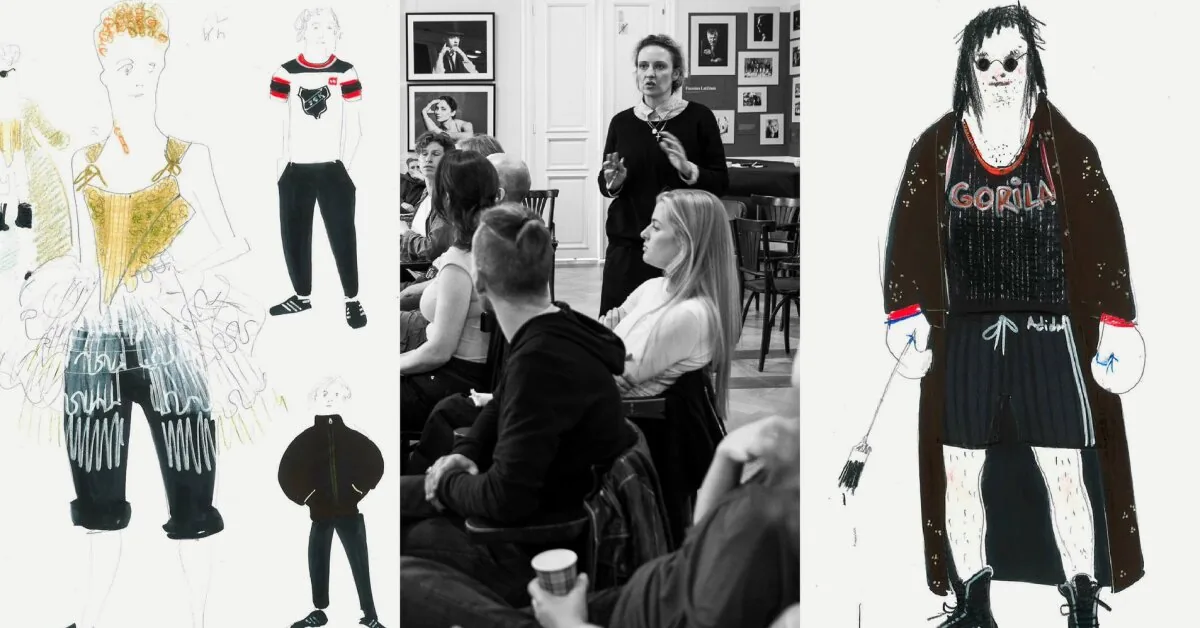







On screen, as on stage, we won’t see one thing – the hard rehearsal work and the people behind the scenes, whose hands create the theater’s miracles. The people who make, assemble, and select the decorations.
Read more JAV Representatives Chamber – decisive vote on Russia
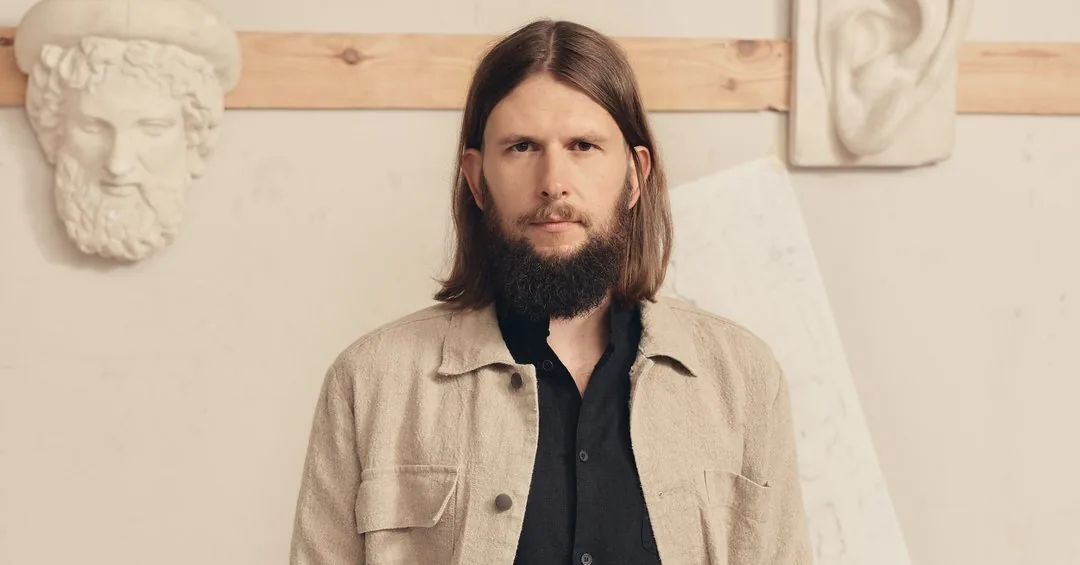
Before the twentieth anniversary of “Vilnius City Opera,” we spoke with two of them: set designer Romas Pupkevičius, without whose hands not a single “Bohemians” performance would have existed, and Valdas Stasiūnas, who spent a decade in the “Bohemians” technical team.
2006. “No chance”
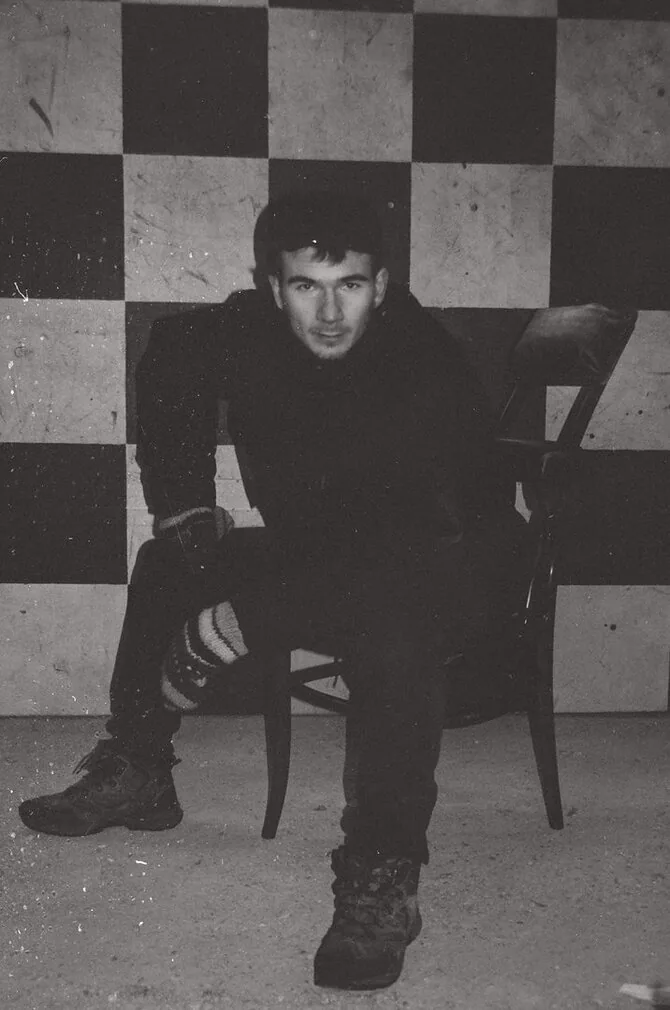
It all started with the word “no.” In the spring of 2006, Romas Pupkevičius and two colleagues had just left the National Opera and Ballet Theatre. After thirteen years of working there, the payment system changed: the state banned paying salaries based on hours worked and assigned everyone a salary close to the minimum. The 2005 crisis added to this, performances decreased, and only three people remained in the entire workshop. “I had a good order that needed to be done,” Romas recalls. “I suggested to my colleagues: maybe we should team up? And that was it, they agreed.” They spent the saved money on equipment and tools.
The meeting with Dalia Ibelhauptaitė and British set designer Dick Bird became their first major joint work. “The set for the performance ‘La Bohème’ was incredibly complex,” the director says. “It was made not for the theater, but for the Congress Hall: two floors, which had to close and open in front of the audience, and look like a work of art from all sides – without an inside-out, bad side.”
Romas and his colleagues looked at the model, learned the premiere date, and said: “No, no chance.” This set had to be made in half a year, but we were given, I think, three months. He refused, disagreed, said he didn’t have enough workers. And I persuaded them, pressured them as much as I could.”
Romas and his colleagues looked at the model, learned the premiere date, and said: “No, no chance.”
Romas himself remembers that time even shorter: “I don’t remember well anymore – so many years have passed, but it seems we wrapped up all that ‘La Bohème’ in about a month and a half.” “They worked hard,” says Dalia Ibelhauptaitė. “Before the premiere, maybe about fifty hours in a row, without sleep. They brought the last ladder two hours before the premiere. But it was our incredible time and their calling card.”
After “La Bohème,” Romas made the decorations for all our other performances. Every single one.”
From that first “La Bohème,” Romas took a principle he still follows: “There are no impossible things. There is only too little money. If the funding is good, you can do practically anything – the question is only whether it’s worth it, because making real things can cost huge amounts of money that no one will even notice.” From there came another lesson.
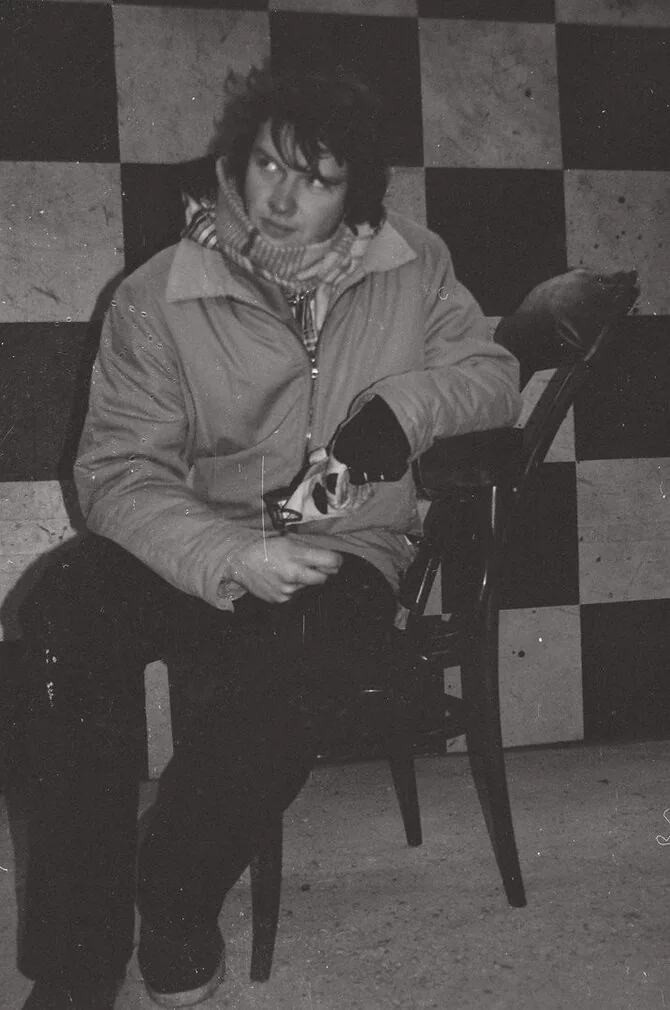
Dick Bird was the first set designer in his practice who demanded that the set be made like for a film – down to the last detail, even though the viewer sits twenty meters away and will never see all of them. “We couldn’t understand why. We said: wait, no one will see that detail. And he replied: ‘I will see it.’ Today, says Romas, many set designers behave this way. Back then, it was a novelty.
Paths of a Carpenter
To become the man who still makes opera sets after twenty years, Romas had to take a long path. He grew up in Žvėrynas, and in 1985 their house was demolished and the family moved to the then under-construction Justiniškės. The nearest educational institution there was a vocational school. Since he liked wood from childhood, he enrolled in the carpenter specialty. After that – two years in the Soviet army, and upon returning in 1990, there was no work. He studied professional driving for half a year, even receiving a scholarship for the studies. Then for two years, he drove a bus transporting people around the city.
A friend who worked at the design institute brought him to the theater: his boss knew the theater director, and the theater just needed a carpenter. Until then, he had no connection with the theater, only hobbies that, as it later turned out, were the same craftsmanship under another name: restoration, collecting old weapons. However, Romas is sure that the theater was the place he was meant to get into.
Eighteen-year-old from punk rock
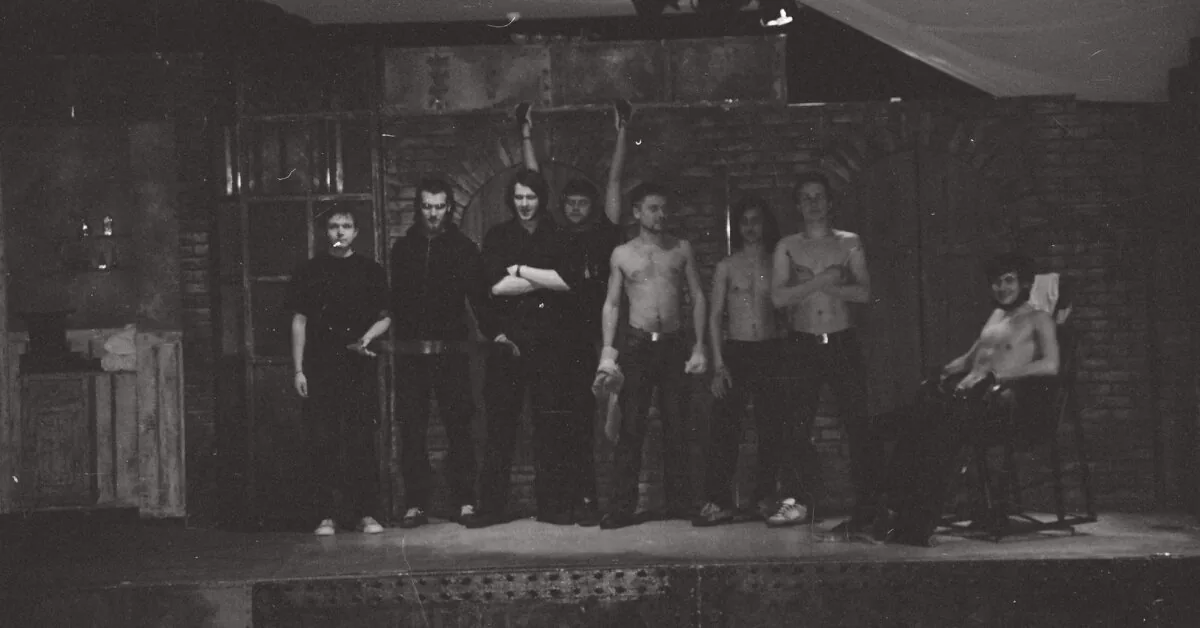
Chef and vocational teacher Valdas Stasiūnas came to the same community from another side – the punk rock scene. The student needed pocket money, and his friend Mindaugas worked with sound equipment at the theater. “From time to time, he took me into the technicians’ team. I kept locking, locking – and got locked in.” Then a colleague who had been building opera sets called: “He says, Valdas, do you want to help? And I, such a young adventurous student, said I would do everything I could.”
Valdas remembers that when Dalia Ibelhauptaitė saw the team he, an eighteen-year-old, had gathered, she called them intellectuals and doubted how they would manage really hard physical work.
They did. “My team was amazing punk rock: everyone had superpowers,” laughs Valdas. “One was a very good technician, another even better. The third was incredibly strong physically, the fourth unbelievably funny. The company even had two trained pianists.” From that came a ritual unknown to anyone in the hall: during dismantling, two colleagues, one of them engineer Julius Grigelionis (today a Silver Crane award-winning sound director), dismantled the set from opposite sides of the stage as if racing. One drove a “modern” style, the other a “classical” one. The rest sat in the audience chairs and watched. We just floated.”
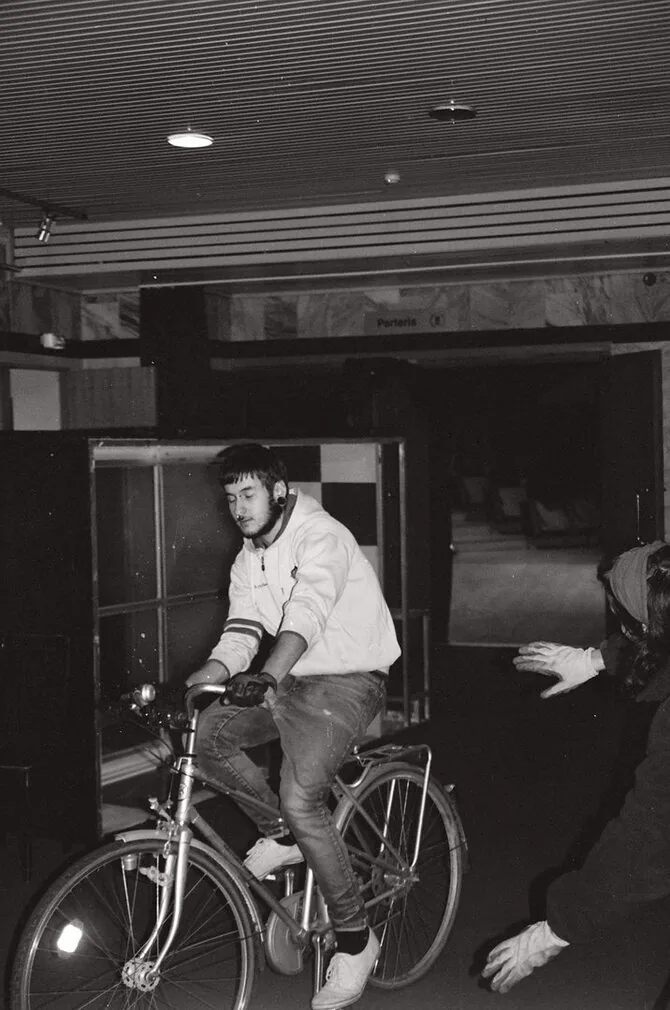
His first opera was also “La Bohème.” And the first time technicians had to act during the performance itself, in front of the audience, not just before or after it.
“There is a big restaurant on stage, which sometimes closes with a fence and imitates a street. I remember we had to attach that huge fence with carabiners. It was a big stress for me: what if I don’t hit the right spot? No one will wait. We practiced, rehearsed to hit exactly, because the tension during the performance is completely different from the technical rehearsal.”
Chess during the break
When the performance is underway, the technicians’ work is not over – it just moves to another phase. “In the technical rehearsal, we set everything up, and during the action, we have intervals during which we need to change the decorations,” explains Valdas. “But, say, you can’t change everything during a thirty-minute break. So we got clever and took up something else.” That something was chess. At first, they played poorly, colleagues called him “the second IBM.” So he started with chess books at home. “Rafailas Karpis was a serious chess player – I played the most beautiful game of my life with him,” Valdas recalls.
Rafailas Karpis was a serious chess player – I played the most beautiful game of my life with him.
There were also poker nights with soloist Kostas Smoriginas, and friendship with the performance manager Sigita Ivaškaitė, who, in Valdas’s words, always came up with things no one else would have thought of.
And most importantly – Asmik Grigorian. “Even now, when I meet someone from those times, the first thing I ask is: how is Asmik? We had a very good connection with her, she was always close to us and, I think, our favorite soloist.”
Asked how much bohemia there really was in that “La Bohème,” Valdas answers with a question: “And what do we call bohemia? I don’t know the traditional definition.
For me, bohemia was simply my technicians’ company – what we did, how we were together, how we felt each other. We didn’t have to look for words, we didn’t feel tense, all the hard work was accompanied by a great lightness. But in terms of work, we were very strictly focused: whoever had to do what, did it, regardless of what happened to whom and when.”
How the craft changed
Romas also remembers a different time – when he started working in the theater, the decorations were still wooden. “I got into the 90s era, when performances looked very realistic, and the decorations were quite primitive. A wooden frame, with fabric stretched over it, which women painted according to the image provided by the set designer.”
After that, everything began to change: drywall appeared, Lithuanian set designers started traveling abroad more often, bringing back new techniques and ideas. Wood was gradually replaced by plastic, then metal, then aluminum welding, which at the time seemed hard to comprehend. Today, Romas’s team scans the set designer’s model (which is always made very small) and, after enlarging it to the required scale, prints it from plastic.
The standards learned in the opera and ballet world were later spread by his team throughout Lithuania: joints with pins so that everything could be changed instantly during the break, specific joint solutions applied in opera. From three men with their own machines grew a team whose hands are trusted with the largest theater, museum, and event decorations.
“Sweeney Todd” and sleepless nights
Asked about the hardest moments, both men without hesitation recall the same performance. S. Sondheim’s “Sweeney Todd – the Demon Barber,” which on September 19 will again be seen in the Town Hall Square, meant a week without normal sleep for the technicians: set up, endure all performances, dismantle overnight, and the next day set up a completely different, minimalist decoration.
“There were sessions when we didn’t sleep for two days at all,” Valdas recalls. Returning from one such tour between Kaunas and Klaipėda at night, driving himself: “I had to call the technicians to gather at the Green Bridge at three in the morning, dismantle everything, and load it into the truck. I call and say: Viliau, hold the wheel, I need to call.”
There were sessions when we didn’t sleep for two days at all.
I don’t know how long I slept while Vilius drove from the passenger seat.” Next time he fell asleep returning home at a red traffic light – he opened his eyes, and a police officer with a flashlight was already standing next to him, asking why the car wasn’t moving. “I said: I just stopped here prophylactically…”
For Romas, those nights never fully end. “Even my wife scolds me for not knowing how to relax, living at work. You lie down and still think about what you’ll have to do tomorrow, what after a week.
The deadline is the worst thing in this job – no one cares if it’s a holiday or a day off. The decoration must be made that day and that hour.” From experience, he also knows another, less obvious difficulty – when the set designer himself can’t decide what he wants and tries to “mold” the final version simply with the craftsmen’s hands.
Once such indecision cost him a whole week: the set designer kept postponing the delivery of the model and each time added another pencil-drawn line. “I said – can I take the model already, and he, giving it, saw the model from a new angle. That handover cost us all another week of the set designer’s reflections.”
And the most complicated set change Valdas associates with another opera – “Eugene Onegin.” “When the break started, our time came, the biggest changes. We rehearsed them with a stopwatch in hand, asking how many more seconds the break could be extended. “We kept a low start – everything already assembled, screws in the mouth, tools in pockets. We finished wet with sweat.” Even the technicians’ movements Dalia asked to perform poetically – so that they wouldn’t be angular, so that everything would happen synchronously.
Bowing
There are moments the audience, sitting in the hall or square, never sees. One of them is two hours before the performance. “You stand on the set in the Congress Hall and look at the empty, completely empty hall. You realize that soon it will be full of people, but now only one orchestra member is tuning something. A unique feeling – we had the opportunity to experience such moments often, and people don’t even think about them,” says Valdas Stasiūnas.
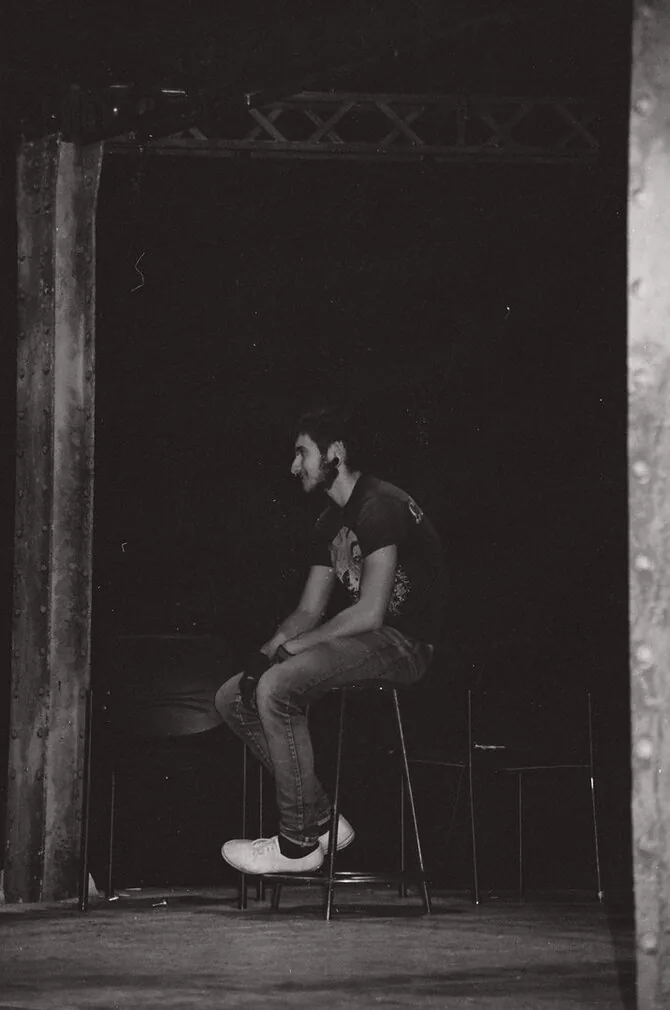
Once during the “Sweeney Todd” premiere, Sigita Ivaškaitė came up with something that wasn’t in the program: “After the premiere, when everyone bows, she says: ‘Technicians, stay, come in.’ I asked: ‘How us, technicians? Are we going there?’ She apparently planned that one half of the technicians would exit from one side of the stage, the other from the other. We bowed together with the actors, the whole hall applauded us.” Valdas still finds it hard to find words to describe that feeling: “It was the only time I felt that the audience considered you part of it all – together with the director, with the soloists. It was indescribable. To be honest, that was enough – we didn’t ask for more. We just enjoyed the creative process that people usually don’t see.”
Romas defines his place in this hierarchy without illusions: “We are the executors, and the creator is the set designer. He tries to make with our hands what he imagines.” His satisfaction comes earlier and quieter: at the general rehearsal or on the premiere evening, when he can finally look at the finished work from the audience’s side of the hall.
Scars
The craft also leaves other traces – ones no one sees under the shirts. Romas recalls one summer when it was so hot in the workshop that he worked only in shorts. “The team gathered to discuss, I came over, got involved in the discussion, and accidentally leaned on a clamp. At that time, a colleague was heating metal with a burner until it was red hot, so the edges of the clamp burned.”
“It was so hot that touching something you just couldn’t tell. By the time I smelled burning flesh, I didn’t even understand what was happening.” The burn covered the entire thigh. He tells about it without pathos: in this craft, he says, such cases are not rare, and over time you even get used to it.
What remains
Asked what he takes from those ten or twenty years, Valdas searches for words for a long time: “It’s very hard for me to weigh it. It enriched me culturally immensely: not only with works but also with people from Lithuania and abroad, with communication. And I gathered a lot of hard-to-weigh practical things – I know how to twist wire, how to tighten a nut, all sorts of little things. I think I became largely who I am now by being with the ‘Bohemians.’.”
“BOHEMIANS” – 20. September 17–20, Vilnius Town Hall Square, free of charge. September 17 at 8 p.m. – “La Bohème”; September 18 at 8 p.m. – “Werther”; September 19 at 7 p.m. – “Sweeney Todd – the Demon Barber”; September 20 at 7 p.m. – “The Troubadour”.
An hour before each showing – discussions and meetings, 15 minutes before – musicologists’ reflections. The project is funded by the Lithuanian Council for Culture and Vilnius City Municipality.
Read more 5 people killed in Ukraine near the front line in a Russian drone strike on a minibus