The Facebook post links iron supplement use to sudden infant death syndrome (SIDS). The author relies on studies comparing iron concentrations in the liver tissue of infants who died from SIDS and those who died from other causes, claiming that higher iron levels in tissues may be associated with SIDS.
Read more The United States tells allies and China to support an economic campaign against Iran
No direct link with supplements was studied
Interestingly, the studies listed in the post are not fabricated – they all have a real scientific basis, but their results are presented incorrectly and distorted, and it is omitted that the authors themselves are not inclined to link iron supplements with sudden infant deaths.
In a 1994 study published in the journal Archives of Disease in Childhood titled “Liver iron concentrations in sudden infant death syndrome” („Liver iron concentrations in sudden infant death syndrome“), it was indeed found that the iron concentration in the liver tissue of infants who died from SIDS was higher than in the control group. The median in the SIDS group was 296 μg/g, while in the control group it was 105 μg/g.
However, this does not mean that excess iron caused SIDS. On the contrary, the study authors themselves noted that the higher iron concentration is unlikely to be a direct cause of SIDS.
They only speculated that higher iron concentration in tissues could have an indirect significance, for example, reducing resistance to infections or promoting free radical formation.
Moreover, the study has methodological shortcomings. First, it was an observational, not an interventional study – scientists analyzed tissues from infants who had already died.
This study design allows identifying a possible association between two phenomena but not proving that one caused the other – the authors themselves emphasized this, stating that a direct causal relationship seems unlikely.
It is also important that the control group consisted of children who died from other causes. It is unclear what exactly their causes of death were. This is significant because various diseases or infections can also affect iron metabolism, so some of the difference between groups could be explained by other factors.

Additionally, tissues were taken post-mortem, and the summary does not provide enough information on whether samples in both groups were taken under the same conditions. Iron concentration also strongly depended on the infants’ age, so the authors had to statistically adjust the analysis.
Most importantly, the study did not provide data that infants who died from SIDS had taken more iron supplements. Many other factors that could influence iron stores, such as breastfeeding or formula feeding, birth weight, and maternal iron status, were also not assessed.
Therefore, the study only showed that infants who died from SIDS had, on average, more iron in their livers.
It did not show why there was more iron, and even less did it prove that iron supplements increase the risk of SIDS. This is exactly the causal conclusion the Facebook post draws.
Another study – only 18 infants
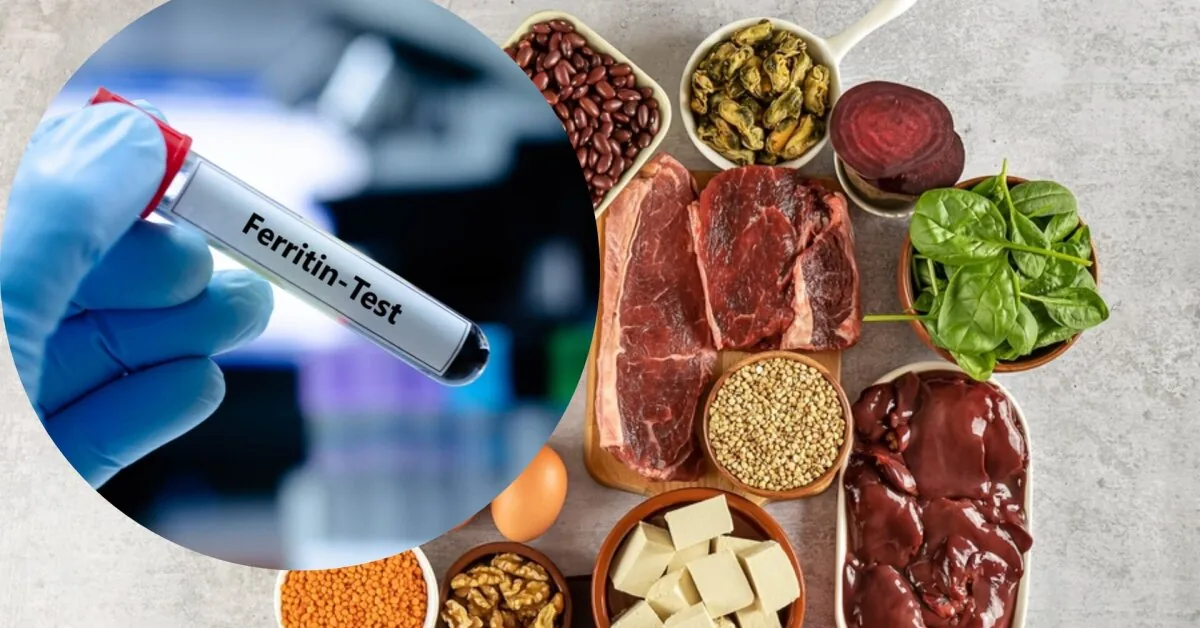
The same researchers published a follow-up study in 1996 titled “Blood ferritin concentrations in newborn infants and the sudden infant death syndrome” („Blood ferritin concentrations in newborn infants and the sudden infant death syndrome“), analyzing Guthrie card blood samples taken in the first days after birth.
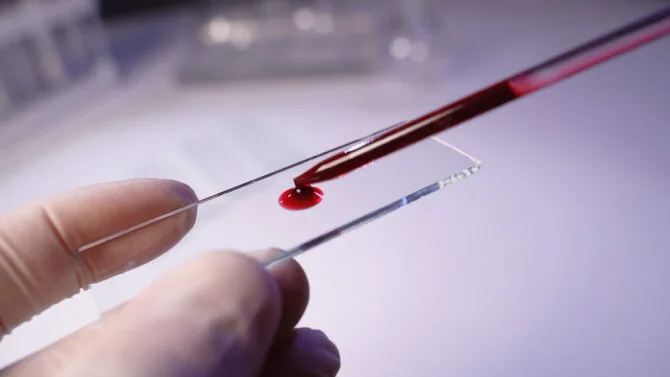
A Guthrie card is a special filter paper card on which a few drops of newborn blood, usually taken from the heel, are placed during newborn screening for certain diseases. Such dried blood samples can be stored and later used for research.
The ferritin levels in infants who later died from SIDS and in the control group samples did not differ. In other words, infants who later died from SIDS were not born with higher iron stores.
The 1996 study results should also be interpreted cautiously. It analyzed only 18 samples from infants who later died from SIDS, each matched with four controls. Such a small sample means the study might have been too weak to detect a small but real difference between groups.

The measurement method itself also raises additional questions. Ferritin was determined from dried blood drops preserved on Guthrie cards using a method specially adapted for this study. From the description provided, it is unclear how well it was validated and how the storage duration and conditions of the samples might have affected the results.
Moreover, ferritin is not solely an indicator of iron stores – its increase can be associated with many infectious diseases, oncological diseases, chronic inflammatory autoimmune diseases, rheumatic diseases, hemochromatosis.
If these factors were not assessed, it is harder to accurately judge the infant’s iron stores based solely on ferritin levels.
The main limitation of this study relates to its question: only ferritin levels at birth were evaluated.
SIDS occurs later, so such a study cannot show what happened with iron metabolism during the months between birth and death. It also says nothing about iron supplements taken later.
Read more Robertas Puchovičius: «Nemuno aušra» will appeal the VRK decision on election financing
The summary of results is also limited by the fact that the study was conducted in one region of Wales, and SIDS is a heterogeneous diagnosis made by exclusion.
Therefore, the 1996 work only allows stating that in this small sample, ferritin concentrations at birth did not differ between groups. It neither proves that iron metabolism is irrelevant to SIDS nor provides grounds to causally link iron supplements with SIDS.
Sudden infant death is not linked to iron
Another important circumstance is that a higher iron level in early infancy is not pathological by itself.
A newborn is born with iron stores accumulated during pregnancy, so their amount is naturally higher in the first months of life and gradually decreases as the child grows. This is a normal physiological process, not inherently related to iron supplement use.
This context is important when evaluating the Facebook post’s attempt to link higher liver iron concentration with prophylactically administered supplements.
The American Academy of Pediatrics (AAP) recommendations state that healthy, full-term infants generally have sufficient iron stores for about the first four months of life. For breastfed infants, additional iron is prophylactically recommended from about 4 months of age.
Thus, the period when the infant’s body naturally has the highest iron stores essentially begins before prophylactic iron supplements are given. Therefore, the mere fact that more iron is found in the liver in early infancy is not a basis to explain this phenomenon by supplement use.
It is also important that iron concentration in the body or iron supplement use is not listed among known SIDS risk factors.
The American Academy of Pediatrics (AAP) 2022 recommendations for SIDS and other sleep-related infant death prevention summarize data from dozens of scientific studies.
The document lists risk factors increasing risk such as infant sleeping on the stomach, soft sleep surfaces and bedding, bed-sharing with an adult, smoking during pregnancy and after birth, alcohol or drug use, overheating, prematurity, and low birth weight.
Among risk-reducing factors, pediatricians highlight sleeping on the back, firm and flat sleep surfaces, infant sleeping in the same room as parents but in a separate crib, breastfeeding, pacifier use, and regular prenatal care.
Neither iron supplements nor higher iron concentration in tissues are mentioned in this list of risk factors. This does not prove that iron cannot have any biological significance under any circumstances, but it shows that current SIDS prevention recommendations do not consider iron supplement use a confirmed SIDS risk factor.
Therefore, the impression created in the Facebook post that iron preparations are one of the significant causes of SIDS does not correspond to how this risk is assessed in modern pediatric recommendations.

Recommended supplement doses are safe
The Facebook post links iron excess to a very wide spectrum of diseases – from cirrhosis, diabetes, and some cancers to Alzheimer’s or Parkinson’s diseases. This part of the claim is not entirely fabricated but is presented in a misleading context.
Long-term and significant iron overload can indeed damage organs and increase the risk of certain diseases. However, such conditions are usually associated with hereditary hemochromatosis, where the body absorbs too much iron, or with repeated blood transfusions, which gradually accumulate iron in the body.
This is not the same as taking iron supplements at doctor-recommended doses for diagnosed deficiency or risk. The post conflates these different situations, giving the reader the impression that any additional iron intake poses the same threat as severe chronic iron overload.
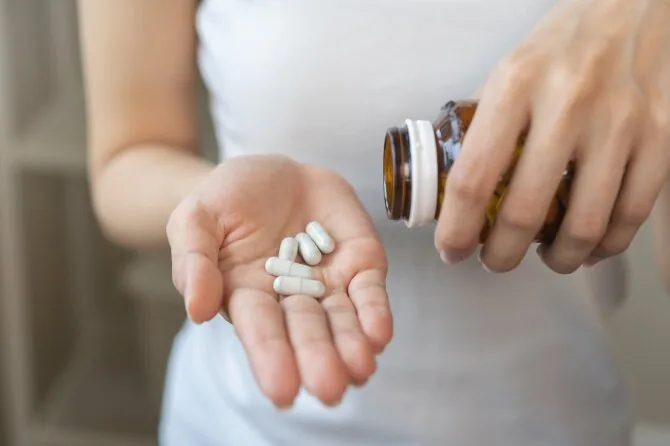
In other words, iron excess can be harmful, but it cannot be concluded that iron supplements taken in usual, recommended doses cause cirrhosis, diabetes, cancer, or neurodegenerative diseases by themselves. This boundary is erased by the social media post.
15min verdict: lacks context. The Facebook post relies on real scientific studies, but their results are interpreted much more broadly than the data allow. The studies did find that iron concentration in tissues of some infants who died from SIDS was higher, but they did not show that this difference was caused by iron supplements, nor did they prove a causal link between their use and SIDS.
Publication prepared by 15min in cooperation with Meta, aiming to stop the spread of misleading news on social media. More about the program and its rules – here.
Read more The Latvian army revealed which country’s drone was shot down last week