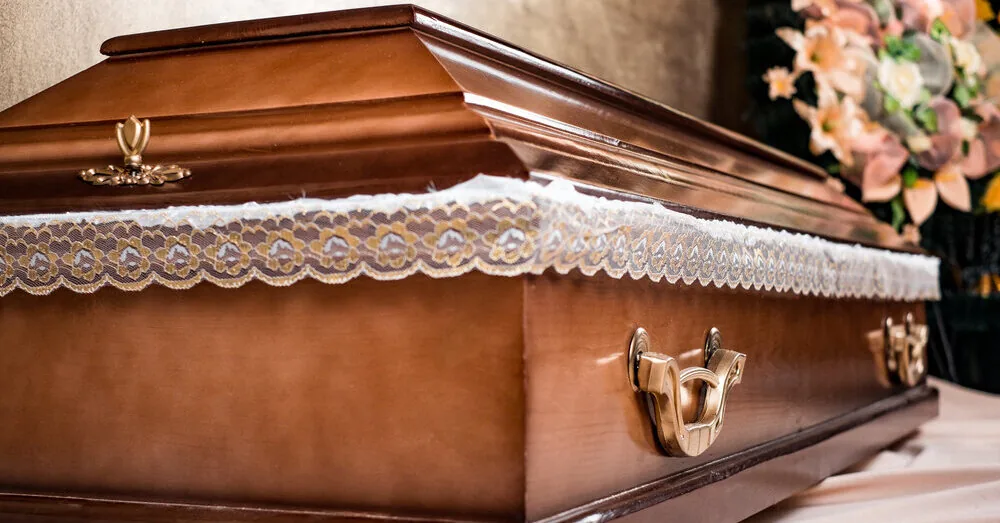
This is evident from Rusprofile data, cited by the Kommersant newspaper. The total number of companies in the funeral services market reached 11.5 thousand at the end of June, which means a 7.6% growth compared to the same period last year.
Read more Poland offers the US and Ukraine to join forces and jointly produce Patriot missiles
The growth in the number of funeral companies is related to the forced withdrawal of businesses from the “grey zone”: agencies that have been operating without registration for a year are forced to officially formalize their activities, says Anton Orlov, director of the Institute for Research on Social Policy Problems.
According to Elena Andreeva, executive director of the Union of Funeral Organizations and Crematoria, this process is driven by the policy of supervisory authorities, which regularly carry out control measures. New companies are also emerging, established by former funeral service and morgue employees, as the share of large market players decreases in the market, noted Vladimir Voroshukha, director of the Nizhny Novgorod Crematorium.
Dividing businesses into several parts due to taxes
In addition, businesses are adapting to the increasing tax burden, added Denis Tversky, a partner at Strategy Partners. From 2026, the government reduced the income threshold for VAT exemption from 60 million to 20 million rubles. As a result, entrepreneurs began to divide their businesses to avoid paying the tax, explained D. Tversky.
Meanwhile, due to the increasing number of small market participants and decreasing solvency of the population, the average bill for funeral services is decreasing, noted V. Voroshukha. According to D. Tversky, clients are increasingly choosing the cheapest options: refusing additional ceremony elements, buying simple coffins, choosing concrete monuments instead of granite ones, and generally trying to minimize costs as much as possible.
Read more Artūras Zuokas. Mayor Benkunskas is preparing Vilnius residents for higher bills
In large cities, funeral expenses currently amount to 90–110 thousand rubles (1-1.2 thousand euros), which is 12–15% more than a year ago, according to A. Orlov, a representative of the Institute for Research on Social Policy Problems.
According to Rosstat data, in January–May 2026, expenses for funeral services across Russia increased by 9.6% to 57.8 billion rubles compared to the same period last year.
At the same time, the average cost of coffin production reached 9.2 thousand rubles in June 2026, which is 11% more than in the same period last year. However, overall, the profitability of the funeral business has not significantly increased and remains low, concluded J. Andreeva from the Union of Funeral Organizations and Crematoria.
Read more Gintarė Verbickaitė. European startup reform: will Lithuania be an observer, or a winner?