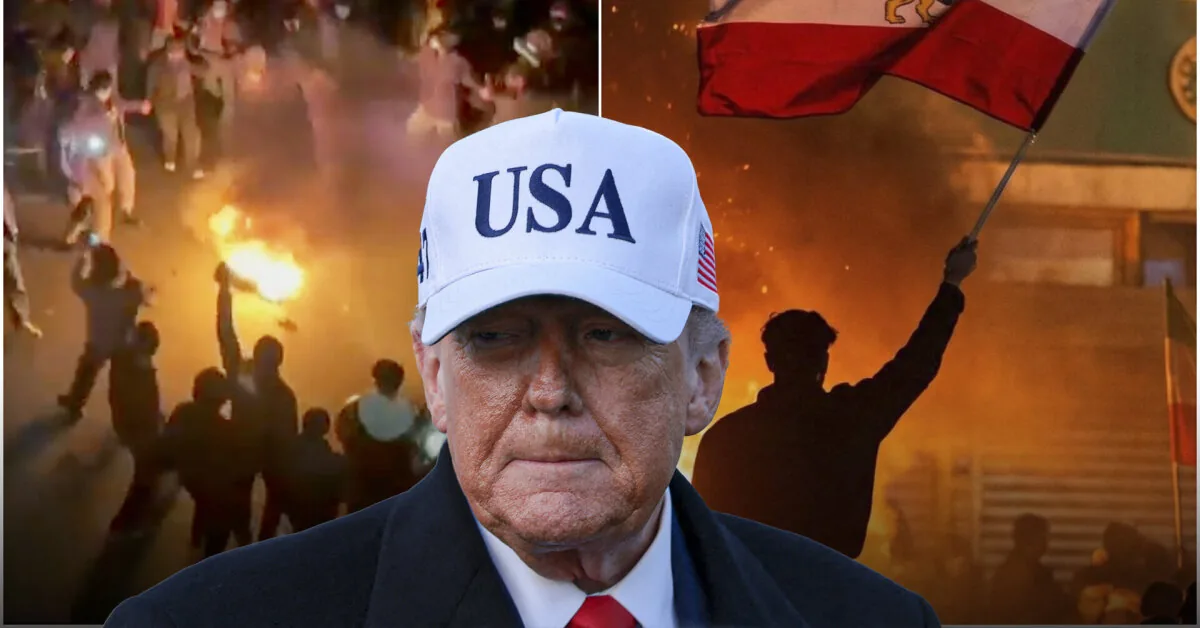
“HELP IS ALREADY ON THE WAY,” he promised.
However, more than five months have passed since the start of the war, and the liberation of the Iranian people from the regime’s oppression has become one of the most prominent unfulfilled goals of this conflict.
Read more «They will kill my son»: FSB threats forced a Ukrainian volunteer to go to Russia
Since the day D. Trump gave his word to the Iranians, Iran has executed at least 26 people connected to the protests that erupted in January. As noted by Amnesty International, a similar danger may threaten dozens of other protesters.
U.S. officials believe that the new Iranian Ayatollah Mojtaba Khamenei is much more interested in developing a nuclear weapon than his father, who was killed in strikes on the first day of the war.
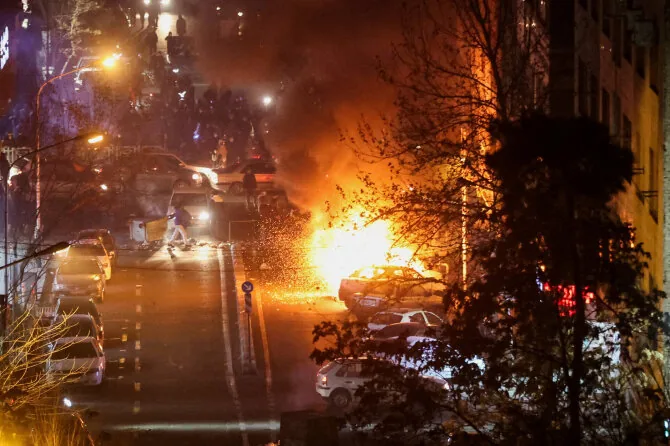
While Iranians try to navigate the emerging crisis, D. Trump is looking for a way out. Negotiators are working on an agreement that could help resume shipping in the practically blocked Strait of Hormuz. The American president himself is trying to lead his country out of a conflict that has lasted much longer than planned and cost more money than he expected.
In an interview this summer, D. Trump admitted he never believed that public resistance would ignite because, in his view, Iranian security forces would have suppressed all demonstrators.
“I never thought – unless they were fully armed – I never thought they would dare such a large-scale uprising, because these individuals tend toward violence,” D. Trump told conservative podcaster Hugh Hewitt.
However, the sense of betrayal is very real for Iranians who believed in D. Trump’s earlier promises.
“I sincerely thought help was already on the way, but I was very wrong,” said 35-year-old Vahid from Tehran.
The man merely echoed the opinion expressed to The New York Times journalists by many other Iranians. All the newspaper’s interlocutors, fearing government reprisals, agreed to speak only on the condition that they be identified by first names only.
36-year-old Maryam, living in the Iranian capital, was involved in anti-government protests in January. Now the woman said that D. Trump exploited her fellow citizens’ uprising to achieve his own goals.
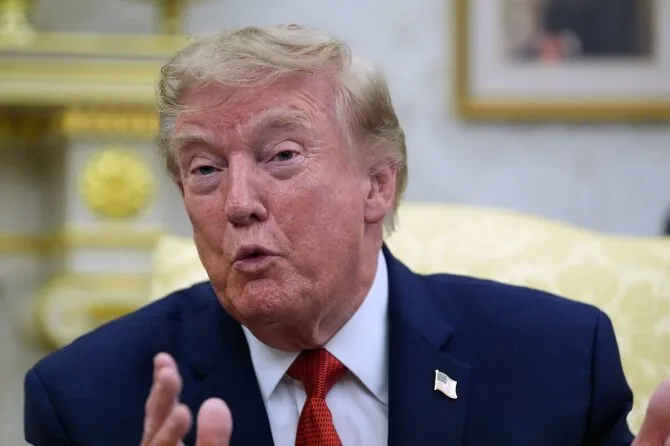
“In my opinion, Trump and the United States are hypocritical. The U.S. president himself is just a showman,” Maryam said. “They used human rights rhetoric only for their own benefit.”
Sajjad, living in Tehran and working in a cinema, spoke even more openly, emphasizing that he trusts neither Iran nor the United States.
“I don’t think either of them (the countries – editor’s note) cares about the interests of the Iranian people,” he said bluntly. “In short, I despise Trump, the United States, and everyone else.”
“Let the oil flow!”
The White House refused to answer questions about D. Trump’s promise to help free the Iranian people. Instead, officials mentioned the often-heard D. Trump goal that Iran should never have a nuclear weapon. However, he never succeeded in achieving this.
“For 47 years, U.S. presidents and many other world leaders have spoken about the threat posed by Iran, but no one had the courage to confront it,” said White House press secretary Anna Kelly in a statement.
“President Trump took decisive action, having a visit to ensure that Iran could never again harm our homeland, our troops, or our allies. A denuclearized Iran means the entire region and its inhabitants would be safer and more stable,” the press secretary emphasized.
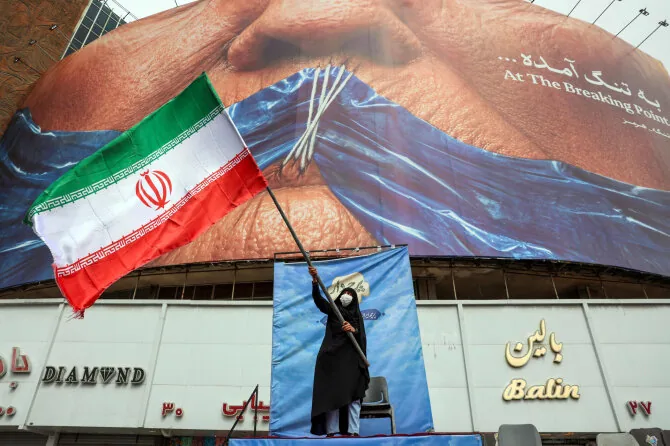
According to data from a U.S.-based human rights activists’ news agency, more than 1,700 Iranian civilians have died in the war. This statistic includes at least 175 people – mostly children – killed in an airstrike targeting a school on the first day of the war.
Behind the scenes, U.S. military officials acknowledged that the strike on the school was carried out by American forces and assessed it as an intelligence failure. Nevertheless, D. Trump distanced himself from any responsibility, stating: “Mistakes happen. War is a cruel thing.”
Over time, D. Trump mentioned the horror experienced by civilians in Iran only briefly, and later stopped talking about it altogether.
When he announced on the first day of the war that Ayatollah Ali Khamenei had died in U.S. and Israeli attacks, he called this move “the greatest and only chance for the Iranian people to reclaim their country.”
In April, he boasted of saving 8 Iranian women from the death penalty. However, the Iranian government strongly disputed this fact, stating that they had been executed.
The following month, D. Trump hinted that he might send weapons to protesters. In June, he stated that under a preliminary agreement, Iran would use its released funds, previously “frozen,” to purchase corn, soybeans, and other goods from U.S. farmers. He viewed this as a mutually beneficial solution: America would get money, and supposedly there would be no famine in Iran, which the country’s people faced due to the war.
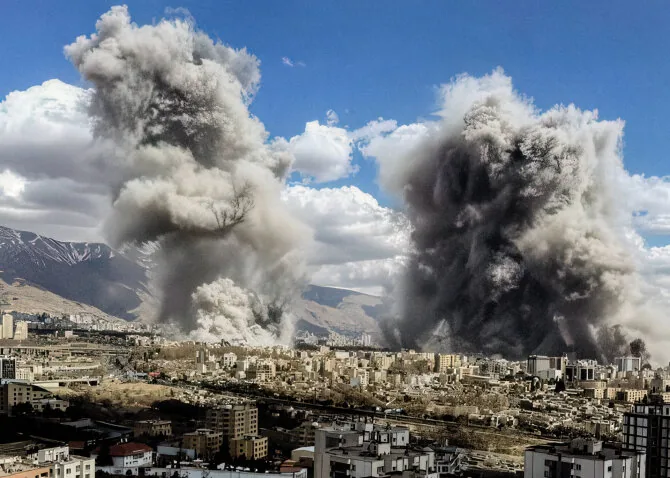
However, most of the time D. Trump devoted to other issues, especially the turmoil in the Strait of Hormuz, which caused a spike in fuel prices and shook global markets.
When in June D. Trump announced the terms of an agreement that quickly collapsed, he did not even mention the Iranian people.
Instead, he declared: “World ships, start your engines. Let the oil flow!”
One of D. Trump’s agreement conditions seemed particularly contradictory to the U.S. president’s initial promises to Iranians: both countries must respect each other’s sovereignty and not interfere in each other’s internal affairs.
He even praised the new Iranian leaders – it was a truly impressive moment, considering that the country’s theocratic rule remained unchanged.
“The current Iranian leaders are very rational people,” D. Trump said. “They are pleasant to deal with. They are strong and intelligent people. They are not radicals and seek to help their country.”
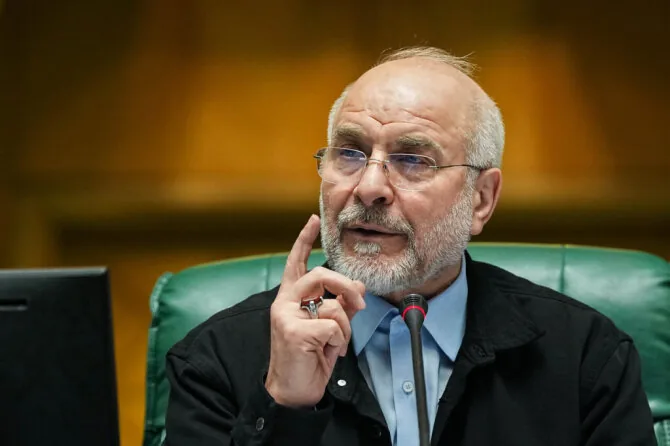
One of the Iranian officials maintaining constant contact with the United States is Mohammad Bagher Ghalibaf – a longtime commander of the Iranian Revolutionary Guard, known for his low tolerance for the opposition. Since the start of the war, the Iranian Revolutionary Guard has gained an even more prominent role in government decision-making. This institution is also responsible for suppressing protests in the country.
“The worst of all worlds”
Richard Fontaine, CEO of the Center for a New American Security and former foreign policy advisor to Senator John McCain, pointed out that this is not the first time in history that a U.S. president has urged people to rise up and then left them in the lurch.
The most notable similar example occurred in 1991 when U.S. President George H.W. Bush publicly urged Iraqi Shiites to rise against their government but later ordered American forces to stay out when Saddam Hussein’s military helicopters and militias drowned the uprising in blood, costing tens of thousands of lives.
Since then, U.S. presidents have acted cautiously and avoided encouraging uprisings abroad. In 2009, President Barack Obama faced pressure from both U.S. parties when he did not take action during the “Green Movement” protests in Iran, fearing it could end in the massacre of demonstrators. Later, he admitted that such caution might have been a mistake.
R. Fontaine noted that of all D. Trump’s promises made to the Iranian people, the most important was support for their liberation, especially considering that the killings of Iranian protesters that began in January seem to have prompted more aggressive U.S. military actions against Iran.
“The biggest losers are the Iranian people,” the expert emphasized. “Now they are left with a war-torn, destroyed country whose economy is in even worse shape than before, and they are still ruled by the same predatory, downright tyrannical government. In a way, this is the worst world of all.”
Maryam, a nurse living in Tehran, recounted that in 2022 she joined anti-government protests during which she was beaten with sticks and saw people bleeding right in the streets. That year she protested out of solidarity.
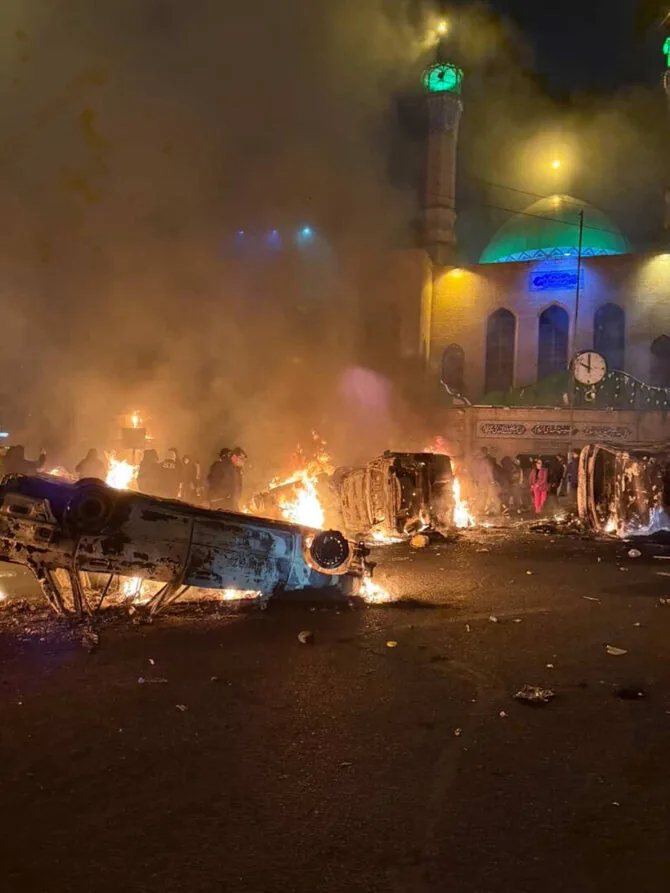
This year she took to the streets because she wanted revenge for what the regime did to her people – not because D. Trump told her to. Now, according to the woman, she has come to terms with “fear and hope.”
“Fear that the spilled blood will go unnoticed and forgotten,” she said. “We do not lose hope because we believe that despair would be a betrayal of our children.”
She believes that both D. Trump and Israeli Prime Minister Benjamin Netanyahu may still have some plan for the Iranian people. But ultimately, Maryam says, Iranians can only rely on each other.
“Our resistance was our own choice – a response to the regime’s crimes and a movement aimed at overthrowing the system,” she explained. “Whether Trump helps now or not, it does not affect our determination. We are grateful for his support, but our struggle does not depend on him.”
Read more Predicted rainy but quite warm weather
This article was published in The New York Times.
© 2026 The New York Times Company