


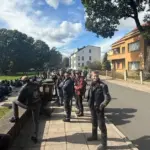
When journalists asked how they would respond to the weather hazard, the marathon organizers replied, “We will not stop the event, but we know what to do if the situation changes.” And thus they provided a simple resilience recipe for every citizen and the state: we know what to do in case of a threat and will implement our plans if necessary. But until then, we will not stop life.
Read more The largest creditor of airBaltic is Pratt & Whitney, the debt amounts to 66.5 million USD
Russia wants us to constantly think about it
The Kremlin’s long-term political goals are to dominate the geopolitical neighborhood, undermine the unity of the EU and NATO, and thus strengthen its weight on the global stage. All means are suitable to achieve these goals – the disastrous war in Ukraine, sabotage and terrorist attacks, economic pressure, division of Western societies, and waves of lies and disinformation poured daily into our, Westerners’, heads.
This is the Kremlin’s cognitive war, targeting our minds. Through it, Russia seeks not only to change our attitudes on various issues – that Russia is winning the war in Ukraine, that it is unbeatable, or that Lithuania’s economy is on the brink of collapse – but also to change our thinking.
In other words, to make us no longer know what is truth and what is lie. To distrust the media, the state, politicians, allies, and each other. To fear Russia and therefore make concessions to it.
We are all susceptible to Kremlin disinformation
In “ON THE FRONTLINE OF FEAR,” I describe a representative study conducted by me and colleagues in the fall of 2025 on Lithuanian society’s resilience to disinformation. It revealed an uncomfortable fact: among a thousand respondents, there was not a single one who rejected all 27 Kremlin narratives tested. On average, respondents agreed with nine.
We believe less often in narratives about NATO or our statehood, but worryingly often in manipulative or false narratives about Lithuania’s economic and social situation or the war in Ukraine.
For example, almost 4 out of 10 Lithuanians agree that the economic situation in Lithuania is constantly worsening. In reality, Lithuania’s economy has been one of the fastest-growing in the EU in recent years. About 1 in 3 agree that due to the worsening economic situation, people are rapidly emigrating from Lithuania. In reality, for the sixth consecutive year, Lithuania has recorded a positive migration trend – more Lithuanian citizens return to the country than leave it.
Almost 1 in 3 agree that Russia cannot be defeated by military means. Although in reality, Russia is bleeding, and without the support of China, Iran, and North Korea (!), it would be much harder for it to continue the war.
One in three residents disagrees that the Lithuanian army and NATO allies are capable of defending Lithuania. In reality, NATO’s conventional military power is incomparably greater than Russia’s, and NATO defends its members daily through collective deterrence. In Lithuania, this means allied fighters in Šiauliai and a German brigade.
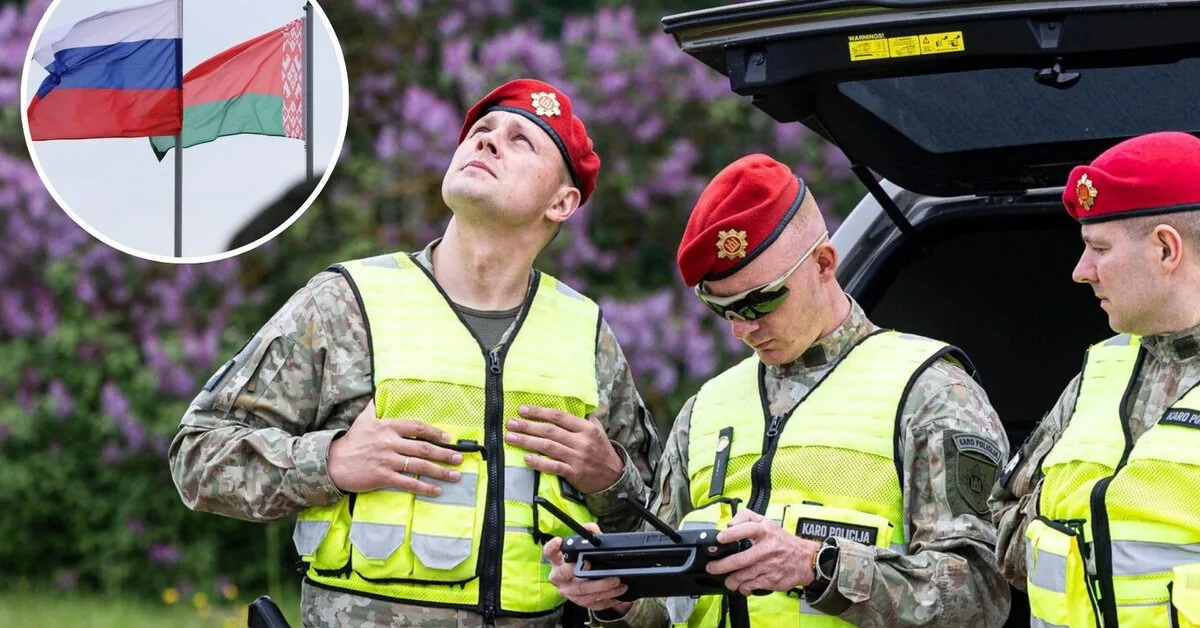
Read more At the border with Belarus, a smugglers’ drone carrying cigarettes «crashed»
17% of residents and even 25% of people under 35 agree that Lithuania is historically and culturally closer to Russia than to the West. Why the youth are more susceptible to this narrative is unclear, but one possible reason is the huge and practically uncontrollable amounts of disinformation on social networks. Primarily on non-Western platforms such as the Chinese “TikTok” or Russian “Telegram.”
Eurostat data published in September shows that in 2025 only 15% of Lithuanians tried to verify the reliability of information found online through other sources. By this indicator, we are second to last in the EU. This does not mean that the remaining 85% believe everything they see online. However, for a country on one of the main fronts of Russia’s information war, this is certainly not a good result.
The Washington-based Institute for the Study of War (ISW) aptly summarizes in its 2025 introduction to Russia’s cognitive war that Russia is not a weak state, but its capabilities are limited compared to what the Kremlin wants to achieve. Therefore, Russia uses cognitive warfare – it seeks to influence our perception of reality so that it can achieve more than its actual military, economic, and political power would allow. And to do so more cheaply, without starting a direct war.
Let’s talk more often about what Russia really wants
Therefore, when talking about the Russian threat, we should less often ask when Russia will attack us and more often what Russia wants us to do today. It is much cheaper for Russia to achieve some of its goals without starting a direct war with NATO. Why risk a catastrophic conflict if it is possible to intimidate Western societies, reduce their willingness to resist, and force us to make decisions beneficial to Russia ourselves?
The least Russia needs is a real war against Lithuania, Latvia, Estonia, Poland, or Finland, in which it would face the entire NATO alliance and risk the collapse of its projected power. But Russia very much needs us to constantly fear Russia. This fear is Russia’s most successful export.

Russia constantly creates fear through threats, disinformation, rattling weapons, sabotage, and terrorist acts in NATO countries, which for some reason we still call “hybrid attacks.” Let’s call things by their real names – there is nothing hybrid about an attempt to attack a plane in Leipzig with a drone loaded with explosives. This is an attack on Germany.
Yes, the Russian threat is real. It is possible that Russia will carry out a terrorist attack in Lithuania. An electrical substation may explode, a train may derail, or Russia may direct a few of its hundreds of drones at “Orlen Lietuva” in Mažeikiai or “Independence” in Klaipėda. We cannot rule this out. We must prepare for it. But we cannot freeze because of it.
Resilience is not the ability to be fearless. Resilience is the ability not to let fear make decisions for us. Like the Vilnius marathon organizers, let’s be prepared for all the surprises the desperate Russian regime may throw at us. But let’s not stop life because of it. And that will be our victory over Russia’s front of fear.
Read more For the first time in 17 years: The President of France is making a state visit to Spain