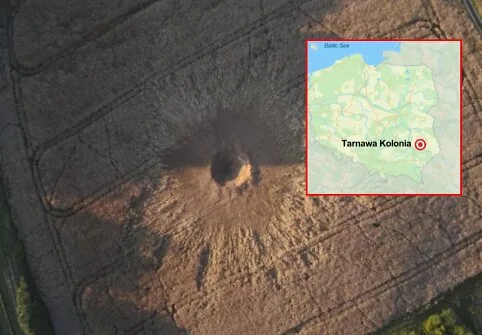









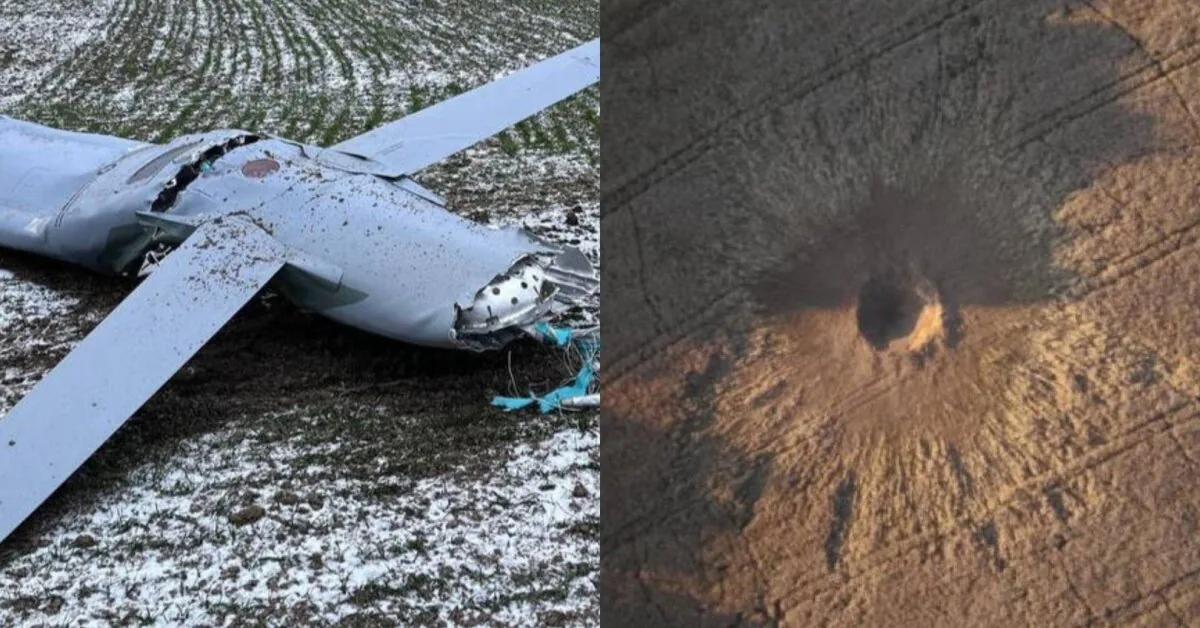
At a press conference, Polish Prime Minister Donald Tusk stated that although the investigation is ongoing, all signs indicate that the object was a Russian Kh-101 cruise missile.
Read more Young woman’s life claimed by melanoma: left an important message before death
Polish Defense Minister Wladislaw Kosiniak-Kamysz added that the “Kh-101” strike is currently the “most likely hypothesis,” noting that Russia launched dozens of such missiles overnight at targets across Ukraine.
What do we know about the Kh-101?
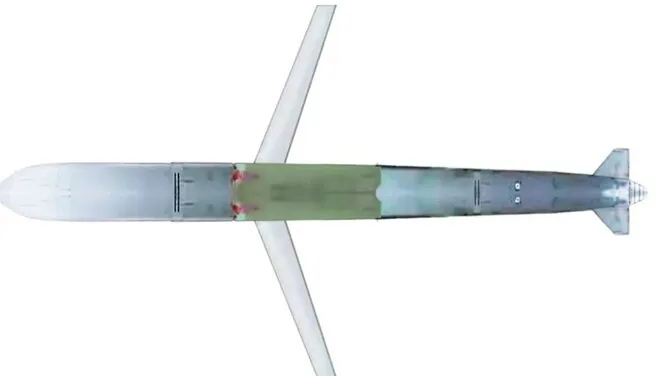
The Kh-101 is one of the most advanced conventional cruise missiles in Russia’s arsenal.
Designed to strike targets thousands of kilometers away, this missile has been widely used against critical infrastructure in Ukraine, including facilities in the western part of the country.
Weighs as much as a minibus
The missile is about 7.5 meters long, and its maximum launch weight is around 2.5 tons – roughly the weight of a minibus, according to TVP World.
It can fly at speeds from 735 km/h up to nearly 1,000 km/h (in the terminal phase), and its maximum range, according to the military analysis center Global Security, is about 5,500 kilometers, although the operational range is usually stated as 3,500 km.
The warhead is reported to weigh about 400 kg, and the Kh-102 variant can carry a nuclear payload.
Launched by strategic bombers
Kh-101 missiles are typically launched from long-range strategic bombers – mostly various Tupolev Tu-95 and Tu-160 variants, which depending on the aircraft type, can carry up to 12 weapons.
Unlike a conventional bomb, which requires the aircraft to fly close to the target to drop it, the Kh-101 cruise missile can be launched from a great distance – allowing the bomber and its crew to remain far beyond the reach of most Ukrainian air defense systems, according to Polish public broadcaster TVP Info.
Read more Russia added Telegram founder Pavel Durov to the «terrorists» blacklist
Another important feature of the Kh-101 is that the missile usually flies at a low altitude, from 30 to 70 meters above the ground, making it much harder for conventional radar systems to detect and track it.
Retired General Jaroslaw Kraszewski, former director of the Polish National Security Bureau, told TVN24 that “these are missiles flying at low altitude and designed so that radar systems, which have their limitations, practically cannot detect them.”
Poland scrambled an F-16 fighter
During the night, Poland activated its air forces to protect the country’s airspace when Russia launched a large-scale missile and drone attack against western Ukraine.
The Polish operational command reported that at about 3:40 a.m. local time, an unidentified object moving westward was detected in the country’s airspace.
“A standing-by F-16 fighter was dispatched to identify and intercept it in that area,” the command reported.
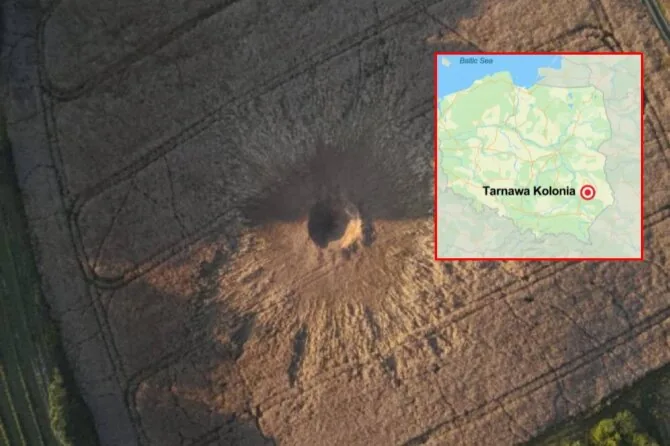
However, the object later disappeared from radar screens. This prompted the military to send a helicopter to the last known location, where the crew later found the impact site in an uninhabited area near the village of Tarnava Kolonia.
Read more Kaunas centurions and their teachers solemnly honored: awards and acknowledgments presented