„I always look for works that emotionally affect me very deeply – only such I perform. Listening to them again and again, ideas begin to be born, which often go beyond the boundaries of music alone. But the flute always remains in the first place,“ admits D. Šeibok.
From rules – to complete freedom
Two years ago, the flutist who returned to Lithuania from California brought not only international experience but also a question that still sounds unusual in the world of classical music – how to convey to the audience everything that lies behind each sound?
She searched for the answer for five years.
„Flute teachers constantly stopped me – in classical music everything must be precisely regulated: breathing, posture, hand position. But for me, movement was always a natural form of expression,“ the performer says.
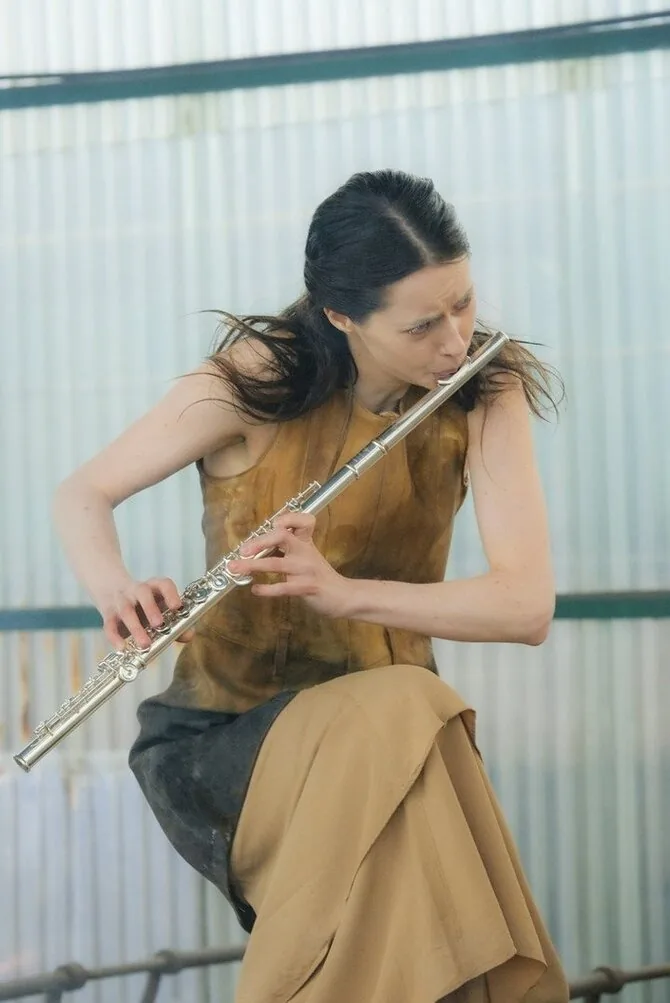
Later she began to consciously work not only with the body but also with facial expressions. According to Dominyka, the face should not only be a consequence of playing – it can become the story itself: „I wanted not only my flute to play. I wanted the whole body and the whole soul to play.“
Why did the flutist envy opera soloists?
Dominyka does not hide that for a long time she felt envy towards opera performers:
„They have costumes, scenography, makeup, directing, they can create characters. Instrumentalists usually do not have such space. I really wanted it, so I decided to create it myself.“
However, such a path required enormous work. According to the musician, playing virtuosic classical music, consciously controlling body movements and facial expressions at the same time is an extremely difficult task.
„At first, it seemed that the brain simply could not control all the processes at once. Only after several years of practice did the freedom to improvise sound and movement together appear,“ admits D. Šeibok.
Three works, three different stories
The project „Embodied Music“ consists of three independent performances.
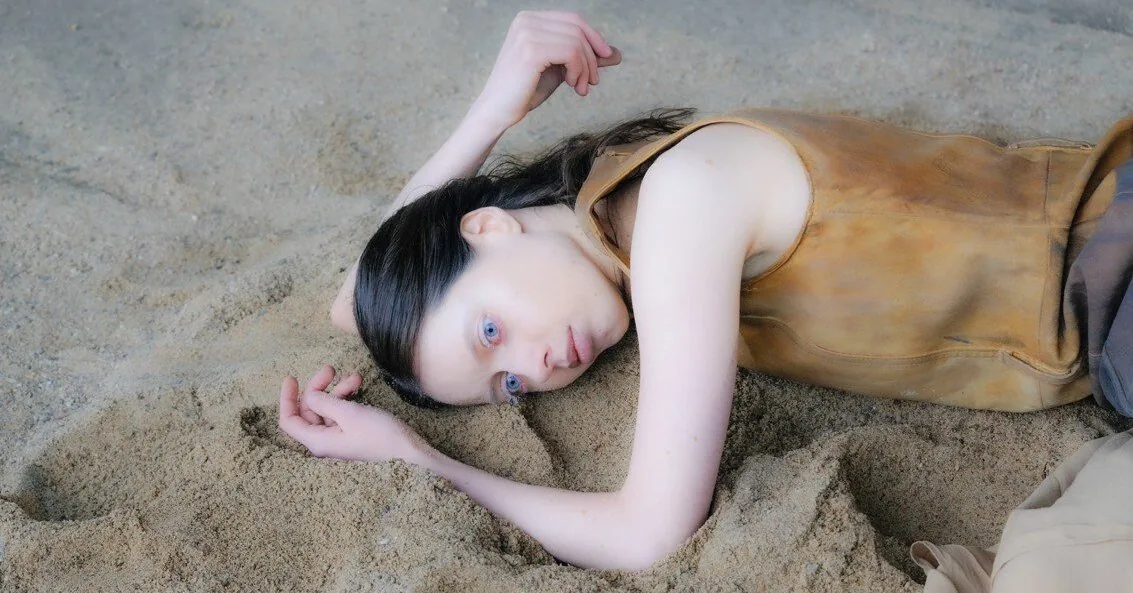
The first part interprets Claude Debussy’s work „Syrinx“, based on the ancient Greek myth about a nymph turned into a reed. In this version, the flute is completely silent.
„I wanted to give it back a voice – without the flute,“ says the performer.
The second part has neither a score nor a composer. The flutist rides a railway handcar, and the music becomes the environment itself – passing trains, bird calls, metal sounds, and the creaking of wheels.
The third interprets Franz Schubert’s serenade „Ständchen“, performed together with pianist Simona Zajančauskaite-Giedraite and percussionist Džiugas Daugirdas. Here, the longing for love becomes not only audible but also physically experienced.
Even the piano had to be special
All three performances were filmed in the hangar of Vilnius Railway Park. According to Dominyka, a space was consciously sought that would not have the sterility of a concert hall.
„I wanted a place with character and its own atmosphere. The hangar turned out to be exactly that,“ says the performer.
Finding the piano was no less of a challenge.
„I needed an instrument that was not new, that I would not mind slightly damaging during filming, but at the same time had its own history and character. I am very grateful to the Lithuanian Composers’ Union, which gave me such a piano. It seemed that it was just waiting for this project,“ rejoices D. Šeibok.
The body as a second instrument
Dominyka hopes that her project will encourage other musicians to seek new forms of expression: „I would like to show that the instrument does not necessarily end with sound, that the whole body can play together.“
This idea continues beyond this project. Through her interdisciplinary music platform „Five Skins“ that she founded, the performer has been developing joint music and other art projects in Lithuania and abroad for several years, and in Hungary she annually leads interdisciplinary performance masterclasses for classical music performers.
On September 11, it will be possible to hear and see „Embodied Music“ live at the Music Magic Club in Vilnius.
Read more Due to the conflict in the Middle East, fuel prices in Poland have reached record highs