Start with good beef
The best steak starts long before you turn on the grill or heat the pan, according to a press release. The most important thing is the meat itself. Pay attention to the marbling of fat: thin white veins inside the meat melt when cooked, providing juiciness and flavor. The more evenly they are distributed, the better the result will be. Choose a steak at least 3 cm thick – this makes it easier to achieve a crispy crust and a juicy interior.
Read more Horror: Briton tried to drown a stranger on the beach and suffocate a boy in the sand
When buying, it’s worth knowing the main cuts. Ribeye is fattier and has a richer flavor. Sirloin or tenderloin are leaner and among the softest choices. If in doubt, choose ribeye: due to its fat content, it’s harder to overcook, making it more forgiving for home cooks.
After guests asked where they could buy the same beef they tasted in the restaurant, “Meating Room” representatives decided to offer meat for takeaway and home cooking. The restaurant offers chicken, beef, and lamb from Lithuania, Germany, Uruguay, Argentina, Australia, and New Zealand – the same quality used in the restaurant’s kitchen.

Aging beef
Aged beef becomes more tender and develops a richer, nutty flavor. During the aging process, muscle fibers break down, making the meat softer. Look for meat with an aging label in the store or ask the seller – the difference on the plate is immediately noticeable.
Take the meat out of the refrigerator in advance
Cold meat cooks unevenly: the surface burns while the center remains raw. Take the steak out of the refrigerator about 30–60 minutes before cooking to allow it to warm up to room temperature.
Before placing it in the pan, thoroughly pat the surface dry with a paper towel – moisture prevents a crust from forming. Salt with coarse salt just before cooking: if the meat is salted too early, the salt will draw out some of the juices.
Heat the pan properly
The crust is what gives the steak most of its flavor, and it only forms when cooked at high temperatures. A cast-iron skillet is best for steaks. Heat it very strongly until it just begins to smoke. Use oil that can withstand high temperatures.
Don’t overcrowd the pan – a crowded pan cools down, and the steak boils instead of searing. Once you’ve placed the steak, don’t touch it for a few minutes: let a brown crust form, and only then flip it to the other side.
Read more „NEO Rally Žemaitija 2026“. How much does adrenaline cost?
At the end, you can add a knob of butter, garlic, and fresh herbs, and baste the steak several times with the rendered fat – this will give it extra aroma.
Doneness and temperature
The most accurate way to cook a steak to your desired doneness is to use a meat thermometer. General guidelines by internal steak temperature:
Rare: about 50–52 °C
Medium rare: about 54–57 °C
Medium: about 60–63 °C
Medium well: about 65–68 °C
Don’t rely solely on cooking time – the result depends on the steak’s thickness and cooking conditions. Remember that the temperature continues to rise for a few minutes after removing the steak from the heat, so it should be taken off when it’s 2–3 °C below your desired doneness. A medium-rare steak is usually the juiciest.
Let the steak “rest”
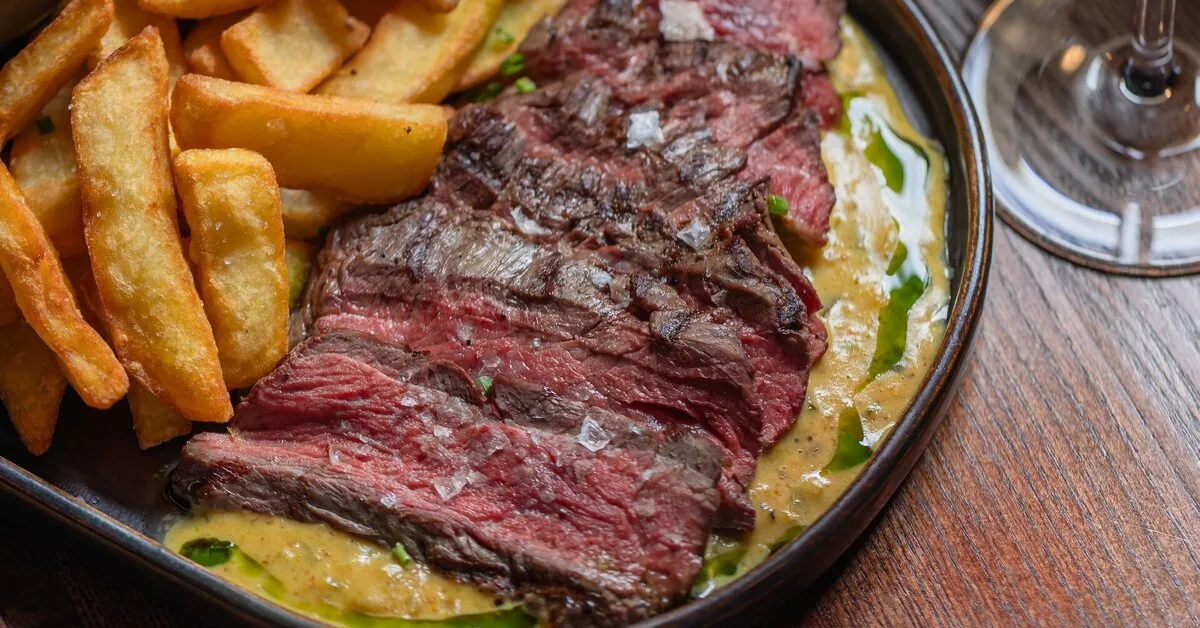
Many people skip this step, even though it determines the final result. Let the cooked steak rest for 5–10 minutes. During this time, the juices redistribute evenly throughout the meat, so they don’t run out onto the plate when cut, and the steak remains tender and rich. Before serving, sprinkle with coarse salt flakes and freshly ground pepper.
Common mistakes when cooking steak
Steak is placed directly from the refrigerator – the inside remains cold and raw.
Pan is not hot enough – no crust forms, the meat just boils.
Steak is flipped too often or pressed with a spatula – juices are squeezed out.
Meat is cut immediately without allowing it to “rest”.
Salted too early or too little.
“Most often I see one mistake – impatience. Everyone wants to cut the steak as soon as it’s off the heat. But those few minutes of ‘rest’ determine whether the meat will be juicy or dry,” says Maksim Montorov, chef at “Meating Room” restaurant.
A perfect steak starts with quality meat, but details are no less important – the right temperature, “rest” time, and patience. These are often what determine the final result.
Read more Epso-G will be able to borrow up to 160 million euros from Swedbank over two years