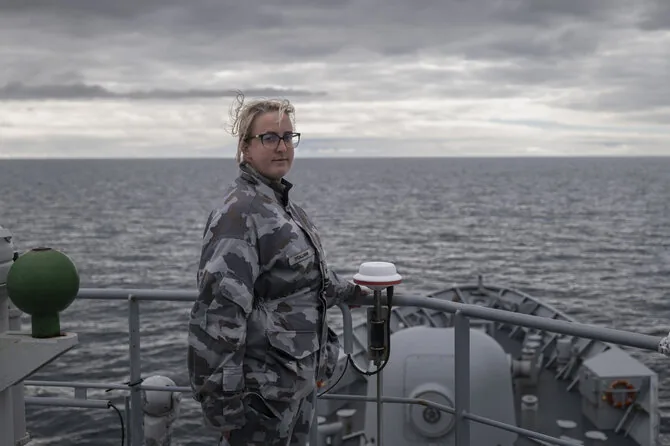
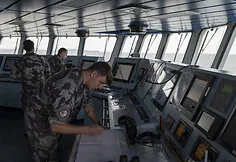
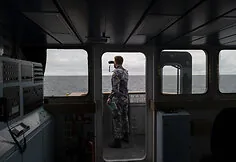
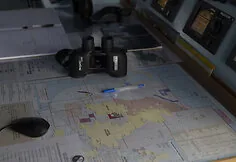
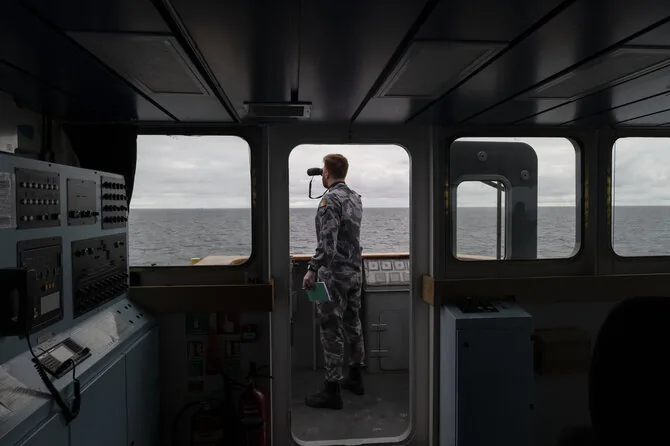
Scanning the horizon, Lieutenant Commander Maria O’Callaghan pointed to numerous lines on the navigation screen, marking the underwater power cables and gas pipelines stretching between Ireland and Great Britain.
Read more June 5th horoscope: fate promises surprises for some Zodiac signs
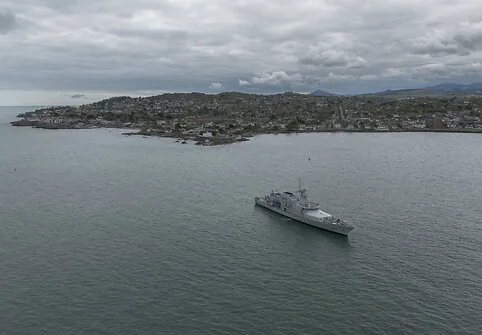
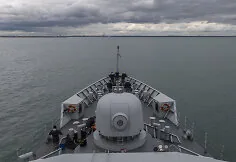
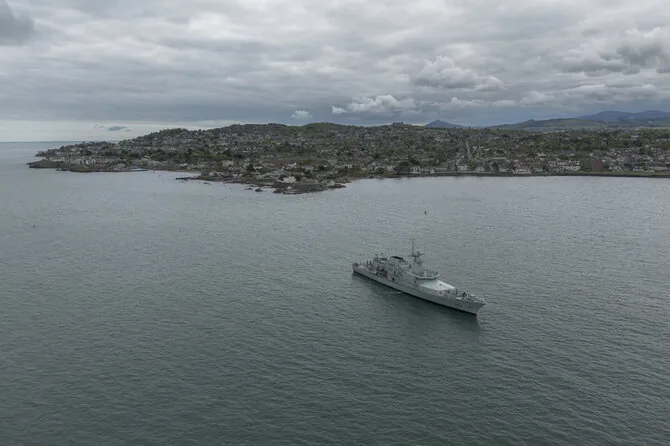
The crew of the Irish ship “George Bernard Shaw” looked for anything unusual, while the captain monitored a large vessel carrying liquefied natural gas on the screen. That ship is not on the sanctions list, but the crew knew from previous monitoring that it was sailing north towards a Russian port, just skirting Irish territorial waters.
Against the backdrop of a hybrid threat gathering over Europe from an emboldened Moscow, with ships attempting to circumvent Western sanctions continuing to sail to and from Russia, such patrolling is part of an intensified Irish campaign to more closely monitor the waters surrounding it.
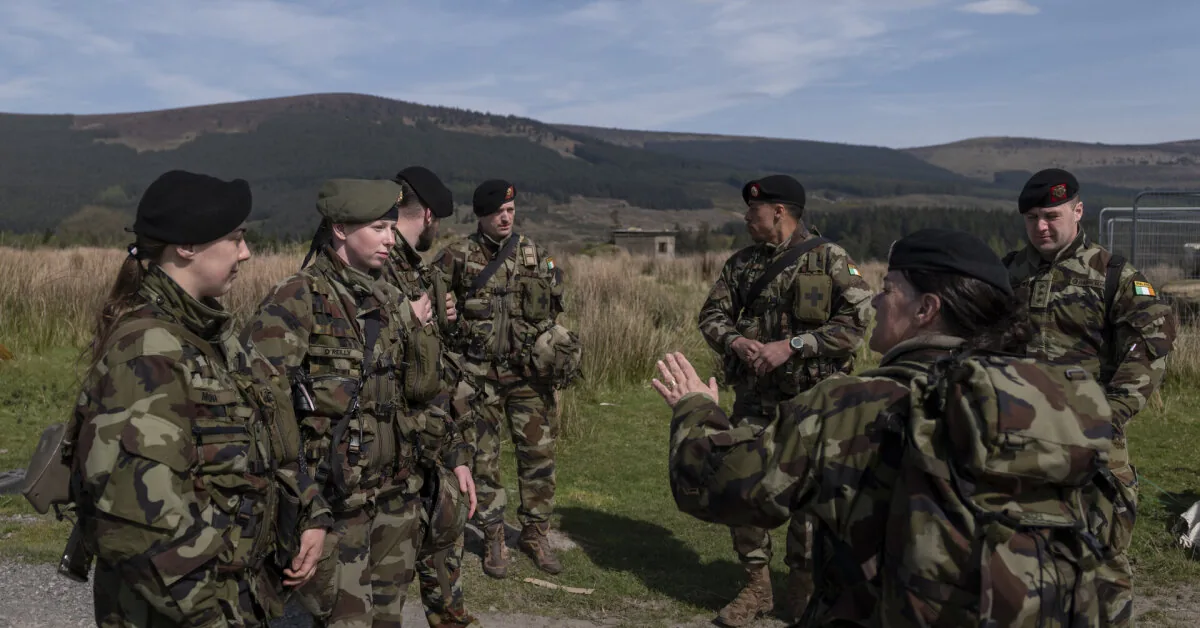
As the United States withdraws from long-standing alliances in Europe, experts warn that the small island nation, with just 7,500 permanent force personnel, could become Europe’s weak link in defense. This danger has awakened the Irish government, which has rushed to modernize and strengthen its defenses.
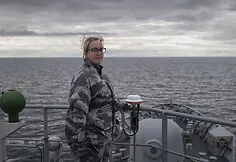
M. O’Callaghan, 38, said that her ship now makes contact and asks questions of other vessels’ crews via radio in a way never before seen in her 20 years of service.
“It’s just extracting information that’s out there somewhere,” she noted. “It’s mostly about observing what’s around and being interested in it.”
Ireland has long adhered to a tradition of military neutrality. Successive Irish governments have firmly relied on this position to justify their meager defense spending.
Ireland is not a member of NATO. However, according to security experts, Ireland is extremely significant for other reasons. It is a global data center and the European headquarters for many international technology giants, including Apple, Google, and Meta.
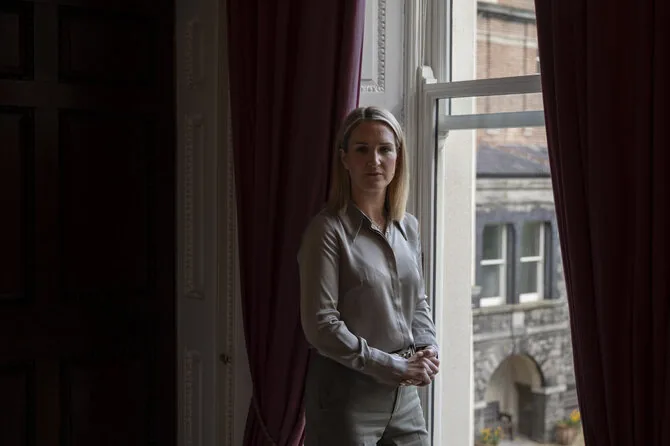
Irish Minister for Foreign Affairs, Trade and Defence Helen McEntee acknowledged in an interview with “The New York Times” that her government is working to urgently close gaps caused by underinvestment.
“We need to clearly understand what we, as a country, need to do. That means having stronger defense and ensuring security. Therefore, we need to invest more in it,” the minister said. “And we are doing that.”
Changes are happening “as quickly as possible,” said H. McEntee, emphasizing that hybrid threats from Russia have clearly shown one thing: “Ireland is not immune to this.”
The country increased its overall defense budget for the period 2026-2030 by 55 percent – to 1.7 billion euros. In February, Ireland unveiled its first Maritime Security Strategy, outlining a five-year plan to protect its maritime interests and strengthen its defense.
Security experts agree that maritime threats are increasing. They mention the so-called “shadow fleet” – a group of aging tankers that secretly transport Russian oil and fuel to circumvent Western sanctions. However, it is suspected that they are also preparing diversions near underwater cables in various parts of Europe.
In 2024, the Irish Naval Service escorted the vessel “Yantar,” which, according to Western security services, was a Russian spy ship used to collect intelligence and map critical underwater infrastructure, out of its territorial waters off the country’s west coast. A year later, it sailed through the Irish Sea again. Other Russian ships have also been observed loitering over data and energy cables in Irish waters.
After Great Britain announced a new policy a few weeks ago, allowing the Royal Navy to board sanctioned Russian vessels and those transiting through its waters, a significant number of ships belonging to the “shadow fleet” chose to sail around the western coast of Ireland.
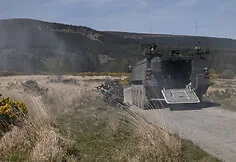
Due to legal restrictions and a lack of capacity, the naval service can do little more than inform other ships via radio and ask questions. Ireland’s eight-ship fleet lacks underwater sonars, anti-drone, and air defense systems. Crew shortages also complicate patrolling.
“Ireland really needs to climb a very steep hill,” stated Mark Mellett, former Chief of Staff of the Irish Defence Forces, adding: “For Russia to strengthen, it will be enough for Europe to appear weaker.”
This summer, as Ireland prepares to assume the rotating presidency of the European Union in the second half of the year, the concerns seem urgent. Many European leaders will need to travel to the island to organize meetings, which could pose security risks. For example, in 2025, when Denmark held the presidency, Copenhagen reported drone incursions into its airspace.
In preparation for this, Ireland also seeks to demonstrate greater commitment to its European partners. The government has accelerated some defense plans, including a military radar program. Some anti-drone technologies will be deployed in the coming weeks. Officials note that the five-year budget increase can also be seen as a sign of greater commitment.
Meanwhile, others worry that these measures are not broad or fast enough.
Irish Member of the European Parliament Barry Andrews stated in a report earlier this year that the country’s security oversight, infrastructure, and military capabilities are insufficient under current security conditions. While he acknowledged some progress had been made, he said the upcoming presidency poses particular concern.
“A target appears on your back. Even countries with much more sophisticated defense capabilities have experienced significant infrastructure disruptions during their presidencies,” the MEP noted.
“I believe that the level of threat to Ireland has changed over the past few years due to major problems beyond our borders,” B. Andrews emphasized, citing weakening United States commitments to NATO and Russia’s war of aggression in Ukraine.
“Furthermore, Ireland has long had a kind of practice of strategic helplessness. Both the US, NATO, and Great Britain indirectly took care of Ireland’s defense and security,” he stated.
Irish military neutrality – a cornerstone of its foreign policy – has a long and complex history, rooted in centuries of British occupation, followed by the War of Independence and the Civil War.
The country has maintained military neutrality since its foundation, including during World War II. Nevertheless, this principle has remained popular. And Minister H. McEntee dismissed talk that the government is abandoning this position.
“Ireland’s military neutrality is beyond doubt,” the minister emphasized, but added that neutrality in itself does not mean that the country should not invest in defense.
One of Ireland’s national prides is the country’s continuous involvement in peacekeeping missions. Notably, it was Ireland that sent the most troops to the United Nations peacekeeping mission in Lebanon, known as the UN Interim Force in Lebanon (UNIFIL).
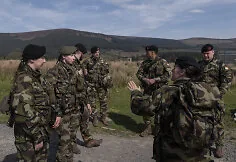
Ireland plans to increase its permanent defense forces to 11,500 troops by 2028. The Naval Service, which has long been entrusted with duties such as monitoring fishing territories, apprehending drug smugglers, and search and rescue operations, will soon begin modernization. This will involve upgrading vessels and increasing staff numbers.
Due to the changed security climate, “we will take a path we have never taken before,” stated Aonghus O Neachtain, spokesperson for the Naval Service.
He noted that in recent weeks, Ireland has gone from monitoring about four “shadow fleet” vessels in its waters at any one time to almost three dozen.
“We simply didn’t anticipate most of these things happening,” the spokesperson explained.
According to Captain M. O’Callaghan of the “George Bernard Shaw,” the view from the bridge will look completely different in the coming months and years. Sophisticated sonar equipment will alert the crew to underwater activity, while surveillance radars will allow for the identification and tracking of aerial threats.
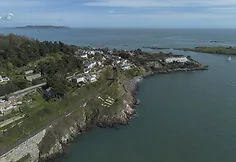
This is part of a rapidly changing understanding of the importance of the sea, the captain said, her ship seemingly gliding through an exceptionally calm stretch of the Irish Sea northeast of Dublin.
“You’ll hear it called ‘sea blindness.’ We, as a nation, simply didn’t understand it for a long time, we were too inward-looking,” M. O’Callaghan noted. “But that has truly changed.”
This article was published in “The New York Times”.
© 2026 The New York Times Company