

Some Russians are tired of the economic stagnation and intensifying Ukrainian counterattacks, and some fear that V. Putin may announce a massive new mobilization of troops after the elections.
Read more The Prime Minister spoke about whether the heating allowance will be reinstated
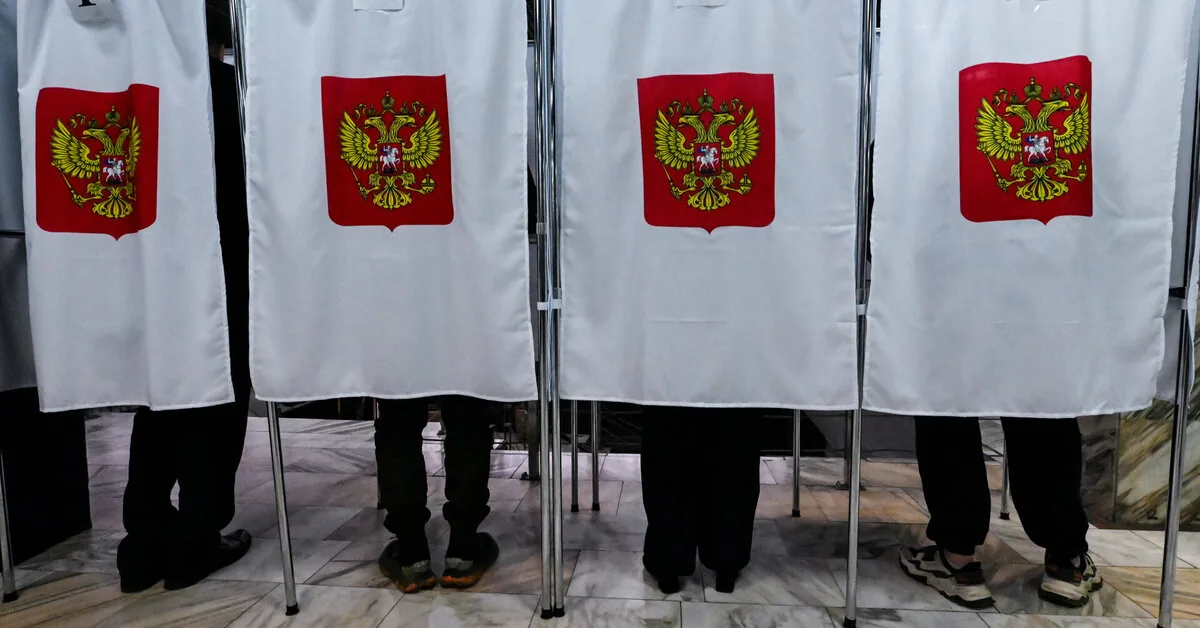
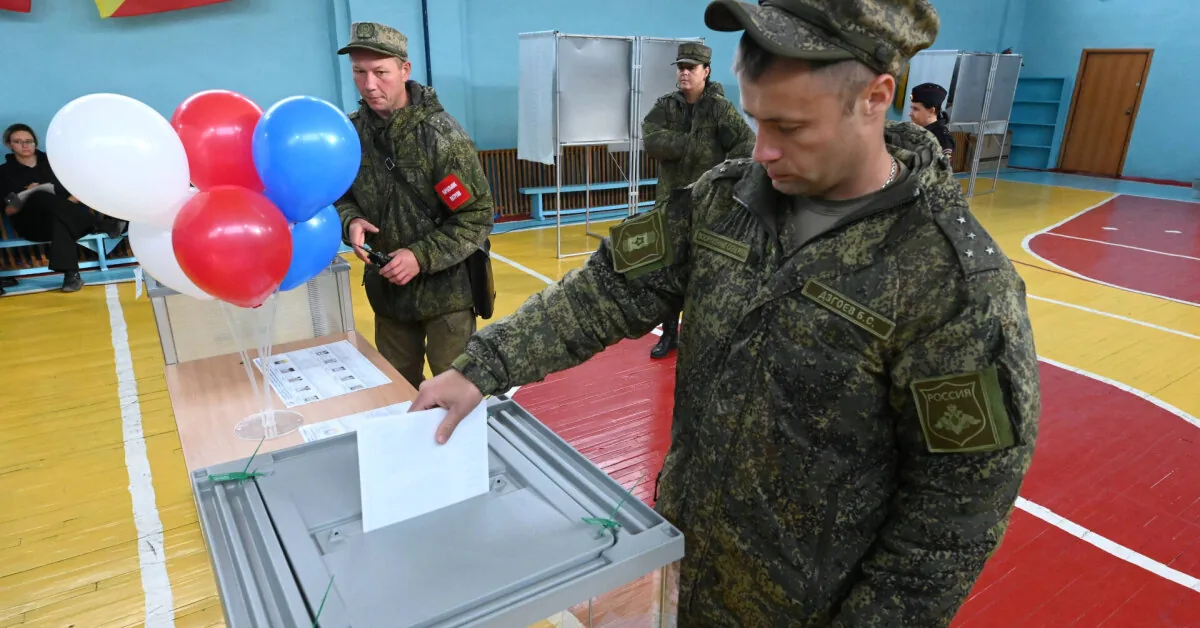
The voting, taking place from September 18 to 20, is the first parliamentary election since Russia launched its offensive in 2022, and only the second national election since the start of the war, after the 2024 presidential election when V. Putin began a new term.
The voting is also taking place in parts of Ukraine occupied by the Russian military.
Reminding of the reality of war, Ukrainian drones flew to Moscow on Friday. Moscow Mayor Sergei Sobyanin reported that Russia destroyed dozens of drones flying towards the capital overnight.
“From 8 p.m. on September 17 (local and Lithuanian time) until 7 a.m. on September 18, more than 350 unmanned aerial vehicles flew towards the Moscow region,” Sobyanin said on the Telegram platform.
“It is reported that most of them were destroyed at the outer defense perimeter, including 64 drones intercepted as they approached Moscow,” he said.
The war has claimed hundreds of thousands of lives, strict censorship has been imposed in Russia, Eastern Ukraine has been devastated, and unprecedented Western sanctions have been imposed on Moscow.
With the Kremlin banning any criticism of the war, there is no real opposition party on the ballots, so the ruling V. Putin party, United Russia, is guaranteed a majority of seats in the State Duma.
One European diplomat told AFP news agency that although the elections are a “complete sham,” it is a “ritual that the Kremlin considers necessary,” so efforts will be made to “ensure high voter turnout.”
V. Putin has ruled Russia since New Year’s Eve 2000, and his party United Russia has dominated Russian politics since the beginning of the century.
Moscow has banned criticism of its war in Ukraine, and Russian elections, strictly controlled by the Kremlin, offer few surprises.
The voting, which will renew 450 seats in the Duma, the lower house of the Russian parliament, will run until 9 p.m. Sunday Moscow (and Lithuanian) time.
Russia’s Kamchatka Peninsula and Chukotka by the Pacific Ocean are the first of Russia’s 11 time zones to start voting.
Only pro-Putin parties
Half of the 450 seats in parliament will be distributed according to national party list voting, and the other half in single-member constituencies across the country.
Only parties supporting V. Putin and the war were allowed to participate in the national elections: the ruling United Russia, the Communist Party, the A Just Russia party, the nationalist LDPR, and the New People.
The only anti-war party still operating in Russia, Yabloko, was removed from the elections.
A 20-year-old Muscovite named Apostol told AFP news agency that he “sees no point” in voting for anyone other than United Russia because it “will win anyway.”
Read more Alytus police found 12 liters of homemade moonshine-filled cannabis at the suspect’s home
Russian political expert Tatiana Stanovaya, working in France, said V. Putin likes to “compare his political situation” with that of European countries.
“So he can always say: look, we had elections. I have such great Russian support,” she told AFP.
“Therefore, it is very important to him personally, emotionally, politically,” she said.
The authorities have used the circumstances of the war to intensify repression to an unprecedented level since Soviet times.
All major opponents of V. Putin are imprisoned, abroad, or dead. Among the latter is his main rival Alexei Navalny, who died in a Russian prison in 2024.
Although the powers of the Russian parliament under V. Putin have been greatly reduced, legislative elections previously caused tension.
In 2011, widespread fraud and V. Putin’s return to the Kremlin from the prime minister post triggered the largest protests in Russia since the collapse of the USSR.
In Moscow, few reminders exist that elections are taking place this year. There are almost no election posters, except for general institutional calls to participate, with the slogan: “Your vote is Russia’s strength.”
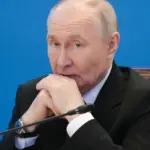
Before the vote, the 73-year-old president urged Russians to cast their votes and thus show the soldiers that “millions of people stand behind our fighters,” and to demonstrate “a united response to those who want to weaken Russia.”
Fear of mobilization
The elections will become a barometer of moods regarding the war. The war has already claimed hundreds of thousands of lives and affected the daily lives of Russians, even those living thousands of kilometers from the front.
In recent months, Kyiv has intensified long-range strikes on Russian territory – described as a justified response to Moscow’s attacks – causing fuel shortages, billions of rubles in damage, and civilian deaths.
Amid constant rumors, V. Putin himself was forced to deny that Moscow plans a new wave of mobilization after the elections, similar to the unpopular 2022 call-up of 300,000 reservists.
Kremlin critics, Kyiv, and some Western countries have accused him of exactly such plans.
Because of this highly unpopular move, draft-age men have been fleeing Russia en masse.
A. Navalny’s widow Yulia Navalnaya urged Russians opposed to the war to vote at the same time – Sunday at noon.
However, the Yabloko party opposed this and said it is better not to vote.
“Are you suggesting we again jump like sheep to their tune and vote for those who caused people’s deaths in Russia and Ukraine?” said its chairman Nikolai Rybakov at a party meeting in St. Petersburg this week.
Read more Play «Dawn of the Gods»: who killed Mantas Kvedaravičius?