








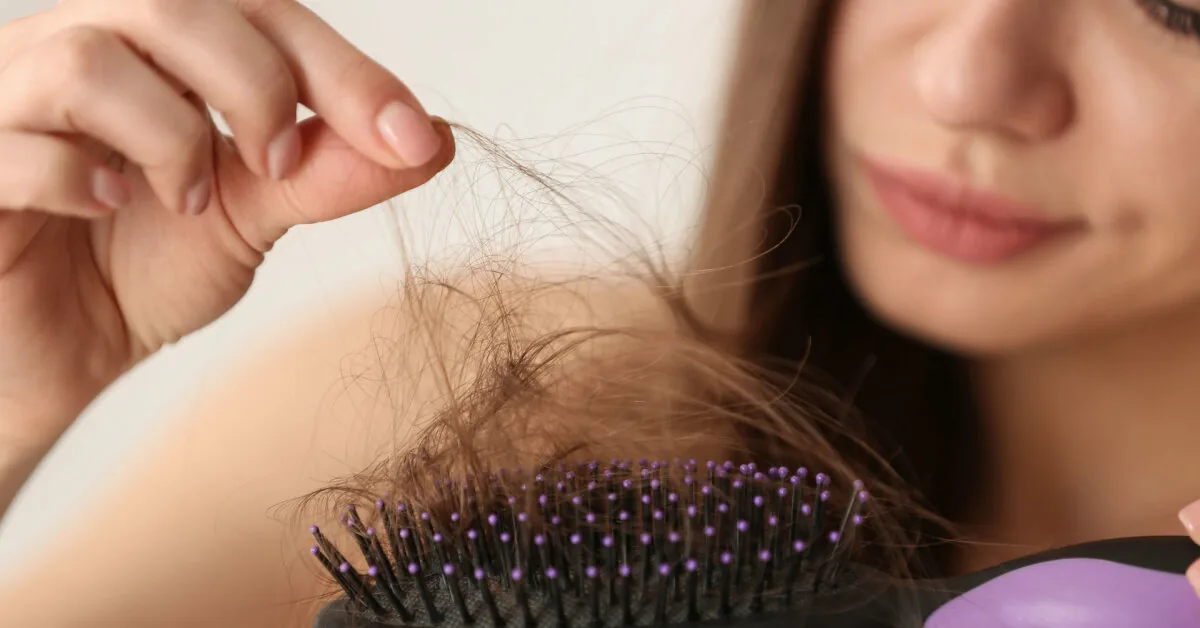
“Many people, noticing more hair strands left on the hairbrush, pillow, or in the shower, usually get scared and think they have started losing hair. However, losing some hair strands is completely normal – a healthy person loses about 50–100 hairs per day, some less, some more. It is much more useful to observe the overall trend: whether there is clearly more hair than usual, whether the density is decreasing, whether there are bald patches visible on the scalp, or if the hair loss is prolonged,” says pharmacist G. Stankevičienė in a press release.
Read more South Korean President: Donald Trump clearly wants dialogue with North Korea
Why does hair fall out more intensively in autumn?
The pharmacist explains that each hair goes through three different growth cycle phases: active growth, transitional, and resting, after which the hair falls out and a new cycle begins in the follicle. Not all scalp hairs reach these stages simultaneously, so we lose some every day. It has been observed that at the end of summer, more hairs may enter the resting phase, so later, in autumn, more hair falls out.

“If in autumn a few more hairs fall out on the brush or when washing the head, but the density does not obviously change, no thinner patches appear on the scalp, and the hair loss gradually decreases, usually there is no need to worry. It is important to assess not just what we see on the brush one morning, but the change over a longer period,” explains G. Stankevičienė.
More hair after showering can also be noticed by people who wash their hair less often. Washing and combing remove hairs that have already detached from the follicle, so after a few days, more of them accumulate at once. Washing or gentle combing itself does not cause hair loss.
However, the pharmacist urges to distinguish hair loss from hair breakage. Frequent hair coloring, lightening, and hot styling tools can damage the hair shaft, and constantly tightly tied braids or buns can eventually damage the follicles. You can recognize hair breakage rather than hair loss by looking at the hairs themselves – if you notice shorter hairs of various lengths rather than whole fallen hairs, it means the hair is breaking.
Finding the cause is not so simple
If hair loss becomes much more intense, the cause does not necessarily coincide with the time when the person noticed it. More hairs can enter the resting phase after severe emotional or physical stress, high temperature, infection, surgery, childbirth, or significant weight loss. Then heavier hair loss may start only after a few months, not immediately.
Read more War in Ukraine. Russia will pretend it was accidental: revealed Moscow’s plans against NATO
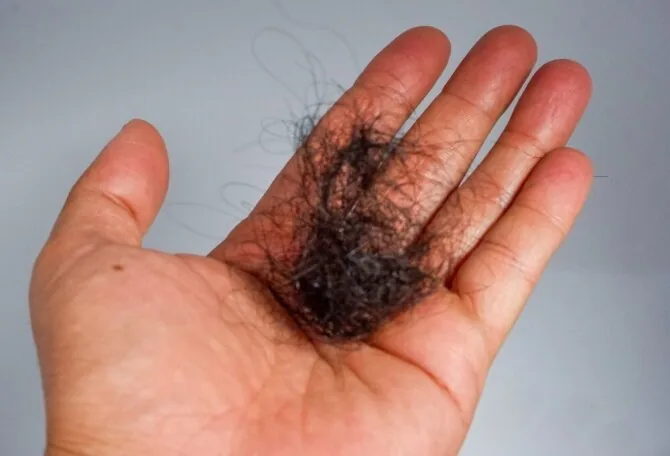
“The hair cycle is not instantaneous, so the body may react to experienced stress or another challenge with a delay. Such diffuse hair loss is often noticed all over the scalp, and after removing the triggering factor, it may decrease over time. Hair loss can also be caused by other reasons – iron deficiency, thyroid dysfunction, hormonal changes, certain diseases, or medications. Therefore, if the problem persists or is severe, it is important to consult a doctor or pharmacist,” explains pharmacist G. Stankevičienė.
She emphasizes that one should be concerned if the parting widens noticeably, hair volume thins, clearly thinned or completely bald patches appear. It is also worth seeing a doctor if intense hair loss does not subside, accompanied by scalp itching, redness, flaking, or pain, or if hair growth changes on the eyebrows or other body parts. When assessing the cause, the doctor, considering other symptoms and health history, may order blood tests, for example, to evaluate blood parameters, iron stores, or thyroid function.
Overall body health is also important for hair
G. Stankevičienė points out that a balanced diet is significant for hair condition. The hair structure is mainly composed of the protein keratin, so it is important to get enough protein in the daily diet. Sources can include fish, eggs, lean meat, dairy products, legumes, tofu. Iron is obtained from meat, fish, legumes, dark green leafy vegetables, and zinc from meat, seafood, dairy products, nuts, and seeds. Various other nutrients, including B vitamins, are also necessary for hair growth.

It is important not to forget biotin – it is often found in supplements for hair, skin, and nails, but higher doses can distort some laboratory test results. Therefore, before blood tests, it is advisable to inform the doctor about any supplements being taken.
“When noticing seasonal hair loss, it is worth ensuring sufficient protein and other nutrient intake in daily life, avoiding very restrictive diets, combing hair gently, reducing exposure to high temperatures, and avoiding hairstyles that constantly pull hair tightly,” says pharmacist G. Stankevičienė.
Read more The second Kaunas Book Fair will begin at the «Žalgiris» Arena