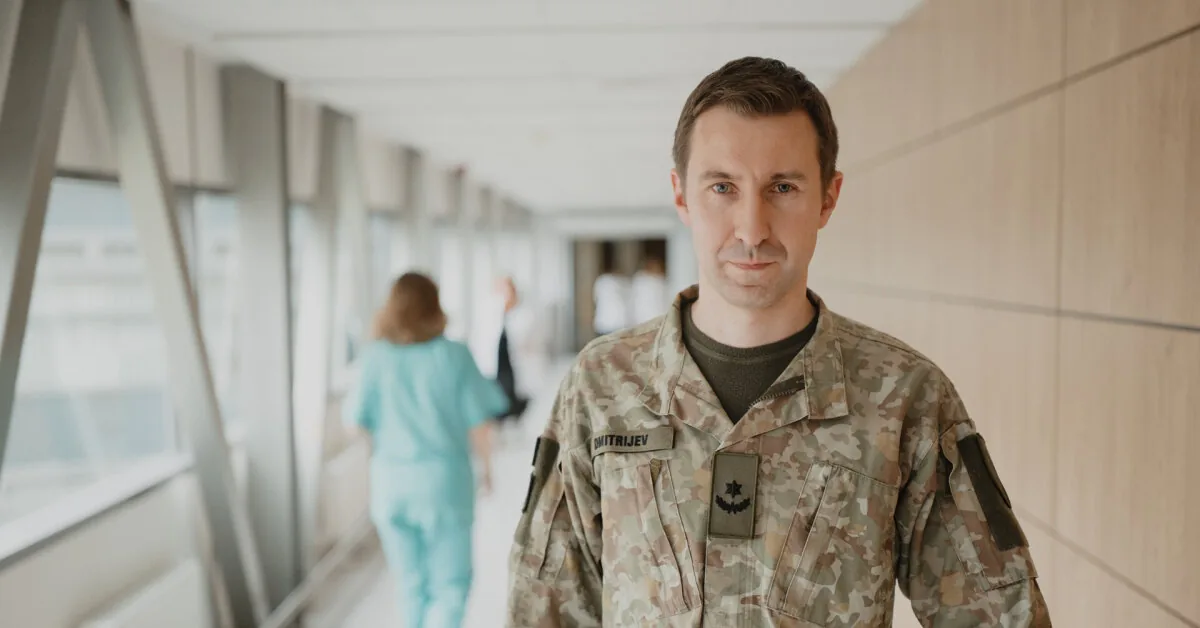
Although war medicine is often associated with the front line, preparation for war is ongoing. “There is almost no clear boundary between ‘peace’ and ‘war’ medicine. The military is always preparing for war, so war medics constantly train and learn from real conflict experiences,” says war medicine doctor, lecturer at Vilnius University (VU) Faculty of Medicine Maksimas Dmitrijevas. Part of this experience today comes from Ukraine, where medics work with war-injured patients and adopt their treatment practices.
Read more A star for David Beckham will appear on the Hollywood Walk of Fame
According to M. Dmitrijevas, our geopolitical situation forces us to prepare for possible scenarios right here, on our own territory. “Previously, NATO soldiers’ ‘hot spots’ were Afghanistan or Iraq, but now Lithuania is becoming one,” says the war medicine doctor.
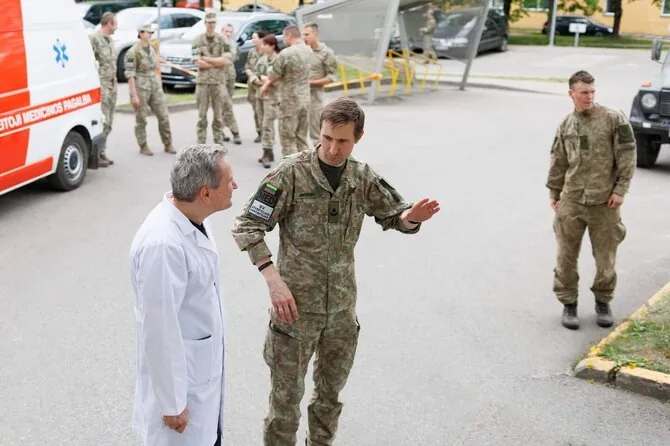
A war medic is also a soldier
Current Dr. Jonas Basanavičius War Medicine Service Klaipėda Medical Support Unit commander Major M. Dmitrijevas only seriously considered war medicine in his final residency years. At that time, he was actively involved in VU activities – he was chairman of the residents’ council, communicating with various medical institutions and organizations. “Eleven years ago, at an employer fair, I made acquaintance with representatives of the war medicine service. That was when curiosity arose to try myself in a new, less familiar medical field,” recalls the internal medicine doctor.
He explains that doctors working in war medicine first become not only medics but also soldiers. Upon employment in the war medicine service, they must undergo the same selection as all professional military service soldiers – pass physical fitness tests and complete a basic soldier course. For many young doctors, this becomes a completely new experience, as until then they usually had no connection with the military.
“During the five-week intensive training, we had to learn from scratch military order, weapon handling, safety rules, uniform wearing principles, and even military daily life. During the course, we, future war medics, lived on the training ground, slept in tents, ate dry rations, and participated in field exercises. Much was incomprehensible – new words, new environment, new order,” recalls M. Dmitrijevas.
However, this lack of routine in the war medic’s work is what he likes most to this day. This job involves a lot of military practice, and daily life includes exercises, training, missions, and working with patients.
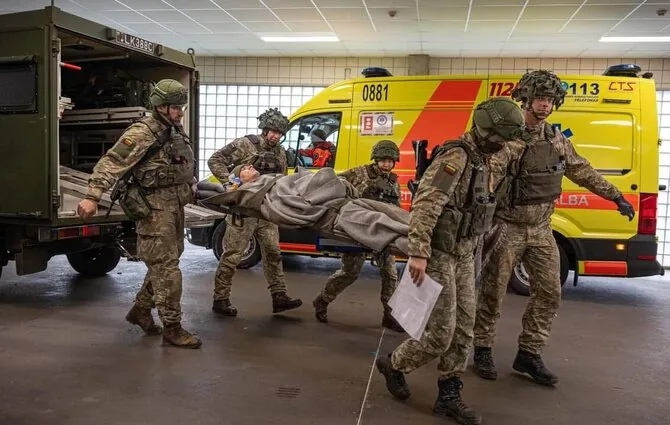
How is the location of a war hospital chosen?
According to M. Dmitrijevas, war medicine has two sides. In peacetime, it hardly differs from civilian healthcare – medics work in medical institutions, supervise soldiers and conscripts, and perform regular doctor duties. But its entirely different part reveals itself during exercises, missions, and under conditions of military conflicts.
“When we wear uniforms and set up our medical unit in the operational area, the true specifics of war medicine emerge,” says the doctor. According to him, exercises take place in an environment as close to war reality as possible, so during them, one must not only learn but also provide real assistance. The ability to operate under extreme conditions is what most distinguishes war medicine from civilian healthcare.
According to the interlocutor, in modern war, medical points become one of the most important enemy targets, so war medics constantly balance between the need to reach the wounded as quickly as possible and the need to protect their team. “This requires cooperation with other military units, assessing air defense situations, possible missile or drone threats. The field hospital must be close to the war zone but also in a safe place,” the major explains about his work.
The most important thing when providing help to soldiers at the front is time. “According to NATO standards, assistance to a wounded soldier must be provided within the first 10 minutes. The goal is to stop bleeding as quickly as possible, stabilize the wounded, and keep them alive until they reach the hospital, where they will receive comprehensive treatment according to all standards. This fast, precisely coordinated chain is the essence of war medicine,” says M. Dmitrijevas.
However, professional knowledge or quick reaction alone is not enough. War medicine also requires psychological readiness to operate under the most difficult conditions. “We must be psychologically resilient but still empathetic to avoid emotional burnout,” the doctor says. “Therefore, exercises recreate maximally stressful situations during which medics and soldiers must act under fatigue, chaos, and pressure to learn to operate automatically and confidently in real situations.”
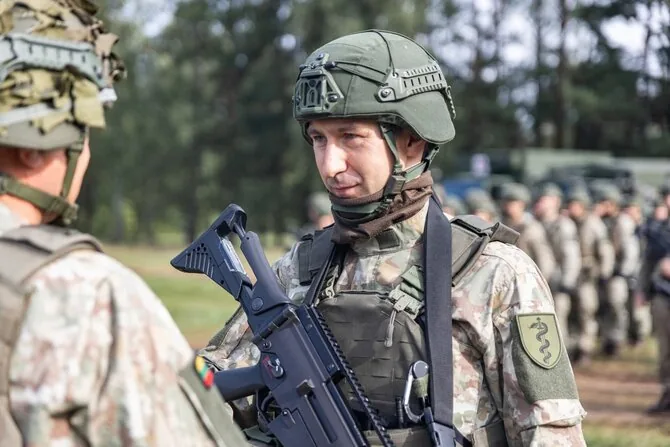
Sometimes automatism saves lives
Clear protocols are crucial under stress conditions. Systems and algorithms used in war medicine allow action even when a person is overwhelmed by panic or fatigue. “When you understand nothing anymore, you remember those letters and work according to protocols. Automatism in extreme situations can directly save lives,” the interlocutor asserts.
Therefore, all soldiers are trained in first aid. Everyone must know how to stop bleeding, apply a tourniquet, and provide help to themselves or a nearby colleague.
Read more No talks about rekindled relationships with Karolina Meschino – a telling OG Version move
According to M. Dmitrijevas, protocols are necessary so that all team members operate according to a common system and understand what help has already been provided to the wounded. Still, sometimes improvisation is needed. “You need to know the protocols, but sometimes you have to think ‘out of the box’,” he says, adding that modern war changes faster than official recommendations can be updated.
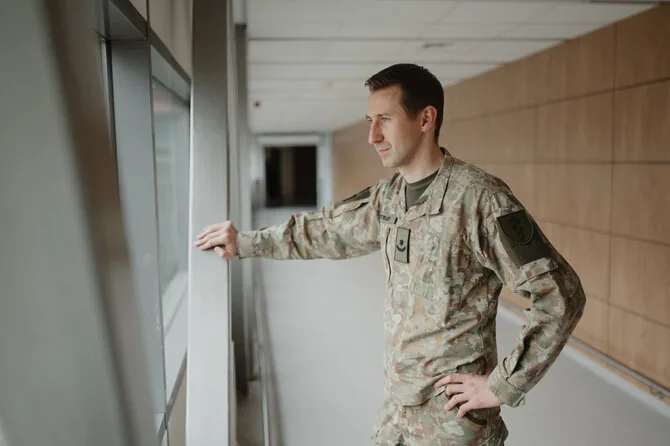
How is it decided who to help first?
One of the most difficult decisions a war medic has to make is when there are more wounded than medics able to help. In such situations, the most important tool is triage – a system that allows quickly determining who needs help first. “There are red ones who must be helped here and now, or they won’t survive. There are yellow ones who can wait a bit, and green – walking wounded who can be helped later,” explains the war medicine doctor.
If there are many wounded, mass casualty management protocols are activated: additional help is called, faster evacuation is organized, additional resources are gathered.
“Sometimes you have to switch off emotions and just professionally do your job,” says M. Dmitrijevas. According to him, the emotionally hardest moments are when you cannot help everyone at once. In such situations, the most important thing is not to get lost, to pause briefly, assess priorities, and act according to clear guidelines, because the main goal of a war medic is to provide professional help as quickly as possible and save the wounded soldier’s life. The interlocutor emphasizes that a soldier’s life is the greatest value because each of our soldiers is a long-trained professional who carries out tasks risking their life: “Therefore, it is important for every soldier to know that if they are wounded, we will be nearby and provide help.”
The nature of injuries in modern conflicts is also changing. Previously, most attention was given to gunshot wounds, but now war medics most often encounter combined injuries caused by explosions, artillery, or drones.
Asked whether the treatment of wounded enemy soldiers differs, the war medic insists there is no discrimination in the medical chain – all wounded are treated equally. “Upon receiving information about a wounded enemy soldier, the command and military police are notified, and the soldier is considered a wounded patient who receives the same level of care as our own. When his condition stabilizes, he is handed over to the military police.”
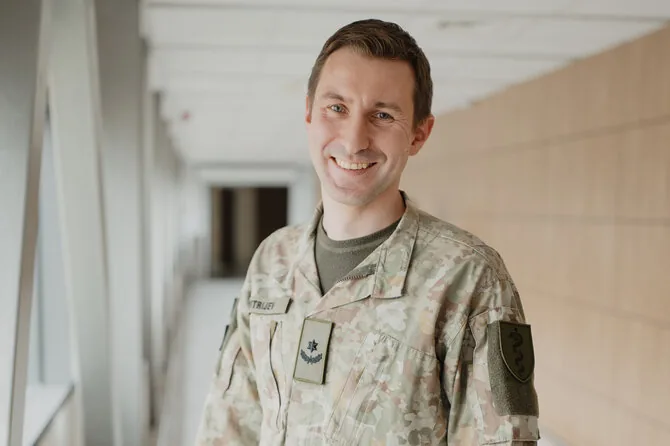
Sometimes you have to be a dentist too
Sometimes a war medic has to take on unexpected roles – from filling teeth to treating specific diseases that are unexpected, rare, and require treatment.
The biggest challenge for M. Dmitrijevas was a case during NATO missions in the Baltic Sea when a crew member showed signs of decompression sickness (a dangerous condition where sudden pressure changes in the body form gas bubbles). “It was quite a stressful situation – you had to quickly recognize a disease you rarely encounter in practice, start treatment, and organize evacuation,” he says.
According to the medic, in such situations it is very important not to be afraid to consult colleagues and seek help: “You should never be left alone with a problem.”
Service at sea, according to the interlocutor, had other challenges. Since he was the only doctor responsible for the crews of seven ships, he was called to another ship for suspected appendicitis and had to transfer from one ship to another in a stormy sea. “I had to jump onto rope ladders and not fall into the sea,” he recalls.
An even more difficult situation arose during the pandemic when ship crews lived in isolation for months. Due to strict COVID-19 control, the doctor had to not only perform his direct duties but also substitute specialists from other fields. “I had to be both a traumatologist and a dentist,” he says, adding that telemedicine and remote consultations with colleagues become especially important in such situations.