







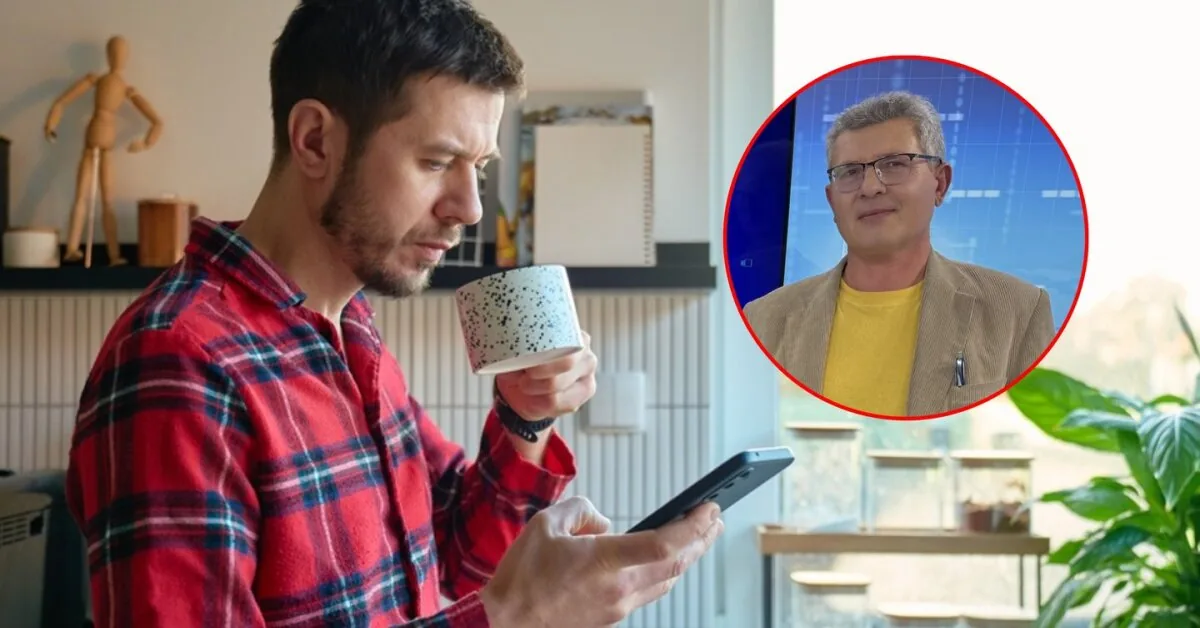
Professor Dr. Darius Plikynas of Vilnius University says that it is becoming increasingly difficult to recognize high-quality forgery just by sight or hearing. Therefore, the most important question today should not be “does it look real?”, but “who published it and what can this claim be based on?”.
Check content in other sources
When seeing a preparation recommended by a “famous doctor” or a video of a well-known person, you should first review its content and assess whether it raises suspicions. If dubious claims are noticed, it is important not to limit yourself to the same page but to look for information in other sources independent of it. This method of verification is called lateral reading.
According to Dr. D. Plikynas, it is important to find out where the post was published: on the official account of the person, clinic, university, or media, or on an anonymous, recently created profile. This is because disinformation spreaders deliberately use quotes, visual elements, and alleged testimonies to create an impression of objectivity and competence. Thus, the presented “expert” may have no connection to the discussed field or may even be fictitious.

The professor also recommends checking whether the product and the claims about it are linked to a real, verifiable source. If the recommendation truly belongs to a well-known doctor or scientist, it should be possible to find it on their institution’s page, official account, or reliable media.
Information should always be checked using critical thinking, without succumbing to possible emotional influence or manipulation.
“A practical recommendation: open a new browser tab and search for the expert’s name and main claims separately from the source page, rather than blindly trusting what the publication itself says about itself. Information should always be checked using critical thinking, without succumbing to possible emotional influence or manipulation,” advises the scientist.
Verification that can be done in 5 minutes
The SIFT method used in academic librarianship is suitable for quick fact-checking. Its name is derived from the English words Stop, Investigate, Find, and Trace.
The first step is to stop. Before believing a message or sharing it, it is worth pausing the initial emotional reaction, as it is often the target of manipulation.
The second is to check the source. In a new browser tab, you can enter the author’s or organization’s name and find out what it is. It is worth looking for information on official university, healthcare, government, or manufacturer websites.
The third step is to search whether the same claim is confirmed by at least one or two independent and well-known sources: news agencies, scientific journals, or official institutions.
Finally, you need to trace the original source of the quote, photo, or video. This way, you can determine whether the content was not edited, cropped, or taken out of a completely different context.
According to Dr. D. Plikynas, this verification does not require paid programs or special technical knowledge – the most important thing is to develop the habit of briefly stepping away from the suspicious page and looking for information elsewhere.

Academic degree does not yet guarantee competence
The professor suggests evaluating the competence of a publicly speaking person on three levels. First, you should verify their identity: whether the person has an institutional profile, scientific publications, belongs to professional associations. If the alleged expert exists only on social networks and has no other digital footprint, this is a serious warning sign.
However, even a real person is not necessarily competent to speak on a specific topic.
“Research shows that real experts are often used in disinformation, but not on their own field of expertise, for example, a cardiologist commenting on epidemiology, an engineer on climate science. Therefore, it is worth investigating not only the person’s position or academic degree but also their specialization and publications on the specific topic. These can be searched in ‘Google Scholar,’ ‘PubMed,’ ‘Web of Science,’ ‘Scopus,’ and other academic databases,” emphasizes D. Plikynas.
If an expert “exists” only on social networks without any institutional footprint – that is a red flag.
The third level of verification is institutional affiliation and possible conflicts of interest. You should make sure whether the stated workplace really exists, whether the person is included in its employee list, and whether they have not concealed financial ties with the advertised product.
“If an expert “exists” only on social networks without any institutional footprint – that is a red flag,” warns the professor.
“Miraculous” promises should raise suspicion
False or manipulative content is often revealed by sensational, strongly emotionally charged language. A study published in the journal “Humanities and Social Sciences Communications,” which compared false and reliable articles, showed that disinformation uses more emotional vocabulary, and its content requires less mental effort to understand.
Another warning sign, according to Prof. D. Plikynas, is a promise that is too good to be true. This could be a universal medicine, quick enrichment, or a “hidden truth” supposedly concealed from the public by the government, scientists, or another “elite.”
The scientist urges paying attention to how such information is substantiated and by what means a person is encouraged to believe it.
Read more Japanese Prime Minister Keeps Key Ministers in Their Seats After Cabinet Reshuffle
“Unnamed or untraceable ‘research’ – phrases like ‘scientists discovered’ or ‘research showed’ without a reference to a specific journal, author, or institution. Urging to hurry or act now – artificially created time pressure, for example, limited quantity or ‘will be deleted after 24 hours,’ hinders slow, analytical thinking. Excessive emphasis on expertise, e.g., excessive names, titles, ‘doctor’ without context, is an attempt to compensate for the lack of real justification,” lists the specialist.
Why do we trust what is popular?
Thousands of likes, shares, and positive comments unconsciously become a sign of reliability. According to Prof. D. Plikynas, in psychology, this is called the “bandwagon” effect. When we do not have time or motivation to thoroughly evaluate content, we take other people’s reactions as a kind of proof of its reliability.

The scientist relies on a meta-analysis of experimental studies published in the journal “Communication Research.” It confirmed that a higher number of likes and shares significantly increases the perceived reliability of information. This effect is especially pronounced when a person lacks motivation or ability to critically evaluate content.
However, as the professor points out, visible popularity can be artificially created. Bot networks and coordinated accounts imitate spontaneous public interest. Generative artificial intelligence allows creating many differently looking, convincingly writing accounts and thus “inflate” the number of reactions.
“A large number of likes is not proof by itself, so it is worth checking the quality of comments: whether they look authentic, individualized, or repetitive, template-like, as well as the age and activity history of the accounts sharing the content,” says D. Plikynas.
What looks realistic is not necessarily real
According to the scientist, artificial intelligence has significantly reduced the costs and time of creating fake content, so such forgeries are rapidly increasing. At the same time, their quality is improving.
He draws attention to a scientific literature review published in the journal “Human Behavior and Emerging Technologies.” It showed that people recognize high-quality “deepfake” videos unreliably, and their accuracy is often only slightly better than a random guess.
According to Dr. D. Plikynas, it is also difficult to distinguish an AI-cloned voice. In an experiment described in the journal “Scientific Reports,” participants listened to a real human voice and its AI-created clone. They correctly identified that these were different voices on average only about 83% of the time, and more than a quarter of participants systematically erred in every trial.
Previously, forgery could be revealed by unnatural blinking, lip movement and sound mismatch, or strange lighting. However, as the professor notes, the latest AI models increasingly eliminate these flaws. It is becoming difficult even intuitively to distinguish AI-generated text from human-written content.
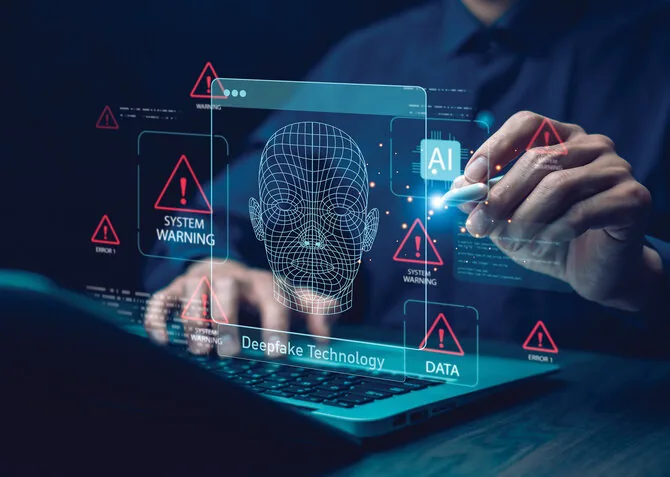
Can an ordinary person still recognize forgery? “The scientific conclusion is that reliably, based on their own senses alone, they usually cannot anymore. Therefore, it is recommended to move from ‘does it look real’ to structural verification (source, context, original publication), rather than trusting the eye or ear,” explains the scientist.
However, according to him, media literacy can be learned. A meta-analysis of studies published in the journal “Communication Research,” involving more than 81,000 people in total, showed that targeted education increases resistance to misleading information. The best results are achieved when training takes place over several sessions, rather than a single lecture.
Resistance to information needs to be developed practically
Prof. D. Plikynas emphasizes that the tendency to trust frequently repeated or highly reacted-to information is not just a theoretical problem. Emotional fatigue, exhausted attention, and reduced vigilance increase when staying for a long time in an uninterrupted, hard-to-control stream of digital content.
“Social networks constantly improve by observing the content we view in the stream, reactions, time spent, communication, and learn to recognize our needs, moods, psychographic profiles, etc., as accurately as possible,” explains the scientist.
More about recognizing propaganda, its impact, and the information resilience of Lithuania and the Baltic region can be found in the scientific monograph “Detection and Impact of Propaganda in the Context of Information Warfare,” published in 2026 by D. Plikynas and other authors.
As one of the practical ways to strengthen long-term resistance, the professor names conscious and periodic withdrawal from the digital stream. According to him, this should not be a one-time luxury of vacation but a regularly repeated practice of information hygiene.
This autumn, digital detox weekends “Disconnection” are organized for those who want to consciously step away from screens, even briefly.
“Temporary disconnection from phones, time in nature, exercise, art therapy, joint activities, and creating a plan of digital hygiene habits help restore exhausted attention, concentration, and vigilance – the same resources that are first needed to recognize manipulative or forged content of alleged experts or AI-generated content,” says Prof. D. Plikynas.
The Media Support Fund allocated 110,000 euros in partial funding for the project “Code of Resilience.”
Read more Cardiologists warn about a popular seasoning: it can seriously clog blood vessels