Some Russians are tired of the economic stagnation and intensifying Ukrainian counterattacks, and some fear that V. Putin may announce a massive new mobilization of troops after the elections.
Read more Changes at the Gariūnai viaduct: traffic rules change from September 18 at 6 p.m.
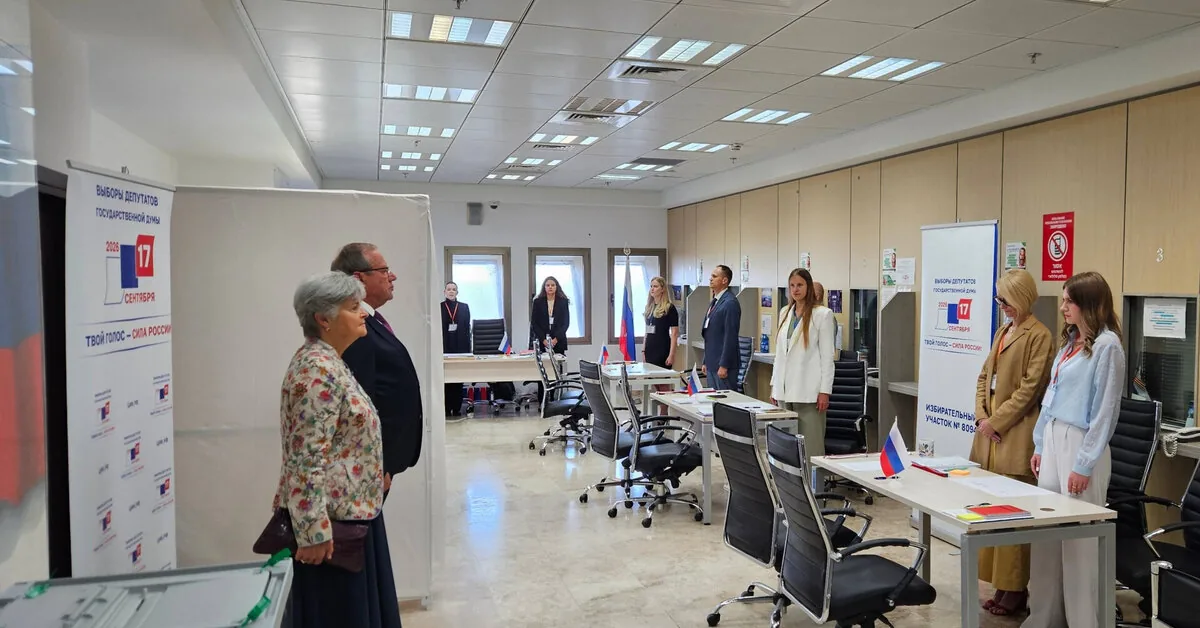
The parliamentary elections, to be held from September 18–20, will be the first since Russia launched its offensive in 2022, and only the second national elections after the 2024 presidential election when V. Putin began his new term.
Voting is also expected to take place in parts of Ukraine occupied by the Russian military.
The war has claimed hundreds of thousands of lives, strict censorship has been imposed in the country, Eastern Ukraine has been devastated, and unprecedented Western sanctions have been imposed on Moscow.
With the Kremlin banning any criticism of the war, there is no real opposition party on the ballots, so the ruling V. Putin party “United Russia” is guaranteed a majority of seats in the State Duma.
One European diplomat told AFP news agency that although the elections are a “complete sham,” they are a “ritual the Kremlin considers necessary,” so efforts will be made to “ensure high voter turnout.”
Even if the results are “pre-determined,” the vote is still important, said Russian political scientist Nikolai Petrov, who lives in exile.
“As in Soviet times, elections are meant to demonstrate citizens’ loyalty,” he told AFP.
Only pro-Putin parties
For V. Putin, who has been in power for 26 years, it is important to “show the elite that he is still supported and ordinary people still trust him,” said N. Petrov.
Half of the 450 seats in parliament will be allocated based on national party list voting, and the other half in single-member constituencies across the country.
Only parties supporting V. Putin and the war are allowed to participate in the national elections: the ruling “United Russia,” the Communist Party, the “A Just Russia” party, the nationalist LDPR, and the “New People.”
The only anti-war party still operating in Russia, “Yabloko,” was removed from the elections.
“It’s a choice without a choice,” eighteen-year-old Evdokia told AFP on a street in Moscow.
She had planned to vote for “Yabloko,” which called for an end to the fighting in Ukraine, but will now vote for “New People.”
Read more Klaipėda District Lost Honorary Citizen
Authorities have used the war circumstances to intensify repression to levels unseen since the Soviet era.
All major opponents of V. Putin are imprisoned, exiled, or dead – like his main rival Alexei Navalny, who died in a Russian prison in 2024.
Although the powers of the Russian parliament have been greatly reduced under V. Putin’s rule, legislative elections previously caused tension.
In 2011, widespread fraud and V. Putin’s return to the Kremlin from the prime minister post sparked the biggest protests in Russia since the collapse of the USSR.
In Moscow, little reminds people that elections will be held this year.
There are almost no election posters, except for general government calls to participate, with the slogan: “Your vote is Russia’s strength.”
Fear of mobilization
The elections will serve as a barometer to gauge attitudes toward the war, which has claimed hundreds of thousands of lives and affected the daily lives of Russians, even those living thousands of kilometers from the front.
In recent months, Kyiv has intensified long-range strikes on Russian territory – described as a justified response to Moscow’s attacks – causing fuel shortages, billions of rubles in damage, and civilian deaths.
Amid persistent rumors, V. Putin himself was forced to deny that Moscow plans a new wave of mobilization after the elections – similar to the unpopular 2022 call-up of 300,000 reservists.
Kremlin critics, Kyiv, and some Western countries have accused him of exactly such plans.
Russian expert Tatiana Stanovaya from the Carnegie Russia and Eurasia Center, banned in Moscow, believes mobilization is unlikely.
“They have put so much effort into convincing Russians not to worry about it (…) I would be very, very surprised if it happens,” she said.
In his inevitable victory, V. Putin would see “confirmation of his legitimacy – the legitimacy of his war,” the expert said.