




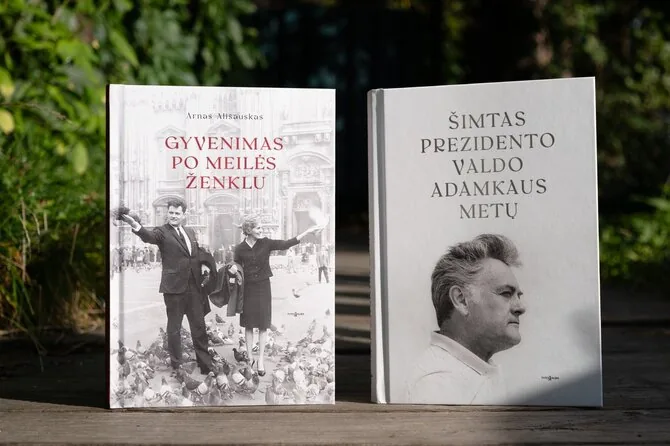
The book “Life Under the Sign of Love” together with the photo biography “One Hundred Years of President Valdas Adamkus” were published approaching the special jubilee of President Valdas Adamkus and tell the incredible life story of this couple.
Read more 100 years ago, the US Army planned to attack Canada. Why?
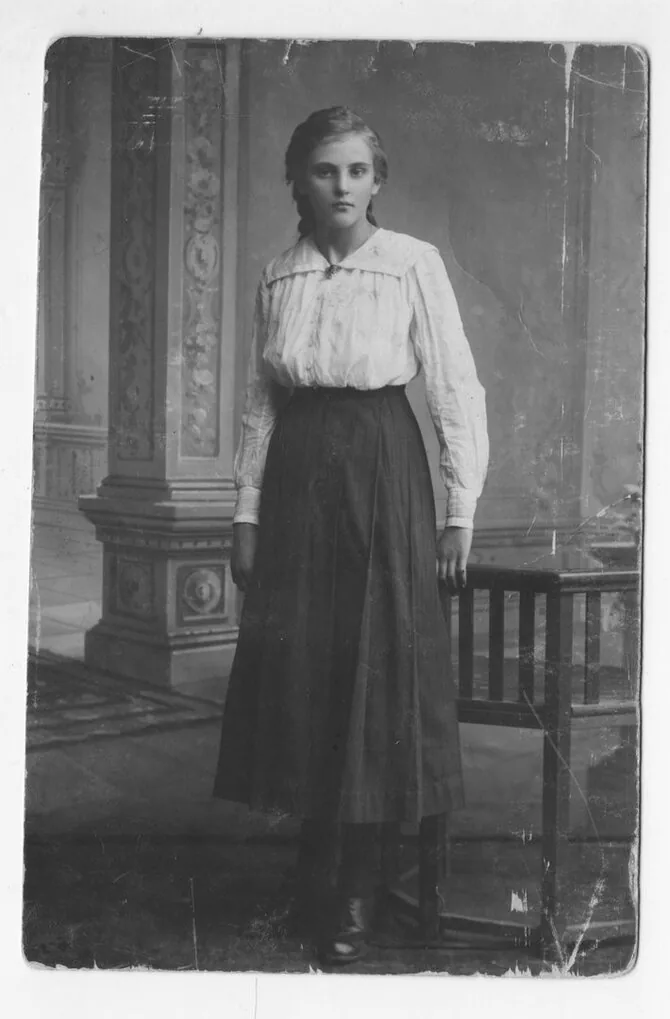
We invite you to open the book “Life Under the Sign of Love” and travel back to Alma Adamkienė’s childhood in Telšiai.
A previous excerpt from this book “I without a license, the car loaded with boxes of alcohol”: the wild and dramatic life of Alma Adamkienė
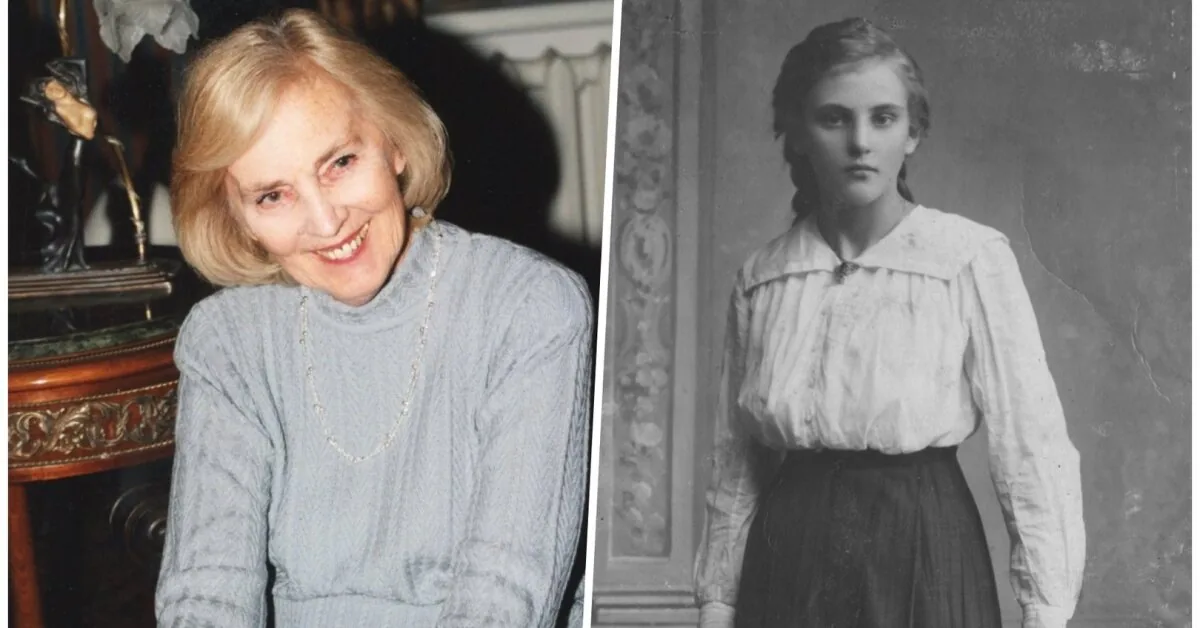
On February 10, 1927, in Šiauliai, in the family of Ona and Stasys Nutautas, a daughter Alma was born – the future Adamkienė. After a couple of years, the second daughter Dana was born. The family later moved to Telšiai because Stasys Nutautas was offered a prestigious position – to become the representative of “Telefunken” and “Siemens” in Western Lithuania. Initially, it was planned to establish the companies’ representation in Klaipėda, but later Telšiai was chosen. The Nutautas lived there until their departure from Lithuania in 1944.
In 1940, when the Soviets first arrived, the Nutautas were on the deportation lists but were not deported – good relations with a former worker and a warning from a restaurant employee who overheard the NKVD’s conversation helped.
– Were your teenage and youth homes in Telšiai?
Alma Adamkienė: Yes, but now there is nothing of my own left in Telšiai. One cousin moved from Plungė to Telšiai before we fled, and when she died, she was buried there – that is the only relative’s grave in Telšiai. As I understood from my parents, when they moved to Telšiai, they had no acquaintances there. But the company that chose my father as their regional representative wanted their office to be in Samogitia, and for some reason thought Telšiai would be best because it is the center, the capital of Samogitia. That’s how we ended up in Telšiai.
– Was it difficult to communicate with the Samogitians?
My mother had problems, but for us children it was not important. To be honest, I don’t even remember it. But when my mother first went to the market, she came back crying. She couldn’t communicate. She said a woman was sitting in a cart loaded with bags of potatoes, carrots, beets, cabbage, and my mother needed potatoes, asked to buy some, but the seller looked at her and said: I don’t have any.
My mother approached another seller, asked how much the potatoes cost, and was told: I don’t have potatoes, only turnips. My mother was upset: what kind of people are these, what kind of place is this – sitting on a sack of potatoes and not wanting to sell, I have money, I will pay, but they say no. But later my mother got used to it. When you think about it, there isn’t such a big difference, at least I somehow don’t remember it, didn’t pay attention, and never learned to speak Samogitian.
In high school, the Lithuanian language teacher Barzdukas was very good, a student of Jonas Jablonskis. During the exam, you have to draw tickets, and I drew one about Samogitia. He said, “This will be very easy for you,” and the first question was: how do you say “crow” in Samogitian? “Varna,” I said. “No,” he said, “think carefully.” I thought: Jesus, will the crow ruin my grade? It turns out it’s “kranklys.” I remember it like today, he told me: kranklys. Valdas always laughed at me: well, then tell me, how do you say “crow” in Samogitian?
– And today, when you hear the Samogitian language, do you understand it?
Well, when people speak the standard language and mix in Samogitian, you can understand, but when they start speaking purely in dialect – it’s over, then you need a translator because I understand only a few words. I didn’t hear much – we didn’t speak Samogitian at home, and at school, the standard language was taught.
I also remember a Lithuanian language teacher named Kudirka – very strict, also a student of Jablonskis, and during his lessons, I had a hard time with stress. And now I hear that in Lithuania they stress words differently. I understand everything, but I can’t say, for example, váistinė or váistai. The word just bothers me; I want to stress it the way I always heard and stressed it.
Since we moved into a new house next to Eimutis’s bakery, I went there and asked where the school was. They showed me: the Cathedral stands on the hill, and next to it is a brick building.
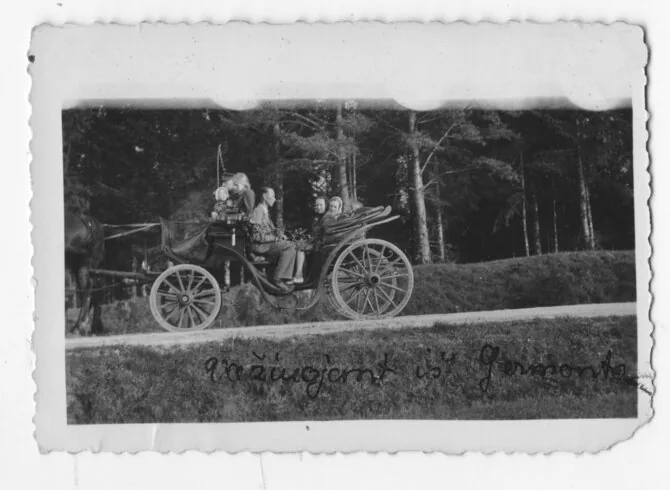
I really like how the Dzūkai speak – half singing. I remember they sang in Samogitia too. We used to go to the lake in summer, not to Mastis, but to Germantas, because Mastis was polluted, and my mother said it was forbidden to swim there.
Sometimes our father would drive us by car and leave us at Germantas, where it was very beautiful and the water very clean. Sometimes we would walk back – with parents, with friends, about five or six kilometers, through fields and forests, and we really enjoyed walking. Sometimes, while walking, you could hear people working and singing in the fields.
– What was your social circle like in Telšiai – sister Dana, classmates, the yard?
Like all children, I had friends at school. When we came to Telšiai, I had already started attending school in Šiauliai. As I said, my mother couldn’t communicate at the Telšiai market, got nervous, and fell ill – a cold, flu, or something else, I don’t know, but she got sick and went to bed. I decided I needed to go to school.
Since we moved into a new house next to Eimutis’s bakery, I went there and asked where the school was. They showed me: the Cathedral stands on the hill, and next to it is a brick building, so that’s where the school is. I went alone, registered myself, and when I got home, I told my mother: I have already registered for school. As far as I remember, my mother was feeling unwell and didn’t react. But when my father came back, he told me: I talked to the right people and agreed that you will go to the nuns’ school.
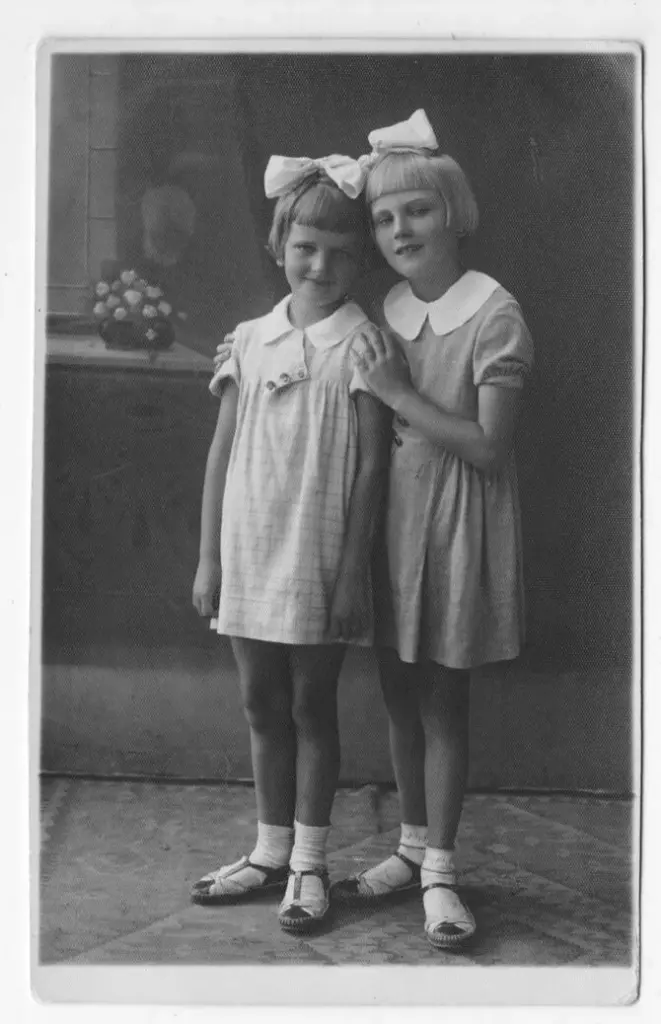
There were two Catholic schools in Telšiai – one run by nuns and the other by the Kazimier sisters, and I went to the nuns’ school. Then in the evening there was a conversation: my father told me he had already agreed, but I replied that I had already registered myself. My father asked: where? I showed him: there. He said: you registered for the wrong school, you will go to the other one. I absolutely did not want to go to the other one, it was not my style, I had already registered. There were talks and a few tears, but my father did not force me, I went where I wanted.
There I met the daughter of the city commandant who lived nearby – we met in the yard and started playing, but later I asked her name… She had visited us, lived in Los Angeles, had four children, one son died… And later my sister was taken to another school – the Kazimier sisters’, where there was very good care and strong teachers. So my sister went to one school, and I to another.
– So you, still a very little girl, decided and managed your school affairs all by yourself?
Well, what could I do: mother was sick, father was working… But school was not everything. I also hired a maid for my mother myself. I went to the same Eimutis in the bakery workshop – it was a very good bakery, by the way. He asked: how is school going? I said school was fine, but my mother was very sick, there was no one to help, we needed a housekeeper, I couldn’t say anything about money, but we needed a housekeeper now. Father used to take us to the canteen, but my sister and I didn’t like eating there. So a woman named Julė came – very kind, she stayed with us for about six years.
Sometimes I envy those who return to Lithuania and know which region they belong to. Whether from Telšiai or Alytus, but they know they lived there, there are their roots. I don’t have that feeling. I thought we always lived in Telšiai. Father built the house very quickly because it was very hard to get a good apartment, and I knew: this is our home.
School is fine, I said, but my mother is very sick, there is no one to help, we need a housekeeper, I can’t say anything about money, but we need a housekeeper now.
But now, after so many years, I don’t know, I don’t have the feeling that Telšiai is my city. I always feel more like Šiauliai, although we left there when I was in first grade, but we often visited Šiauliai, all our relatives are there, both in the city and nearby villages… Somehow I even feel a little sorry that everyone has a homeland, but I don’t know where the secret of our home and family is.
When I first came back to Telšiai after leaving with Professor Česlovas Kudaba, and Valdas was with us, we went to my parents’ house. I saw everything a bit neglected, the garden was arranged differently, and the house was shabby… Kudaba said: let’s go inside, maybe they will let us see if inside it is as you remember.
But there lived, it seems, some party secretary, a very unpleasant person. Kudaba said he would like to see that this was my home, but they did not let us in. I didn’t want anything… Probably because of that I was left with such a gloomy impression, and it seemed that people were unfriendly.
I didn’t meet anyone else: my friends had long been elsewhere, there was absolutely nothing that connected me with Telšiai. We went there a couple more times, and the only thing I remember well is the Cathedral. Nothing else. Nothing can be done, a small loss, only the resentment remains that I don’t feel Telšiai as my city, my home.
– And what about Šiauliai?
The house we lived in Šiauliai burned down. Interestingly, Valdas’s grandmother lived on the same street, just a couple of houses away. When my father was young, not yet married, he knew Valdas’s father – they were about the same age and went to dances. Father said that until Ignas [Ignas Adamkavičius, Valdas Adamkus’s father – ed.] appeared, you could still choose a girl to dance with. But when Ignas entered the hall – that was it, everyone wanted to dance only with him. So my future father-in-law was my father’s competitor.
Read more The «soulmate» of King Charles III has died: former lover narrowly missed becoming queen
Sometimes, when you think about it, you feel like a homeless person. The homes in Chicago, the ones we built ourselves, are somehow deeply embedded in the heart. But now – here, now I really know that our home is here.
– Ms. Alma, is it true that when you were five or six years old, Smetona visited your home?
Not in our home, but in our then city, Šiauliai. Everything happened outside, some kind of celebration – I remember it was in a big square, maybe a school stadium. My aunt was a teacher, many children participated, many young people, and my aunt chose me, as her relative, to present flowers to the president. I marched, probably at five years old, I only remember that I gave the flowers and said: “Hello, President Septonai!” – I couldn’t pronounce “Smetona.” Then everyone laughed, the children kept teaching me that it’s not “Septonas,” but “Smetona,” and I felt so embarrassed. I don’t know if I was scared or excited – that’s how it happened.
I marched, probably at five years old, I only remember that I gave the flowers and said: “Hello, President Septonai!” – I couldn’t pronounce “Smetona.”
– Do you remember Smetona’s reaction?
He laughed. They all laughed there. Nothing special, just a childhood memory. I would have forgotten it, but my mother always remembered, she was very happy that I brought and gave the flowers. She didn’t hear me say “Septonas,” of course, but I worried about it myself afterward, thinking: how could I say it like that?
– Please tell us more about how the Nutautas family ended up in Telšiai.
Father was offered by “Telefunken” and “Siemens” to establish their representation in Samogitia. Parents generally planned to move to Klaipėda or Kaunas, but when they received the companies’ offer to establish a branch, talks began about moving to Telšiai. I remember my mother really didn’t want to move from Šiauliai, really, she even got sick. But father decided, and that was it. He had a cousin in Šiauliai who was engaged in a similar business – maybe they had some agreement, I don’t know.
Valdas Adamkus: I want to add… It was an offer to represent the companies not only in Telšiai but in the entire Western Lithuania region.
Alma Adamkienė: And the companies’ connection with my father was not only by letters; often the representatives themselves came to Telšiai. Since they were well treated, they always gladly came. I remember one “Siemens” representative my sister and I called Fish Eye, Fisherman – his eyes were light blue and very big.
Father gradually expanded the trade: besides everything else, he started trading motorcycles and bicycles. Mother helped him in the store but always said she was not interested among devices, bicycles, and motorcycles, that she wanted an activity interesting for a woman. Then father went to the Czech Republic and brought back very beautiful glassware for trade. Mother was very pleased – ladies came to buy them, and coffee was prepared for them in the store…
Father gradually expanded the trade: besides everything else, he started trading motorcycles and bicycles.
And the most interesting thing for my sister and me was this: when a new shipment came from the Czech Republic, we were the first to run and look, and when we saw something very beautiful, we asked to take it home. I remember my sister chose a very beautiful deer with big antlers, and I chose tulips made as if from glass threads. Both the container and the tulips themselves were extraordinarily beautiful – you could take them out, clean them, and put them back in.
Both parents worked all the time, helping each other.
Valdas Adamkus: I remind you that father’s trade expanded from radio devices to electrical installation – considering how much construction was going on around, how much electricity was being installed in houses, materials were bought from Nutautas. There were men who took everything needed for installation and then paid – so father’s work was not only trade but also the electrification and modernization of the city.
Alma Adamkienė: Father won a competition. He installed all the electrical installation in the manor building, the cinema. He had his people, there were his materials and his work. And he was quite successful, had no problems at work.
Both parents belonged to the high school parents’ committee, father personally supported the Telšiai football team “Džiugas,” helped basketball players… Since schools at that time didn’t have much money, father, coming back from somewhere, always brought good balls for the basketball players. So when we met Grybauskas in America [Vytautas Grybauskas – basketball player, footballer, tennis and table tennis player, coach, journalist, Lithuanian diaspora athlete. He played basketball and football for Telšiai’s “Džiugas” team – ed.], he always remembered how father helped athletes whenever asked, as much as he could.
Since schools at that time didn’t have much money, father, coming back from somewhere, always brought good balls for the basketball players.
Valdas Adamkus: Telšiai’s “Džiugas” basically existed thanks to Nutautas’s support – with balls, sports equipment, everything needed.
Alma Adamkienė: And very few people knew that father did this because he never advertised himself, he didn’t like it. He said: I help because I can, not so that someone talks or writes about it. Probably I inherited this trait from my father.
– What did interwar Telšiai look like to you?
Private new houses looked modern and beautiful, but I don’t remember much else about the city. I remember the high school better – the building was beautiful, modernly equipped… There was a cloakroom with a vestibule, where you had to leave your shoes and go to class in slippers because there was parquet. I remember the basketball hall, where occasionally student dances took place – then they allowed wearing shoes, the only case. Later, when the Russians came, everything changed, everything got mixed up.
I remember very well that at school in Telšiai we got booklets where we had to stick purchased donation badges, and the money paid was allocated for patriotic purposes. One booklet, I remember, was dedicated to the cause of regaining Vilnius, another to support the construction of a church in Kaunas. A different city, but the church in Kaunas was our common cause.
– Where did you get money from as children?
Of course – we got it from our parents. All children always had some money: parents gave money to buy a bun or some drink. Or you buy a notebook, get change, and with that change, you buy not a candy but a badge because it was very important how many badges you stuck and when you filled the whole booklet. There was even a competition in class who would fill those booklets faster.
I remember when the radio announced that the Germans had taken Klaipėda, I walked home from school crying: how, how could they take Klaipėda from us? It is ours!
As I said, I had two – “We will not rest without Vilnius” and one dedicated to the construction of the Resurrection Church in Kaunas. Both goals were very important. On Sundays, there were student services, and then the priest always asked at school if we had been to church. That was the kind of patriotism education.
I remember when the radio announced that the Germans had taken Klaipėda, I walked home from school crying: how, how could they take Klaipėda from us? It is ours! Maybe it was so painful because my friend lived there, and we ourselves were preparing to move to Klaipėda – my father’s employers wanted their representation to move to a bigger city. I was very angry and didn’t understand how they could take what is ours!
– What else do you remember from free Lithuania?
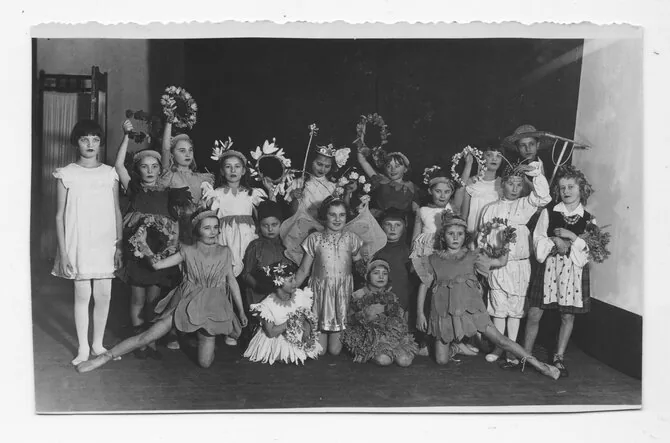
I remember that a theater from Klaipėda came to Telšiai. Later, when the Germans took the Klaipėda region, part of the theater from Klaipėda moved to Telšiai. That was fun for us – the theater staged many performances. There was a beautiful villa by Germantas lake, where actors stayed in summer, rehearsed, in short, life was interesting. Also cultural life. When the Opera Theater came from Kaunas, my mother sold tickets for performances – she had a hall plan, people bought from her, and many bright people gathered in our home.
There were not many good hotels in Telšiai, so guests from the Netherlands or Germany often stayed with us. I think they had plans to build a hotel near the lake, but they never built it.
When the Petrauskas family from Kipras came to the Rainiai manor in summer, they often visited us. I don’t know how they met my father… Maybe better not to write about it, but I remember once Kipras Petrauskas was lying in our dining room already “in a good state” under a big ficus and singing. Many people visited us when the opera came – Mažeika, Marijošius stayed…
There were not many good hotels in Telšiai, so guests from the Netherlands or Germany often stayed with us. I think they had plans to build a hotel near the lake, but they never built it. However, a manor was built in Telšiai – everything was very beautifully arranged there, with a cinema hall, and my sister and I got free tickets to the cinema. But not to all films, only to children’s films. Of course, we tried to bring friends along. But adults were not allowed to the films until they were eighteen. By the way, it was the same in Germany.
Read more Juventus triumphs in the Sargūnas Cup tournament after defeating the hosts