According to the World Gold Council (WGC), in the second quarter, the Russian central bank sold 21.77 tons of precious metal from its gold and foreign currency reserves, far surpassing the second place in sales held by the Central Bank of Turkey, which sold 4.23 tons.
Read more What does the «Meta» agreement with US states mean for social networks and Lithuania?
Other central banks, if they sold gold at all, did so only in insignificant amounts: Mexico – 0.1 tons, Malta – 0.03 tons, Romania – 0.01 tons, according to WGC data. The largest gold buyers were the Central Bank of Poland (50.79 tons), as well as the central banks of China (32.97 tons) and Uzbekistan (16.17 tons).
The Russian central bank actively sells gold mainly to “cover the state budget deficit and foreign currency liquidity shortage” with the proceeds, said Finam analyst Aleksandr Potavin.

According to the bank’s own data, from the beginning of the year until the end of July, the Russian bank sold 1.6 million troy ounces (49.7 tons) from its reserves.
This was the largest single sale of gold reserves since 1998: then, during the collapse of the state treasury bill pyramid, Russia sold 3.8 million ounces (118 tons) over three months, according to International Monetary Fund statistics. On August 1, the central bank’s gold reserves decreased to 73.2 million troy ounces — the lowest level since 2020.
The fact that the Kremlin started selling gold indicates that “they are running out of other liquid assets,” said economist Elina Rybakova of the Peterson Institute for International Economics.
Read more Putin and Trump discussed the possibility of ending the war in Ukraine within two years
Already in the very first days of the war with Ukraine, the central bank lost $300 billion in gold and foreign currency reserves, which were held in dollars, euros, and other Western assets and fell under sanctions. Of its currency reserves, it only has about $100 billion in Chinese yuan.
What is happening with the central bank’s gold shows “increasing pressure” due to Russia’s budget deficit and “pressure related to the sources of financing this deficit,” notes E. Rybakova. According to the Ministry of Finance, the federal budget “hole” was 6.45 trillion rubles from January to July, compared to 5.7 trillion rubles last year.
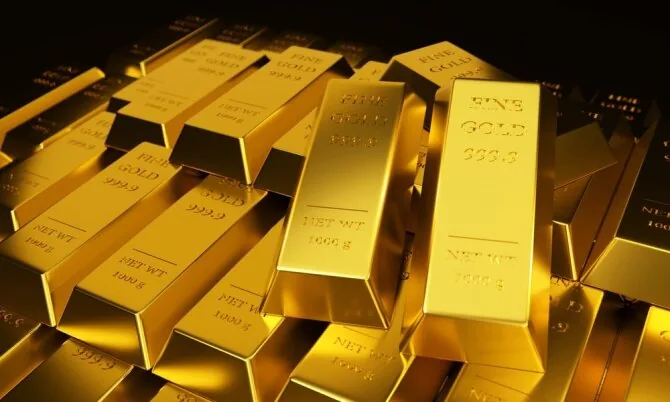
However, one should not conclude from the gold sales that Russia is “bankrupt,” emphasizes Macro-Advisory analyst Chris Weafer: the Russian central bank’s gold reserves are the fifth largest in the world, and so far they have only decreased by 2.1%. At the current pace of 200–300 thousand ounces per month, it would take about 20 years to sell the entire reserve.
It is likely that the central bank will continue to sell gold, believes A. Potavin: at the beginning of the year, precious metal accounted for 48% of Russia’s reserves, and now this share has decreased to 41.5%.
“Perhaps the limit could be around 40% or slightly less. But as long as there is a need to cover a large budget deficit, the share of gold in reserves may continue to decrease,” said A. Potavin.
Read more At the same address, the services are constantly invited, only the stories change