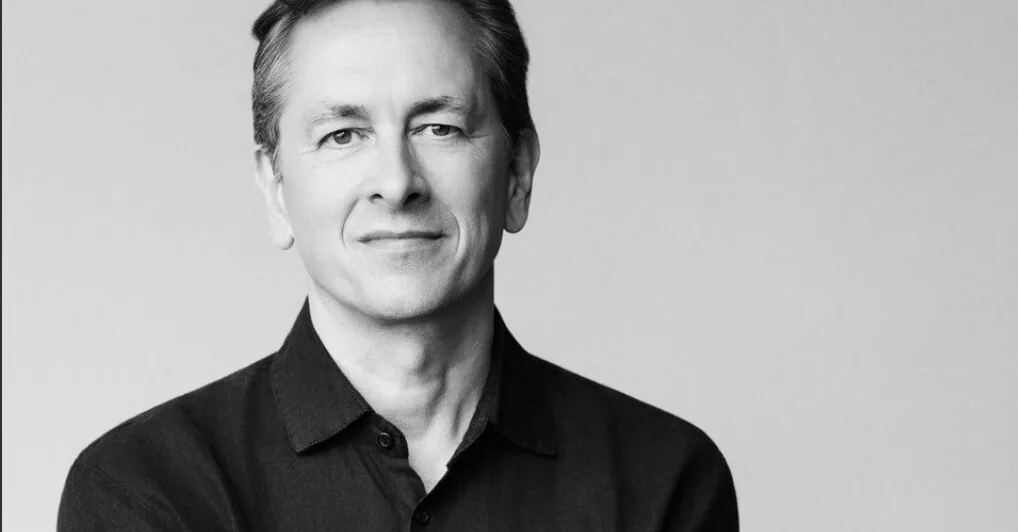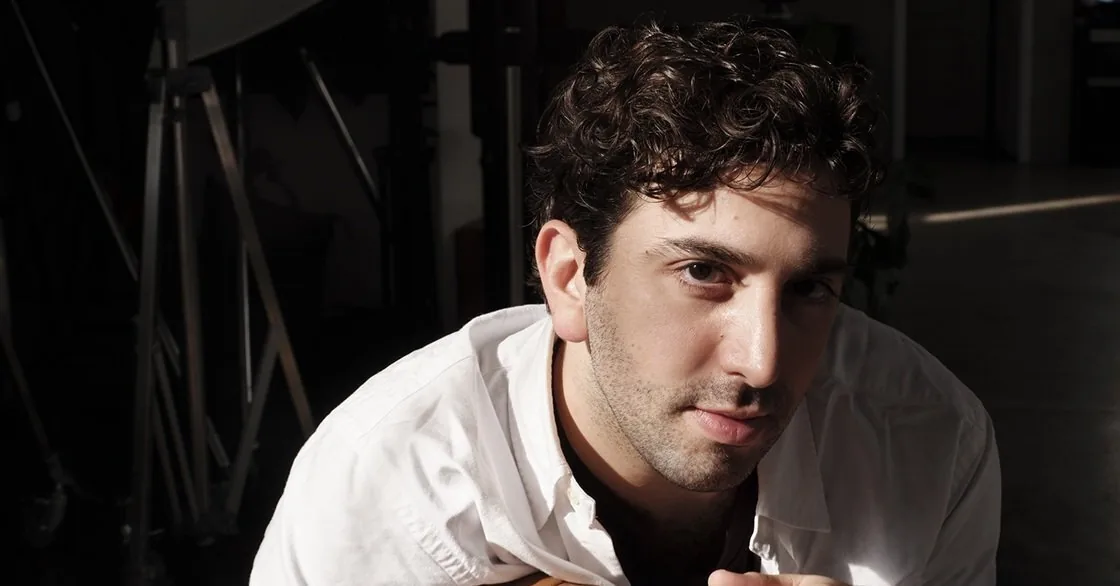
The director himself will also come to Vilnius – so far he has traveled to all his plays’ foreign tours, sometimes even appearing on stage himself. Perhaps the Vilnius audience will see him too. The 28-year-old soon-to-be creator has already impressed audiences and theater critics not only in Europe but also worldwide, and with his works, he has visited prestigious international festivals and theaters.
Read more 7 «unhealthy» foods worth eating if you want to reduce stress
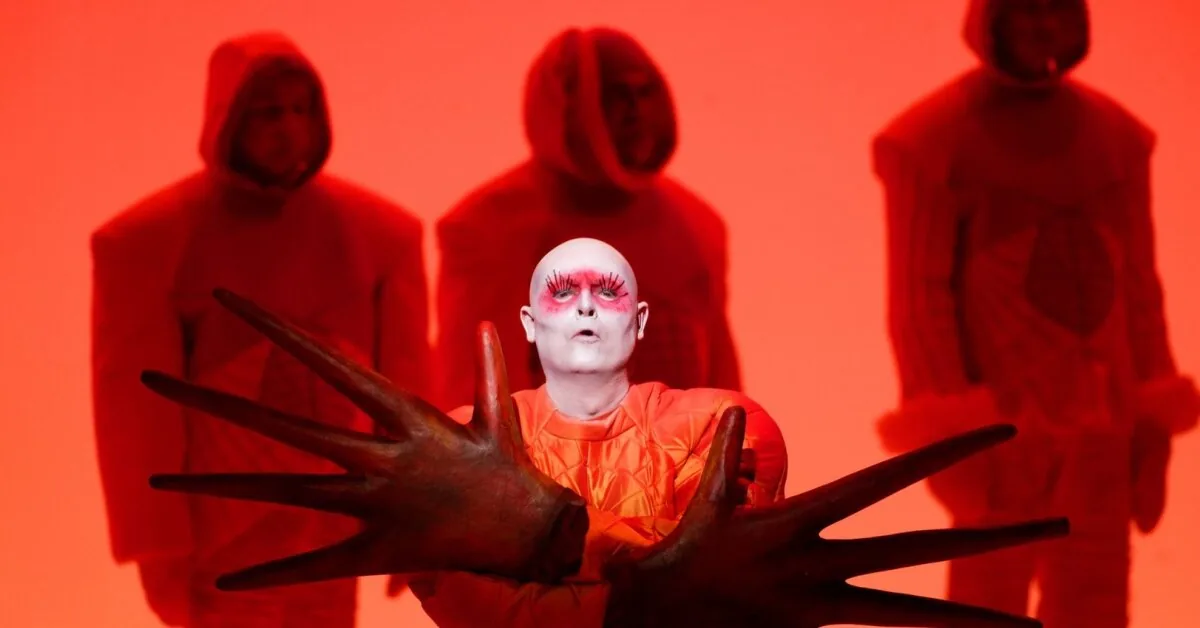
After the premiere at the Avignon Festival in 2025, his play “Mami” received wide recognition in France, and the newspapers “Le Monde” and “Libération” praised the emotional depth and unique theatrical vision of the work. On October 2 and 3, this play will be presented at the “Sirenos” theater festival and shown in the Great Hall of the Lithuanian National Drama Theater.
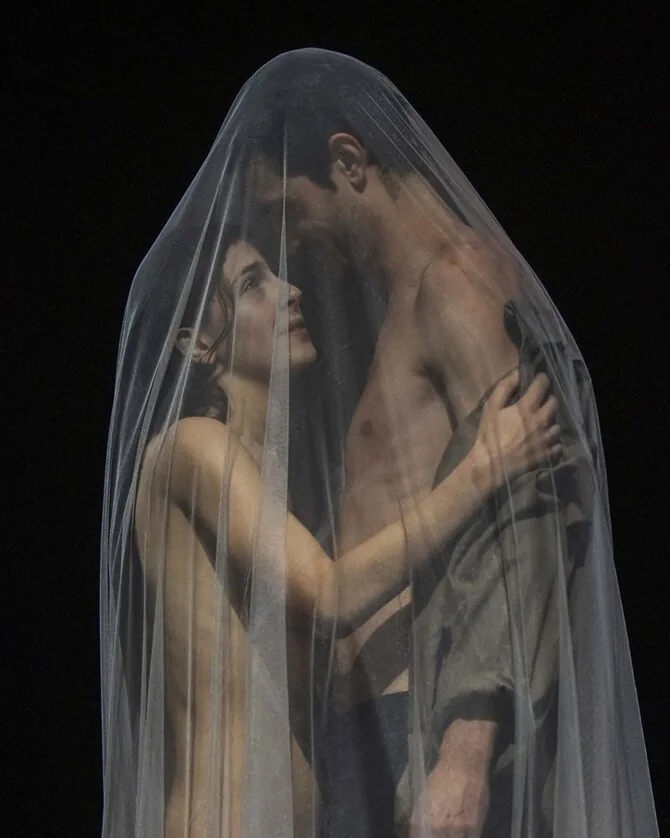
“The play contains some biographical details – you can see a model of my father and grandmother at the end of her life when she was very old: my father took care of her, washed and fed her like a child. Ultimately, symbolically, the child became the father, and the father – the child. I transferred this idea into the play. You see a relationship that begins with a woman giving birth to a son. Later, you see how this son grows into a tall, strong man, and it is his turn to take care of his mother,” the director says in an interview.
– A few months ago, you received the Silver Lion at the Venice Biennale, congratulations! How do you feel?
– Thank you! It happened in June, but the feeling is still very fresh. I feel blessed and honored because it is a great recognition that truly brings changes – I already notice them. I understand how important this recognition is. It changes people’s attitudes toward my work. Unfortunately, artists often need someone’s recognition to feel understood and acknowledged. It would be better if it weren’t so, but the fact is that it really helps in a career – all awards, invitations to famous festivals, and so on.
The award can also encourage other festivals to decide to show my work in their countries. However, I want to believe that this will not be the only reason. I want to believe that festivals and theaters present my works because they like my creativity and the worlds I create.
– Well, the “Sirenos” team invited you even before you received the “Silver Lion,” which means they truly appreciated and were fascinated by your work. Reading your biography, I thought: you are very young, yet you have already presented works at the Avignon Festival, for which other directors prepare for many years, as well as at other important festivals, and now – great recognition in Venice. Do you still feel joy when everything happens so quickly?
– Of course, I feel joy! I feel like a child – I get excited every time we travel to a new place. And when the audience warmly receives my work – I feel honored. I definitely haven’t gotten used to it and don’t think of it as “just another festival.” Whenever I go to new countries or cities, I eagerly want to see how everything will be.
Now I am very much looking forward to the trip to Lithuania and the “Sirenos” festival. I am curious about the people’s reaction. My relationship with the curators of this festival is already very beautiful – they welcomed us wonderfully, so I just can’t wait to see how I will present my work on the Vilnius stage.
Now I am very much looking forward to the trip to Lithuania and the “Sirenos” festival.
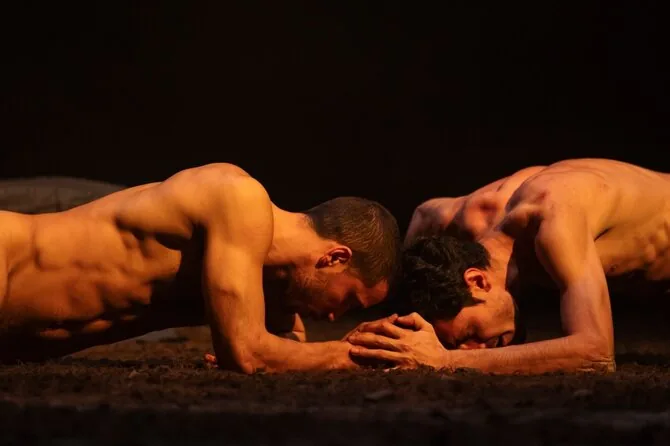
– Could you tell us more about the play “Mami,” which you will show in Vilnius? What inspired you to create a play about motherhood?
– A huge source of inspiration for me is the figure of the mother. Until I was six years old, I grew up with my grandmother, later with my biological mother, and there was always a stepmother in my life. Also, there were aunts who were like mothers to me. So, I was always surrounded by all these motherly figures. I thought I wanted to create something about that motherly image, but not an autobiographical or documentary play about my life.
Of course, the play contains biographical details – you can see a model of my father and grandmother at the end of her life when she was very old: my father took care of her, washed and fed her like a child. Ultimately, symbolically, the child became the father, and the father – the child. I transferred this idea into the play. You see a relationship that begins with a woman giving birth to a son. Later, you see how this son grows into a tall, strong man, and it is his turn to take care of his mother.
Finally, the play raises the question: who really is the father? Who is the guardian, and who will protect me? That is why I wanted to include a short-statured woman in the play. I liked this irony – who is big, and who is small? Who will take care of whom? This woman in the play is a very symbolic figure: she moves from one character to another and takes care of everyone; she is the hand that brings care. The work juggles these meanings – who is the father, who is the guardian, and who really is the mother.
Finally, the play raises the question: who really is the father?
– If we talk about mothers and care, what is the most important, emotional thing for you personally? Sacrifice? Maybe that children leave home and forget their mothers? What moves you the most when we talk about motherhood?
– I think the sacrifice you mentioned is very important. I cannot ignore the fact that my own mother really sacrificed herself for me and my sisters. She simply limited her own life: worked long hours to bring money home, gave us everything we wanted – from clubs to food. I will never forget this sacrifice.
I also cannot ignore – both symbolically and practically – the fact of feeding itself when a mother feeds a child with her breast or hands. Of course, the concept of mother is much broader: a father can become a mother to a child, it is not always the biological mother, it can also be a grandmother.
For me personally, it is associated with the figure of a woman, but for others, the role of mother can be performed by someone who is not a woman. I have often heard people raised only by their father (because the mother died or for other reasons) say: “My father was my mother.” This word is so powerful… It is incredibly important to call someone mom, even if she is not your real mother.

– Your works are characterized by not using words – or at least in this play, you avoid them. Despite this, the message is still perfectly conveyed and everything becomes understandable. Why did you choose to create without dialogues and words?
– Honestly, I don’t know if this is my style, but it is the most acceptable way of expression for me. Since my first work “Ragada,” which I created at 20, I always wanted to do something without words. I am not saying I will always do this; in the future, I am open to using dialogues and words, but for now, plays without words work best for me.
Even in everyday life, I often choose to express myself not with words but through a real connection with a person – by hugging them or simply spending a moment together in silence. Sometimes silence causes a strange, uncomfortable feeling, but it is precisely that discomfort that allows me to feel very alive. People usually try to break that uncomfortable silence because they feel insecure, but I feel life in silence and like to create using other elements: colors, light, sound, and movement.
The best illustration would be this: imagine walking down an empty street at night or in the morning and seeing through a window a woman combing her hair or someone feeding another person. I often stop by such windows and just watch what is happening inside the house. That is exactly what I want to transfer to the theater.
In the play, the audience sees a fragment of family life, a real moment, and words are not always needed for that. They just see a woman doing something, hear the sound of the wind, watch for about five minutes, and then think: “Wow, I saw a huge story.”
So everything remains in the hands of the audience – they create the dramaturgy, let their imagination express itself. They start asking questions: who is this woman? Why was she combing her hair? Did she leave the house, or did she never leave? I want to leave the plot open so that people create their own versions and stories.
I want to leave the plot open so that people create their own versions and stories.
Read more Phone charging in the car is very slow? Many people make this mistake
– Thank you for not refusing words now and answering my question about why you don’t use words.
– I am used to using words, and even if I avoid them in my work, I fully understand why words are so important. It’s not that I loudly declare: “I am an artist who doesn’t like words; they are meaningless.”

Of course, they are meaningful, and there are many ways other directors can use them very beautifully and meaningfully, but as a director, I currently don’t think this is the way I best express myself. So I leave it to other directors who do it better than I do.
– Indeed, your plays resemble the work of a painter, even some famous paintings. Do you draw inspiration from art history, from contemporary visual art works? I also noticed certain religious motifs.
– Yes, religion is a very important reference point for me because I grew up in a very religious country. It is a huge source of inspiration for me. And yes, paintings, painting, painters – I really like visiting museums. Every time I find myself in a new city, I want to visit museums exhibiting classical paintings but also new and contemporary museums because they provide a lot of inspiration.
There are painters I knew, but others were introduced to me by viewers saying: “Oh, your work really reminds me of this artist.” So sometimes I really want to learn more about them. Among painters, I am inspired by Bosch, Fra Angelico, Hopper, Frida Kahlo. I am inspired by how they depict light, colors, movements.
– I read that memories are very important in your work. Is that true?
– As I said, “Mami” is not an autobiographical work, but of course, it contains my memories, my true roots. This is the first thing that gives me strength. If I forgot my family, my roots, my childhood, I don’t think I would still have inspiration. This is what gives me strength – memories of my grandmother, father, the home where I grew up until I was six, where we lived very poorly, where we lit a fire at home to keep warm, sometimes the electricity went out, and we sat by candlelight.
These images inspire me as an artist, provide material for future works, and help me stay true to myself. And that is the most unique thing – after all, everyone is different. I think not forgetting your roots is a way to be honest.
As I said, “Mami” is not an autobiographical work, but of course, it contains my memories, my true roots
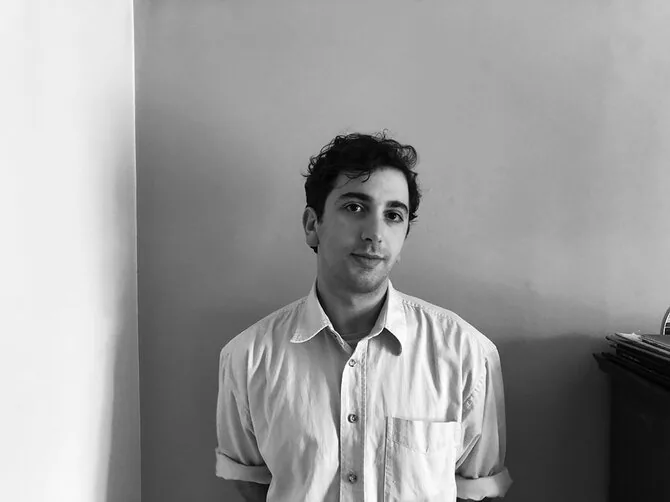
– Does Albania, where you were born, or Greece, where you spent many years, have a greater influence on you?
– Yes, I now live in Greece, but both countries are a huge source of inspiration for me. I don’t know if I could choose. The combination of these countries and cultures gives me, as an artist, the freedom to symbolically create my own country, create my own language.
– Was it difficult to persuade an older actress to perform nude? I think it wouldn’t be easy in Lithuania; actresses would want to cover up…
– We need to normalize the presence of all different types of bodies on stage. And that is why I always like to work with different bodies, people of different ages, people of different skin colors, because it is important to show diversity on stage – after all, that is the world around us, that is life, and it contains everything. Showing only perfect bodies does not reflect the real world.
And, of course, the actress Angeliki Stellatou, who plays the mother, is a very famous dancer in Greece – a dancer and choreographer with an impressive career. She agreed very willingly to do this because she has already appeared on stage without clothes. However, I would like to say and ask the audience to come to the play without judging from the start: “Oh, there are nudity scenes here.” Allow yourself to watch the play and feel what emotions it evokes in you. We use nudity on stage in a very healthy and respectful way; we do not aim to shock but simply to reflect real life.
After all, when viewers look at paintings in museums – they do not condemn nudity in sculptures or paintings. That is exactly what I would ask of the play. There is definitely a reason why it is used here.
You know what I find very beautiful? In every country we have visited, every city we have been to, people who had never seen theater before, older people, very young people, believers – none of them told us: “Oh, the nudity is scary, we didn’t like it, we felt uncomfortable.” Everyone said they felt comfortable, really liked the play, and got involved.
– What other feedback do you receive? Do viewers say that during the play “Mami,” they remembered their mothers, grandmothers?
– We very often see people crying and moved. It is wonderful because nowadays we are very distant from our emotions. Even if people write on Instagram accounts about being themselves, I very rarely see them truly open to their feelings. I often notice how people hurriedly wipe away tears because they are ashamed of them. But we don’t need to be ashamed of our emotions. Let’s be more emotional. Considering what is happening in the world right now, it is extremely important for us to be open and allow ourselves to feel.
For me, as a creator, seeing the audience’s tears is a huge achievement. People send not just short congratulations but long letters sharing their family stories, experienced grief, and losses. Seeing such a reaction from the audience, I understand that this play was not created in vain, and it gives me strength to continue creating. Because honestly, creating a play without words requires enormous work.
Considering what is happening in the world right now, it is extremely important for us to be open and allow ourselves to feel.
Many might think that without text everything is simple – you turn on the light, tell the actor where to stand, and that’s it. But in reality, it is the opposite. Absolutely. When you have text, you know where to start. You analyze it and build accordingly, but when there are no words, you have to create everything from scratch. You can try it yourself at home and you will understand. Because you need to come up with what image the play starts with, how it ends, and what symbolic meaning lies behind each of them.
It is not just about creating beautiful images, colors, or shapes. Although I like beauty, I don’t want my works to be just beautiful, just a showcase you look at and forget. I want to create strong images with deep stories that cut the viewer like a knife.
At the international theater festival “Sirenos,” Mario Banushi’s play “Mami” will be shown on October 3 and 4 in the Great Hall of the Lithuanian National Drama Theater.
Read more Will you answer 10 difficult general knowledge questions?