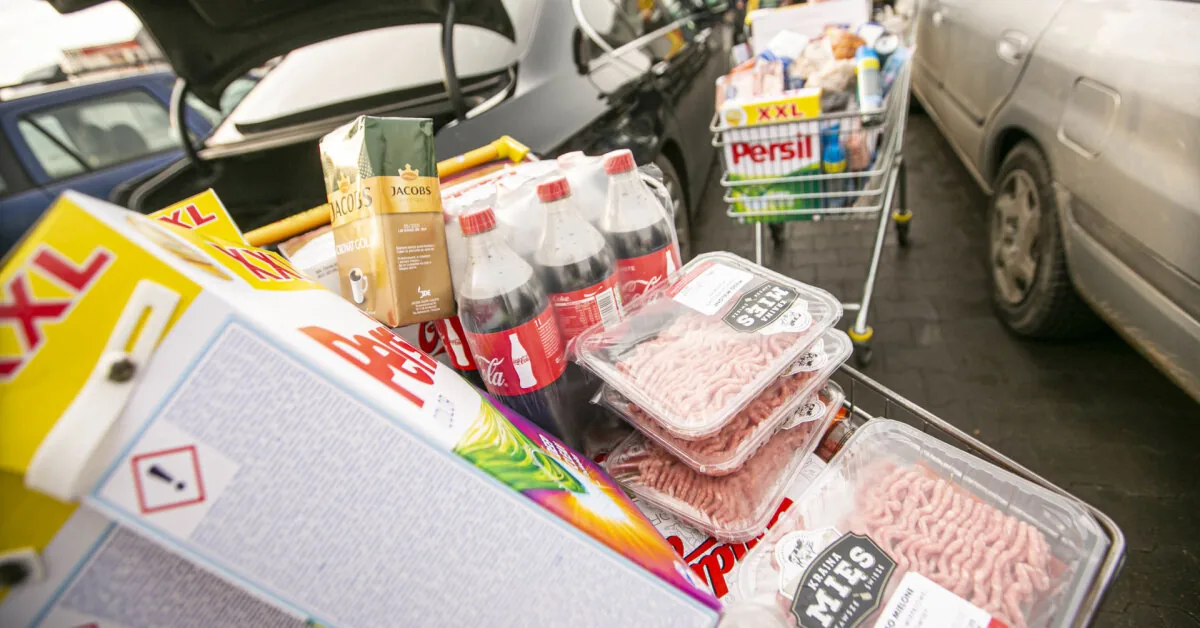
At the end of August, the price per kilogram of boneless pork neck in major retail chains’ stores averaged about 4.50 euros. At the end of July, the same amount cost almost six euros.
Read more Prime Minister: I would like a clear plan for normalizing relations with China
During the same four weeks, the price per kilogram of boneless ham dropped from about four to three euros. Minced pork, which we choose for cutlets, meatballs, or stuffing, cost about 3.70 euros per kilogram, compared to about 4.40 euros a month ago.
Ham with bone, loin, and bacon also became cheaper.
Why didn’t we feel the price drop immediately?
Analysis by ŽŪDC shows that the raw material had significantly decreased in price even before the more noticeable price drop in stores. In July this year, the price of pig carcasses in Lithuania was about a third lower than a year ago. Meanwhile, the average price of six pork products monitored in stores decreased by 6.6% over the same period.
The price drop in raw materials was favored by a larger supply of pork in Europe – more was produced in the first quarter of this year than a year ago.
In August, the price drop in stores accelerated: from August 10–16, the average price of these six products decreased by 12.4% in one week. However, the pork raw material market already showed the opposite trend: at the beginning of August, carcass prices rose in Lithuania, Germany, and Poland.
“The price of meat purchased in stores does not change every time the raw material price changes. Supply agreements can be made earlier, so cheaper meat reaches the buyer after some time. This can create a situation where the store still shows the previous price drop, although the raw material has already started to rise,” explains Dr. Irma Jankauskienė, head of the Market Information and Economic Analysis Department at ŽŪDC.
It is also important that before reaching the shelf, meat must be cut, packaged, kept cold, and delivered. These costs do not necessarily decrease along with the raw material price. Therefore, a raw material price drop of a third does not automatically mean that the pork neck in the store must drop by the same amount.
What does Germany say about Lithuanian prices?
Looking for signs that would help notice changes in the Lithuanian market earlier, ŽŪDC specialists analyzed more than two years of weekly pig carcass prices. Among the countries studied, Germany stood out: usually, the price changes of the previous week were closely related to the changes in Lithuania the following week.
Read more The entire cabinet of ministers is coming to Klaipėda
A statistical model using the previous week’s price changes in Germany explained about 62% of the variation in Lithuania’s weekly carcass price changes.
“If we want to understand where Lithuania’s purchase prices might head, it is worth watching what happens in Germany. This is important for farmers when assessing future income and for processors when planning raw material purchases. However, changes in German prices are not a guarantee that the same will happen in Lithuania after a week. Moreover, they do not indicate when the price will change in the store,” says Dr. Evaldas Stankevičius, chief economist of the Market Information and Economic Analysis Department at ŽŪDC.
What to expect in autumn?
In the last week of August, there were no new significant price drops in stores. Some pork products became cheaper, others increased by just a few cents per kilogram. However, the meat was still significantly cheaper than at the end of July.
ŽŪDC’s analysis considers the possibility that after a rapid price drop, prices will change little for some time. If the raw material price increase continues, meat prices in stores may later rise moderately. If it calms down, lower prices may persist longer.
The European Commission’s summer forecast predicts that this year the EU will produce slightly more pork than last year. This is favorable for supply but does not guarantee that prices will not change in autumn.
Higher purchase prices would allow pig farmers to catch their breath a bit: for the same amount sold, they would receive more income to cover rearing costs. For processors, the same change would mean higher raw material costs. How much farm and company results would change would also depend on other expenses and contracts made.
For buyers, the important difference is between the ended price drop and the return of previous prices. Even if pork prices rise slightly in autumn, the price per kilogram could still be lower than at the end of July. Then it cost almost six euros, while at the end of August about four and a half euros was enough.
Read more Mindaugas Sinkevičius promises to publish the family package next week, hopes for opposition support