Currently in Nepal, V. Šaulys told 15min how he found out about the flood, how he felt, when he realized the true scale of the tragedy, and what shocked him the most.

“During the flood, we were doing the kora (pilgrimage route) around Mount Kailash in Tibet. We were at the northern face, Dirapuk camp, 5000 m above sea level. Evening. Our group leader came and announced that she had two pieces of news – good and bad. We chose to start with the bad. Then she said that a burst glacial lake had washed away our roads, which we were supposed to use to return to Nepal, and it was unclear how we would get back,” V. Šaulys recounted.
Our group leader came and announced that she had two pieces of news – good and bad.
– The good news is that our agency in Nepal is working hard contacting the Chinese and taking care of permits so that we would be allowed to travel through another border crossing – Zhangmu – which is used for international trade but not for tourists. Until the last day, it was unclear whether they would let us through there. There are many requirements and bureaucracy in Tibet.”
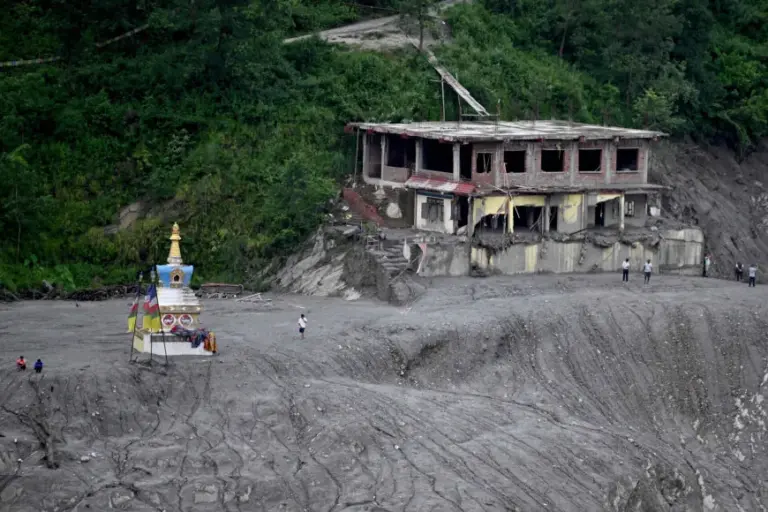
However, according to V. Šaulys, since it was force majeure, they were allowed to leave through the mentioned border crossing. According to the interlocutor, cargo transportation was stopped, and the border crossing was left for evacuation to Nepal, and for the Chinese – to Tibet.
Read more Evaldas Luneckas. Market Pulse: Bond Sell-off, Geopolitical Tension, and a New AI Phase