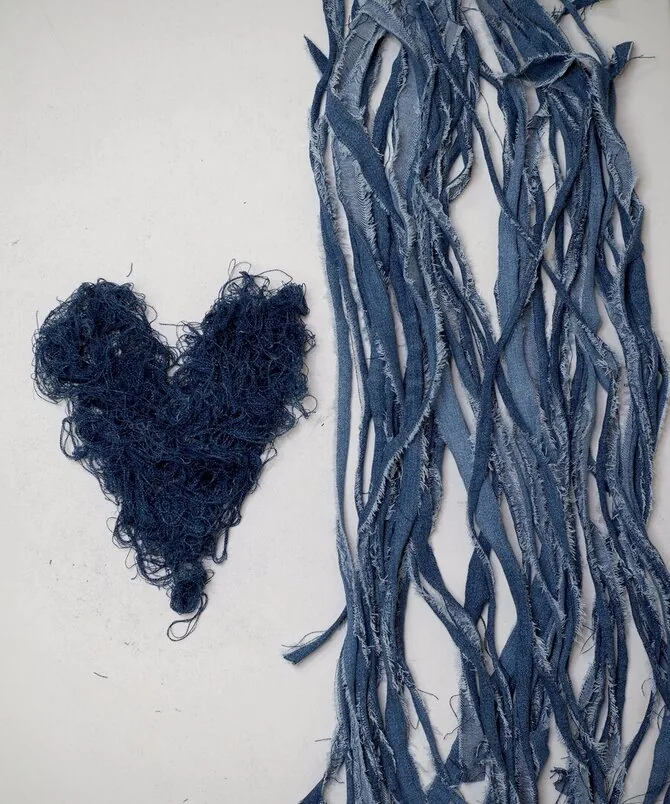
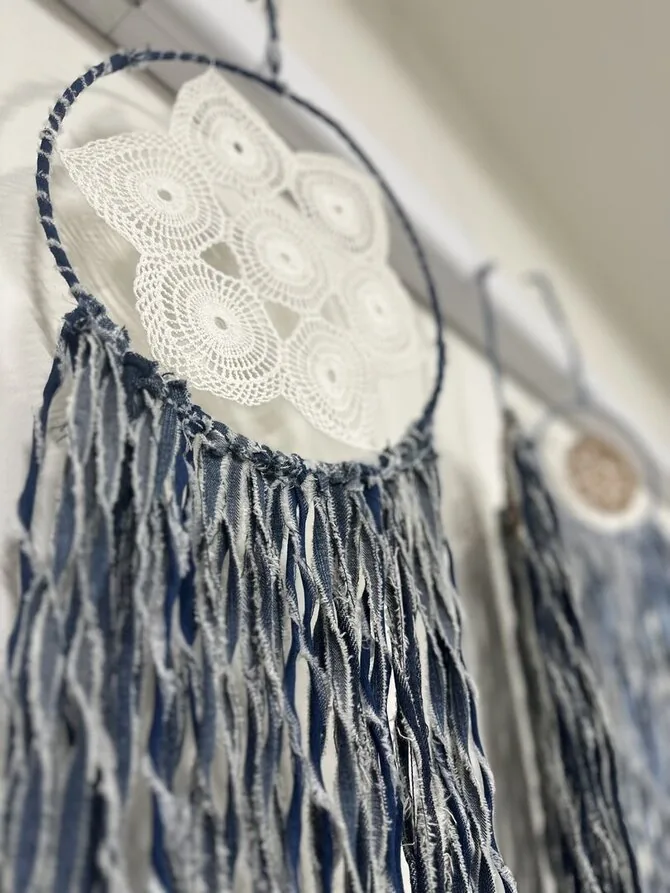
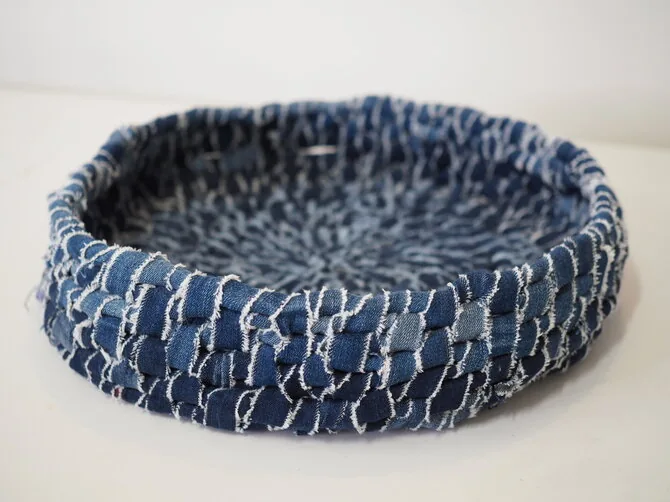
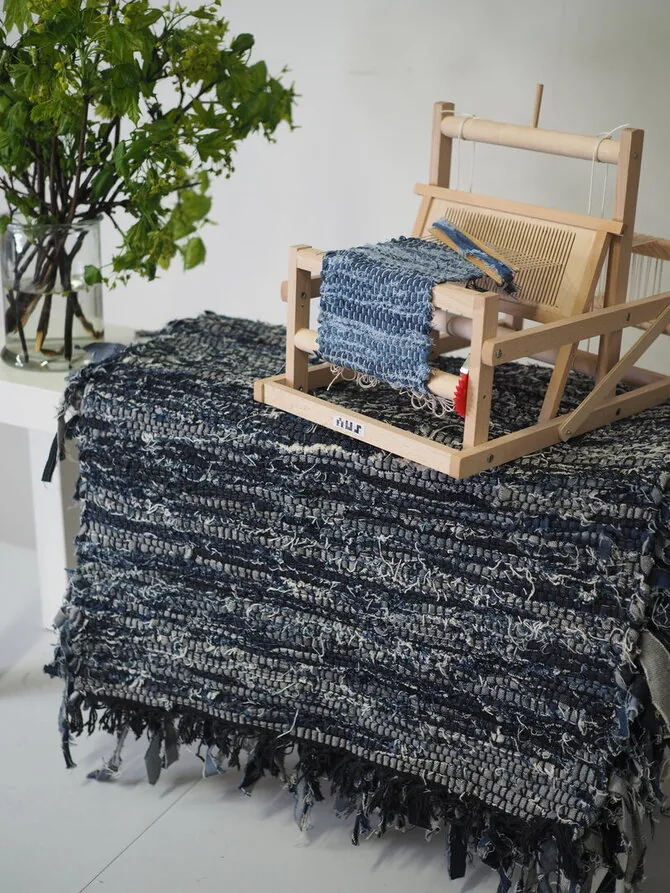
Milda admits that recently she has been captivated by a denim passion – weaving bags. She usually uses denim seams left over from creative dreamcatcher workshops to weave them.
The woman does not hide that her relationship with old clothes greatly depends on what we generally call “old”: “I easily let go of clothes that become outdated just by lying in the closet because they don’t fit or I no longer like them. But those that are loved and constantly worn are hard to let go of – I repair them and keep wearing them.”
She keeps other clothes for memories or because she sees future creative projects in them. “There are items I keep reviewing and promising: I will come back to you soon,” smiles M. Paukštė.
She points out that today there are so many clothes around us that the need to constantly buy new ones often becomes more of a habit than a necessity.
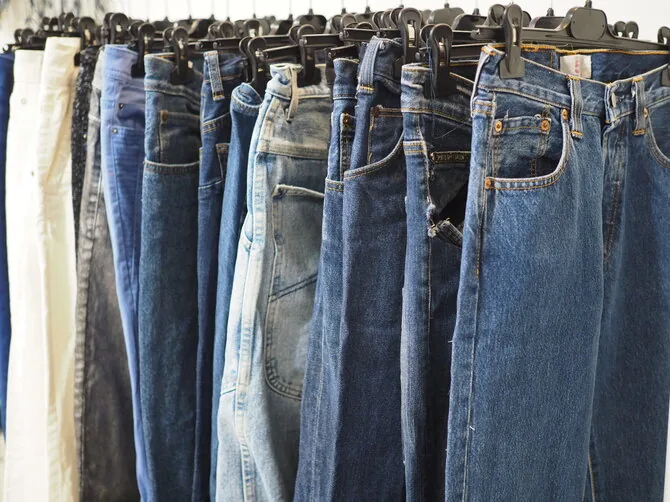
“I bought my last new piece of clothing about five years ago and really hope I won’t need to do it for a long time. I rarely buy used clothes either. My closet and all one hundred DĖK hangers in various places around Vilnius County are living proof that there are too many good unwanted clothes around us to need to buy new ones,” Milda is convinced.
If you need a bed for a cat or dog, why not make it from old pants?
Denim – one of the most rewarding materials for creativity
Reuse, as Milda says, starts not from trendy social media ideas but from a very simple need. If you need to update an armchair or pouf at home, she suggests thinking about denim fabric. If you need a bed for a cat or dog, why not make it from old pants?
According to her, denim is one of the most rewarding materials for creativity because it is durable, easy to combine, and has many details that can become the highlight of a new item.
In the project “Change the attitude, not the things,” organized by the Environmental Project Management Agency, we share real stories about how to preserve items and help them live not only a second but many more lives.
Participate in the contest:
Participate and win: show how old clothes become new
“Jeans are a very characteristic garment. Every person either has jeans or has an opinion about them. And it is practically impossible to wear them out without leaving a single shred,” she explains.
M. Paukštė says different jeans suit different purposes. For example, stiffer, non-stretch fabric is better for sewing handbags or pouches, while stretchy jeans are great for tearing strips. Those who constantly create from denim eventually know very precisely what shade, width, or elasticity of fabric they need.
Social media videos often mislead
Asked if anyone can make such projects, Milda says – everyone can try, but good results require both time and patience. “You can’t even make an omelet without a pan and without knowing how it differs from scrambled eggs,” she laughs.
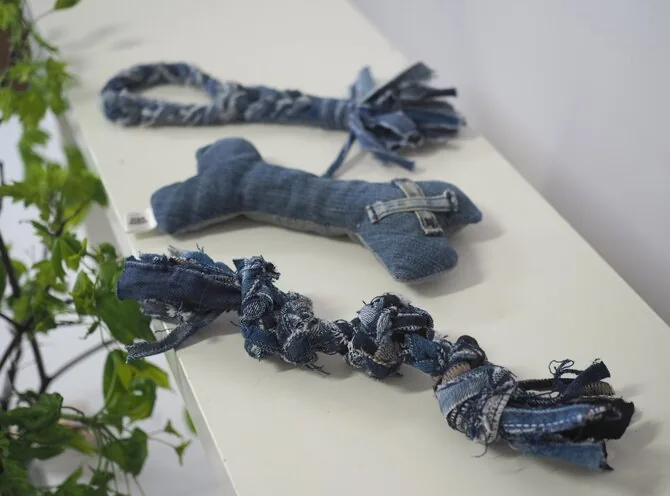
However, some things do not require great skills. For example, it is very simple to tear strips from denim and tie a toy for a pet. But to sew a bag, apron, bedspread, or hammock, you need to know how to sew, select suitable fabrics, and dedicate time to it.
One of the most common beginner mistakes, as Milda notes, is expecting too quick results: “People watch short videos on social media, cut up still quite good jeans, get disappointed with the result, and throw everything away.”
According to the interviewee, short videos are often just inspiration, and quality work requires tools and practice. She admits that experimenting takes most of her creative time. “When you do something for the first time, you make many mistakes, hesitate, and then everything starts going faster,” she says.
Dreams of weaving a rug for the bathroom
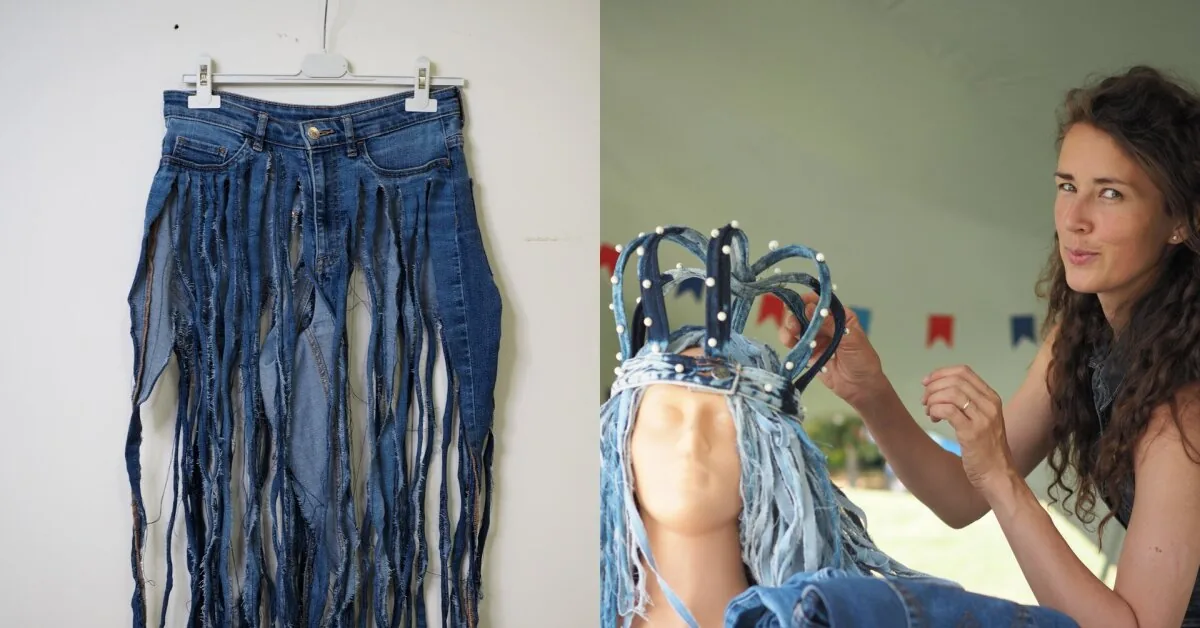
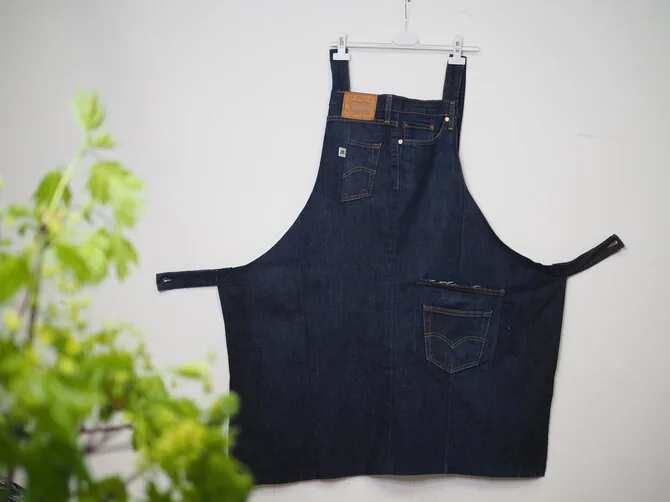
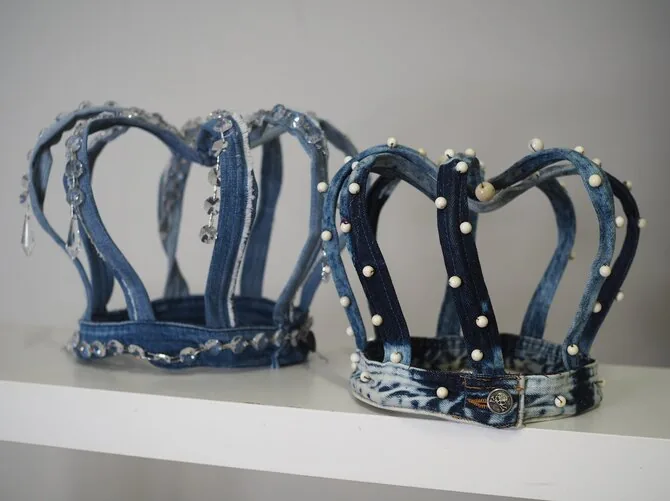
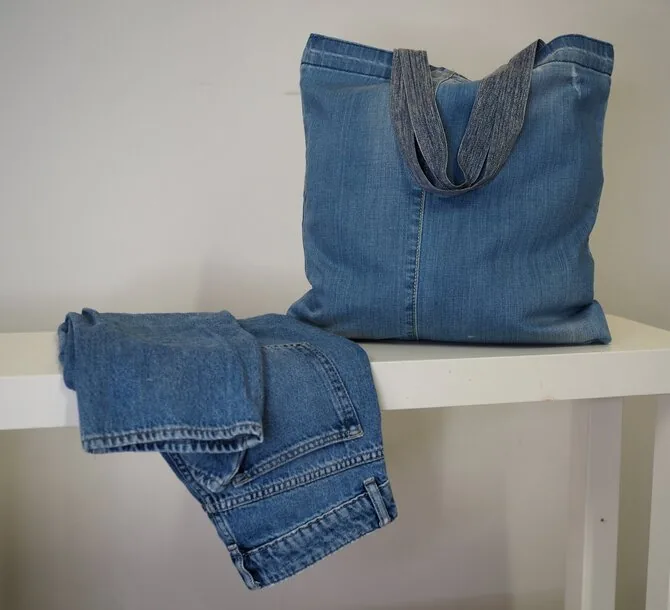
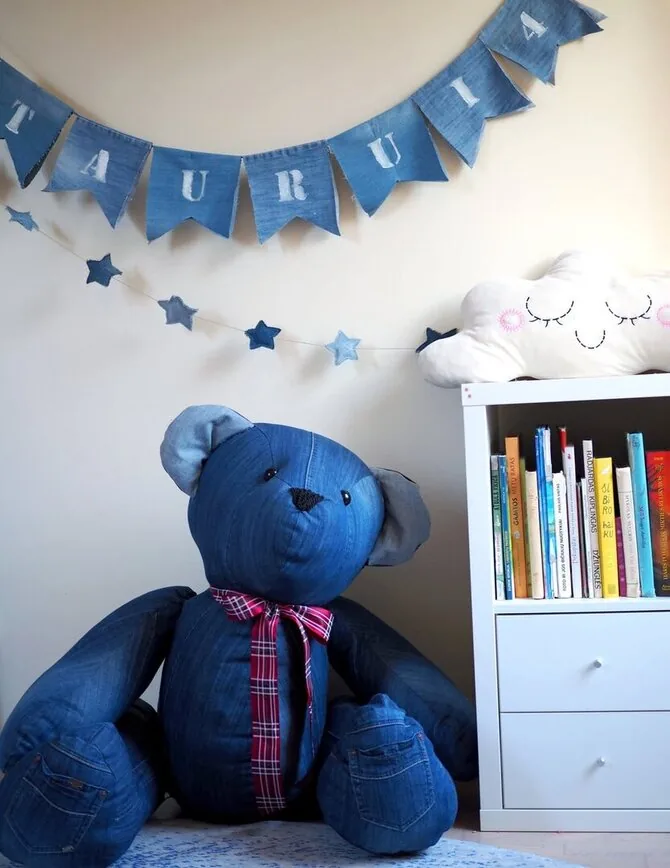
At home, Milda has found the most success with a denim woven rug for the dog, toys for the pet, and a large sewn denim bag. The studio has long used a chair covered with denim patches, an apron for workshops, woven bags, and even a crown, which many visitors want to try on, according to her.
Not only jeans but most clothes can be reused.
She admits she still dreams of weaving a rug for the bathroom but has not yet managed to collect denim in the right shade.
The interviewee is convinced that theoretically, not only jeans but most clothes can be reused: “It is estimated that up to 90% of clothes worldwide are thrown away without using their potential.”
In her opinion, today’s market is full of cheap new items, so people often no longer see the point in repairing, conserving, or sometimes even washing: “In the future, we will talk about these times as our parents talked about shortages, and grandparents about times when one pair of shoes was shared by several family members.”
Creative workshops for schoolchildren
M. Paukštė is glad that the attitude towards sustainability in our society is gradually changing. This topic is increasingly discussed in schools, communities, and organizations and companies are getting involved.
She feels this through the creative workshops she leads for schoolchildren. “According to the Culture Passport program, schoolchildren come to learn the craft of weaving or to make a dreamcatcher. We use unwanted jeans for this, and with each class, at least six pairs of jeans gain a new purpose. This is much more sustainable than buying new fabric,” says the founder of the “Aus Aus” studio.
Asked why it is important for her not to throw away but to reuse, Milda answers very simply: “I just feel much better creating from what others refuse to use because they think it is a worthless item. Then I enjoy both the result and myself the most.”
And sometimes, as she says, the item itself seems to suggest what it could become; you just need to be ready to hear it.