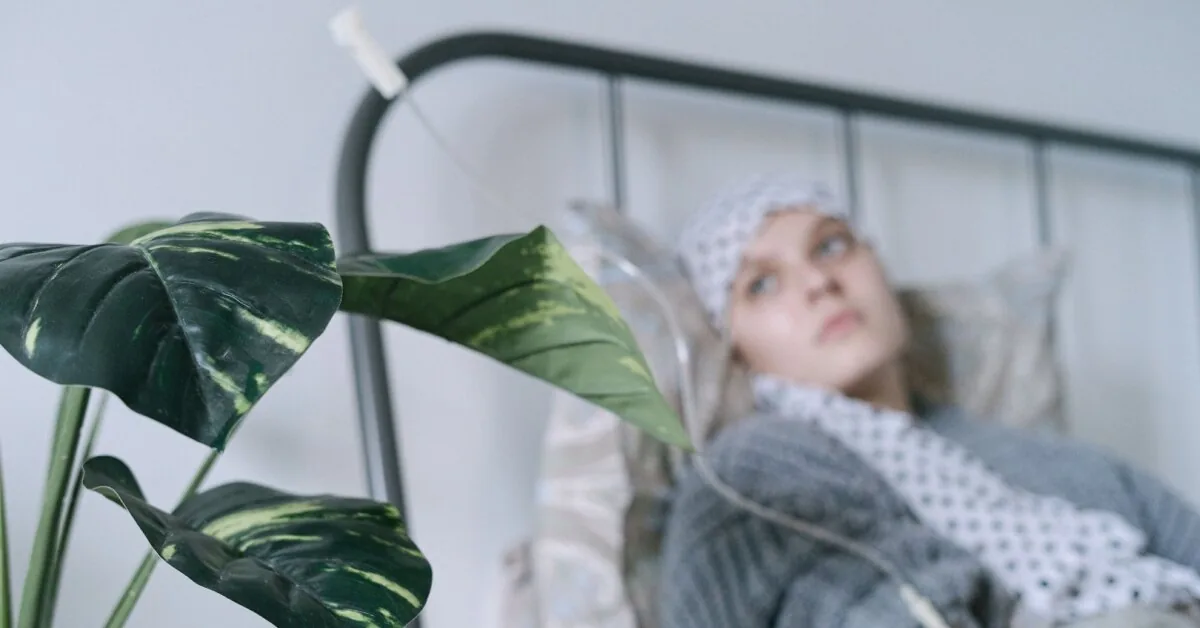
A cancer diagnosis changes life in an instant. It brings not only medical decisions but also many questions, fears, uncertainty, and challenges for the entire family. From that day on, it is not only the patient who walks the path of treatment – spouses, children, parents, brothers, sisters, and friends walk it together. It is often the support of loved ones that becomes the solid foundation that helps not to lose hope even in the most difficult moments.
Read more These Zodiac signs are simply made for each other: they attract each other like a magnet
How to help the patient while preserving their independence? How not to burn out yourself? Where to turn when questions arise about treatment, nursing, social or psychological help? We talk about the challenges faced by people with cancer and their loved ones and why it is most important not to be alone on this journey with the head of POLA.

– What is most important for loved ones to know when a family member is diagnosed with cancer?
– A cancer diagnosis shakes not only the person themselves – it affects the whole family. In the first days, there is often a lot of fear, uncertainty, and questions, so the most important thing is to understand that it is not necessary to know or solve everything immediately. For everyone who hears a cancer diagnosis, it is important to hear that there is still hope, that if someone else could recover, then maybe I can too.
POLA, being close to patients’ concerns for almost 15 years, feels every day how critically important the support of loved ones is for a person with cancer. Often, when conducting patient opinion surveys, we hear their stories about how much it matters to have someone nearby: helping to get out of bed, taking care of household chores, going to the doctor, or simply being together in the hardest moments. When the disease demands a lot of physical and emotional strength, the help of loved ones provides security, reduces feelings of loneliness, and helps not to lose hope. We hear patients say that sincere support from family, medical staff, and the community can truly ease the entire course of the disease.
Another thing – loved ones often feel the duty to be strong, but it is no less important not to forget about themselves, to allow themselves to acknowledge and experience emotions, to seek reliable information and help for themselves. We often repeat in our community – you can best help another only if you first take care of yourself. It is like the oxygen mask on a plane – when we hear the warning signal, we must first put it on ourselves, and only then on our child or loved one.
One of the biggest challenges on the path of cancer treatment is not to get lost in the abundance of information. Therefore, we recommend relying on the information provided by the treating team, reliable sources, and consulting POLA, where we help understand the treatment path and how to cope with daily challenges.
It is very important to remember that every cancer and every person is different. What worked for one patient may not work for another, so we urge avoiding comparisons and not relying on random stories on social networks. We, POLA, are a patient organization that also involves loved ones, valuing their contribution throughout the cancer journey, so we also provide free consultations to loved ones – here they can turn to psychologists, dietitians, and lawyers for consultations, which we provide by phone at a convenient time, arranged in advance. For more than 3 years, a volunteer patient guides help line has been operating, where not only patients but also their loved ones dedicate their time and energy, sharing their experiences and insights. All information – www.pola.lt
Answering this question, it is important to say that there is another group of patients who, for one reason or another, decide not to tell anyone about their illness, not even loved ones, and choose to go this path alone, while also having to think about how to behave and talk so that loved ones do not suspect the demanding treatment and fluctuating emotional state. We encourage talking, being open, because no matter how hard it is, going the path of recovery alone is incomparably harder than not being alone. The path of cancer is not a sprint but a marathon, so it is really important to have a shoulder to lean on and listen when it gets tough.

– How does family daily life change when cancer treatment begins, and what should one prepare for?
– Cancer treatment often inevitably changes the usual family rhythm. Days become filled with visits to medical institutions, tests, procedures, and it may be necessary to coordinate work, childcare, or other daily obligations. Some days the person may feel completely normal, and on others, they may lack strength and need more help. And there is also anxiety about survival – especially if the main financial supporter of the family falls ill. It is probably not hard to imagine that cancer brings many different challenges to patients, the main ones being increased financial burden due to lost work capacity or increased expenses needed for treatment, rehabilitation, health strengthening, additional medical care, and orthopedic aids.
It is important to be prepared that during treatment, well-being may change, side effects may appear, so it is worth planning daily life flexibly. But at the same time, one should not leave the whole life to the disease. If the condition allows, it is very important to maintain as many usual life elements as possible – shared meals, walks, favorite activities, conversations with friends, neighbors, or relatives. This helps maintain emotional stability for both the patient and their loved ones.
– How can loved ones help the patient during treatment while preserving their independence?
– The greatest help is often not doing everything for the sick person. That is definitely not necessary. It is very important to consider the specific situation and preserve the person’s ability to make decisions and participate in their life as much as their health allows. Loved ones can help very practically – accompany to doctor visits, suggest perhaps seeking emotional support, help with paperwork, take care of household chores (cook, clean, water the garden, take care of children or pets), but at the same time, it is important to ask: “What help do you need most today? What can I do for you?” Sometimes a person needs practical help, and sometimes just to be heard. The most important thing is that while trying to help, loved ones do not take over all control. The sick person should not feel like just a patient. They remain the same person with their own wishes, decisions, and the right to choose for themselves.
We notice that patients are sometimes simply annoyed by excessive pity or sympathy, and phrases like “everything will be fine” confuse them. At first, no one knows how the disease will progress or how the body will react to the applied treatment methods. Therefore, the best thing loved ones can do in such a situation is to encourage, wish strength, and show through their daily actions that they are and will be there throughout the entire journey through the disease. Of course, people’s innate traits and abilities to respond to another person’s needs differ, so it is advisable for patients’ loved ones to also use psychological help or consultations.
– What changes in the patient’s condition or symptoms are important to monitor at home, and when should one not hesitate to seek medical help?
– Every treatment method can have its own side effects. It is important for the patient and their loved ones to know which symptoms during treatment are considered urgent. Usually, the treating doctor and their team explain what to pay attention to, but it is worth mentioning that one should always not hesitate to contact the medical institution if there is a high fever, severe shortness of breath, heavy bleeding, severe pain that cannot be relieved, consciousness disturbances, severe weakness, or other sudden significant health changes. It is very important not to be afraid to call the medical institution or emergency number if in doubt – it is better to check than to wait until the condition worsens.
– Where can the patient and their loved ones consult when questions arise about treatment, nursing, or daily care? What do people most often turn to POLA for?
– First of all, all medical questions related to treatment should be discussed with the treating team – doctors, nurses. However, it is natural that outside the medical institution, between visits, other questions arise.
People turn to POLA with various questions. They often ask about social guarantees, benefits available when ill, how to get sick leave or participation, disability assessment, where to turn for nursing or home help, how to understand the course of treatment, how to cope with side effects in daily life. Often, people are very psychologically distressed; they just look for someone who calmly explains the situation and helps understand what the next steps should be. We provide qualified psychologist, dietitian, and lawyer consultations free of charge to POLA community members. This is a highly valued service where a person can receive individual, competent consultation.
We see that people are most frightened by uncertainty. Therefore, it is very important to know that patient organizations, POLA members, operate in different regions of Lithuania, helping to navigate and not leaving a person alone with their questions. These patient organizations operate both by disease and by place of residence – city-based, and their representatives are also POLA card volunteers-ambassadors, ensuring that POLA help is available to as many people as possible facing the reality of cancer.

– What psychological help is available to a person with cancer and their loved ones in Lithuania?
– In society, both a cancer diagnosis and psychological help are still stigmatized, surrounded by some discomfort, so it is very important to talk about it as much as possible so that a person who learns the diagnosis (whether the patient or loved ones) dares to seek help and does not remain alone with their illness.
Emotional support is no less important than medical treatment. Although oncology treatment centers have established oncology psychologist positions, and psychological help opportunities are expanding in other medical institutions, we see that in regions they are still not as easily accessible as in big cities. Therefore, it is important to know that POLA provides consultations by phone, convenient for the person, as there is no need to go anywhere, and help can be received regardless of the place of residence.
The most important thing is not to wait until the emotional burden becomes unbearable. Psychological help is not a sign of weakness – it is part of treatment and adaptation to a changed life.
– How to talk with the patient about the illness, prognosis, fears, and future, especially when they avoid these topics themselves?
Read more Juškaitė’s injury-thinned team crushed in Phoenix
– It is understandable that there is no one right way – some people want to talk openly, others need more time or choose to talk less about the illness. It is important to respect the person’s pace and consider it, not forcing them to talk when they are not ready. Sometimes a simple question is enough: “Do you want to talk about it?”
If the person does not want to, you should show that you are there and will be ready to listen when they want. The greatest help is often not perfect words but calm presence together, knowing that you can always lean on a dear, reliable person nearby.
– How does cancer affect couple and family relationships, and what can help survive difficult times?
– The disease inevitably becomes a new family reality. There may be more tension, fatigue, anxiety, time and responsibilities in the family may be distributed differently. There may also be more closeness, a sense of importance, and quality time spent together.
It is important, experiencing stress due to uncertainty and feelings of unknown, after active treatment, which is often exhausting, changing the body and appearance, and facing interpersonal relationship challenges, to seek help. Open communication, sharing responsibilities, and understanding that all family members may need help are helpful. It is also necessary to attend to one’s own needs – loved ones often devote all attention to the patient, but over time they need support and help.
If it becomes difficult to communicate or overcome emotional challenges, it is worth turning to a psychologist. Sometimes just a few conversations help the family adapt more easily to the changed situation.
We strongly encourage those who have families going through cancer in their circle not to be afraid to offer help – it can be meals you prepare or provide, an offer to walk the dog, or an outing with the family’s children to the park, cinema, or countryside. Every gesture is invaluable because it shows that these people matter, that they are not alone.
– How can a loved one recognize that caring for the patient is becoming too much of a physical or emotional burden, and where to turn for help then?
– Each of us knows ourselves and our loved ones best. But if we see that a person constantly feels exhausted, becomes irritable, cannot rest, sleeps poorly, loses interest in usual activities, or feels constant tension, these may be signs that the burden of care has become too great.
Loved ones also have the right to help. It is worth talking to a family doctor, turning to a psychologist, social worker, or patient organizations. It is important to remember that taking care of yourself is not selfish – only a person who takes care of their strength can be beside the patient for a long time and with quality.
– What practical, social, nursing, or palliative care options are available in Lithuania to a person with cancer and their loved ones?
– Depending on the person’s health condition, social challenges, and financial situation, different measures may be applied – sick leave, disability assessment, reimbursed nursing aids, outpatient nursing services at home, palliative care, medical rehabilitation, social services, and financial benefits in municipalities.
Unfortunately, it is complicated to figure out what help is available in a specific case; it is very individual. Therefore, we encourage actively asking social workers at medical institutions, family doctors, municipal specialists, and turning to POLA. Our goal is to help a person navigate the system as easily as possible and receive the help they are entitled to.
For example, according to the current regulations, in Lithuania, nursing and supportive treatment services can be received by residents insured by Compulsory Health Insurance, who have difficulty fully functioning in daily life due to changed health status or functional impairment, as well as those who need postoperative nursing.
Provision of home nursing services must be ensured by all primary outpatient health care institutions for residents registered with them. Institutions can provide these services themselves or contract with another institution. You need to contact your family doctor. All primary health care institutions provide outpatient nursing services at home or have contracts with service providers.
Patients with oncological diseases experiencing severe chronic pain or unable to eat normally can use life-sustaining equipment at home free of charge – infusion (pain) pumps and enteral feeding pumps. If the medical council determines that such equipment is necessary, its rental is 100% compensated by the health insurance fund. The equipment supplies the patient accurately, safely, and helps ensure a better quality of life at home.
Inpatient palliative care services are provided to adult patients whose health condition meets the specified criteria. For example, all active treatment options have been exhausted (except chemotherapy, palliative chemotherapy, radiation, biological, hormone therapies, and dialysis), and the disease is progressing and life-threatening.

Such patients need symptom therapy that improves their and their loved ones’ quality of life. The referral for inpatient palliative care services is issued by the treating doctor, considering the palliative care criteria set in legal acts. A referral is not needed when a patient is transferred from the supportive care and nursing department to the palliative care department of the same medical institution.
Inpatient palliative care is funded by the Compulsory Health Insurance Fund (CHIF) without limiting the duration of these services and regardless of whether the patient has already received inpatient nursing and supportive treatment.
Palliative care services are provided by a team of specialists (doctor, nurse, nurse assistant, medical psychologist, physiotherapist, and social worker), discussing the palliative care plan with the patient and their loved ones.
Outpatient palliative care at home can be received by patients whose health condition meets the same criteria as for inpatient palliative care. Outpatient palliative care is provided by a team of specialists, including a doctor, nurse, nurse assistant, social worker, medical psychologist, and physiotherapist. The team’s work is coordinated by a doctor, who may include other specialists in the team. The referral for outpatient palliative care services is also issued by the treating doctor.
Targeted social and/or financial assistance provision is assigned to the competence of municipalities, so the rules and regulations for allocation differ. POLA devotes a lot of effort and time to ensure that the allocation of such support for cancer patients is not determined by their place of residence and that the requirements are as similar as possible. It is important to note that a one-time payment made by the municipality is additional individual social support intended for persons experiencing financial difficulties.
Although in some municipalities it is considered that a person’s illness is sufficient grounds to apply for social support, in most municipalities, the average income of the person or the person living together (family member) is additionally assessed. To apply for one-time payments, you need to contact the care department of the municipality where the patient has declared their residence.
The most important message we want to convey to both patients and their loved ones is that you do not have to be alone with cancer. In Lithuania, there are people and organizations ready to help not only with treatment issues but also with everyday life challenges. Seeking help is not a weakness – it is one of the most important steps toward a safer and calmer path to overcoming the disease. More information at pola.lt and priesvezi.lt.