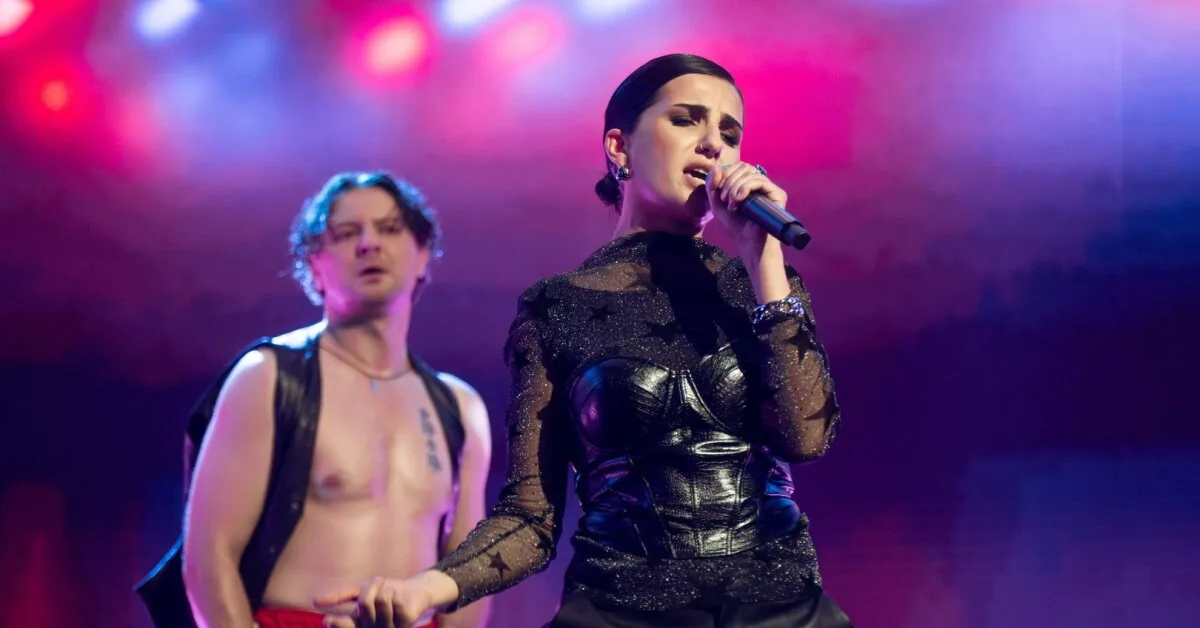
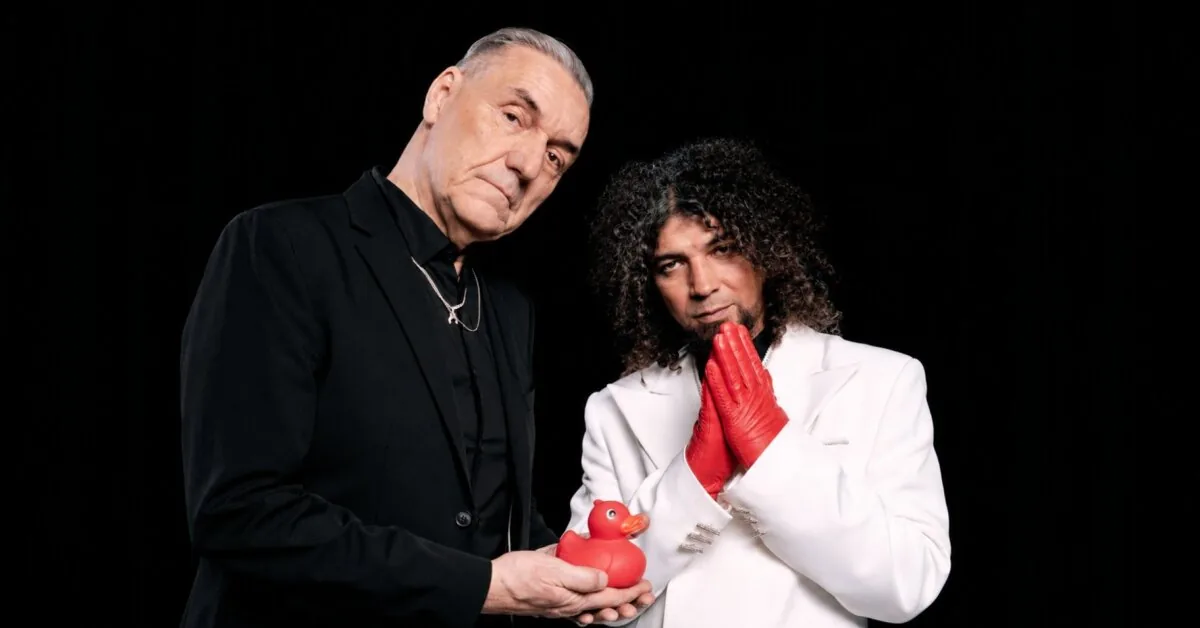
At the last event of this summer, listeners will hear the DJ duo Justautas and Hìldå as well as live performances by the artist Lou-Kee and the band “Ministry of Echology”.
Read more Dutch influencer was forced to leave Ibiza for a strange reason: «I lived in fear every day»
The evening crowning the season will offer a very wide range of sounds to the courtyard visitors, and the little visitors will be waiting for creative workshops dedicated to light and shadow games, led by contemporary circus creator and educator Marija Baranauskaitė-Liberman and curator and educator Vilius Vaitiekūnas.

Since 2009, “Ministry of Echology” has been one of the most prominent reggae and dub music bands in Lithuania. Over more than fifteen years, its lineup and sound have changed, but the desire to play together, experiment, and create music influenced by both Jamaican musical culture and the sound of Vilnius has remained.
We talk with the band members residing at “SODAS 2123” about creativity, community, concerts in their own yard, and the fifth album already in the making.
Domininkas: The band’s history began in 2009. Over that time, the lineup and somewhat the musical direction have changed. What, despite all the changes, is the connecting link of “Ministry of Echology”?
Paulius: Playing together. Spending time together. Releasing new tracks.
Dominyka: I agree with Paulius. In Ministry, friendship, aka bonding, is very important. What unites us is that although we are all different, together we are quite sensitive people. We try to listen to, understand, empathize with, and support each other. I can’t believe we’ve been creating, being together, and having a good time for so many years.
Domininkas: Your music was born in Vilnius, although its roots are in Jamaican reggae and dub culture. What do you think Vilnius has added to the band’s sound?
Paulius: There is a lively underground scene in Vilnius, but not many try to play reggae and dub here. We play as we like or as it comes out, and people like it. Vilnius is small, everyone mingles in one group, there are no very pure musical forms here, so our creations are a mix of everything.
Dominyka: Vilnius is documented in our songs. I grew up here, lived most of my life here, so I think Vilnius is inevitably heard in our music.
Domininkas: This summer you played at one of the biggest reggae culture events in our region – the 25th “Ostróda Reggae Festival” in Poland. What did you take there and what did you bring back?
Paulius: There was a very good “Burning Spear” concert – it completely hypnotized us. We brought back the idea that maybe we should play less, not rush. And we took there what they had not seen or heard before – our “taškalynė” (splatter style). That’s what sets us apart from other, more moderate, more usual bands playing classic reggae forms.
Dominyka: I have never been to such a good reggae/dub concert in my life, so I brought back inspiration to return more often to dub times when concerts had a lot of improvisation and we never knew exactly what would come next.
Adomas: We brought back unforgettable impressions from the legendary band’s concert. It seems we even started to value our groove differently…
Domininkas: You are the only reggae/dub genre band in Lithuania. Why do you think this subculture has not taken root in Lithuania?
Paulius: Not the only one! There is Ignas from Ignalina, Adomas and Nerijus sometimes play. There is “Kigidi Karma”, pop reggae. There are manifestations. Now, there are even three handmade reggae/dub soundsystems! Maybe it’s too cold here and people want more intensity! I like that we are the most active and play our own. Of course, it would be interesting to see how others would play. So I really invite someone to play dub!
Dominyka: I would like to play in a dub band… I think this genre has taken root. It seems everything goes in circles, and there is a feeling that dub is returning to people’s headphones.
Adomas: There is also another dub band in Vilnius called “Dejahvu”. But I still think we have enough events representing reggae culture. They may not happen every month, but they appear from time to time.
Domininkas: When and under what circumstances did “SODAS 2123” become your rehearsal and creative space?
Paulius: When SODAS was created, we were a collective of the Kirtimai Culture Center (KKC). “Kirtimai” as partners contributed to the development of SODAS, so we ended up here as the KKC collective.
Read more Boxer who overcame the obstacle chose a new opponent – will aim to unify three belts
Dominyka: Aha, lucky that Paulius is good at coordinating things and initiating collaborations.
Domininkas: How does playing in this space differ from your previous studios or rehearsal places? Does the environment itself somehow change your creative processes?
Paulius: Very suitable environment. We have the opportunity to record comfortably, good vibes, other people around. Outdoors, garden – great. Close to everything. Many of us rehearse in that studio, but it is big, so we fit and know how to share.
I like that this studio has windows. Before, we played in the Trade Unions Palace, and even earlier – in a cozy space with big windows on Gėlių Street, even earlier – in the Jakšto basement… The current studio is probably the most professional (smiles).
Dominyka: Ha ha, the journey of windows. On Jakšto Street, we thought there were no windows at all, but when we had to move out, we found one. It was very sad to go into that dark basement space… The current space is very warm in winter – that was not the case in our previous studios. And we ourselves transformed this abandoned meh basement into a functioning rehearsal room. We all worked together with many musicians with whom we now share the studio. It was fun.
Domininkas: What does it mean to be “residents” in a place like “SODAS 2123”? Do you feel just tenants or part of a broader community of artists and culture creators?
Paulius: Oh, after so many years you really start to feel part of it, and a lot has been done together. It’s good to see people every time. We help each other, come up with everything together. Wonderful place. Long live! We are definitely not just tenants. We are a bit like hosts here (laughs).
Dominyka: We feel it, we feel it. It’s a very inspiring thing: you come to play, look around – everyone is buzzing, creating, organizing, and you feel you’ve found your place – you want to be even more energetic. I really like that in one day you can talk with musicians, sound system builders, painters, photographers, animators, filmmakers, poets, artists and cultural figures of various genres. You feel less lonely.
I greet strangers but very often seen people. This neighborhood has become my neighborhood too. Maybe at first I looked a bit suspiciously, as if waiting for problems – maybe it will be too loud, maybe this, maybe that – but it’s very friendly to live together.
Domininkas: In 2024, you held a concert in the “SODAS 2123” yard just a few steps from your studio. How do such “home” performances differ from concerts in clubs or festivals?
Paulius: Convenient logistics. All instruments nearby. Cozier at home. Everyone comes, you play as for yourself, sharing not only music but also the place. It’s very nice.
Dominyka: It’s good that you can play that so-called “mayonnaise” in the studio. Almost like at home – you can rest well lying on the carpet. Nice that if you forgot something, you can go get it very close. And I really like that after the concert you can go to the studio.
Work for the benefit of the Homeland and the good of the people.
Adomas: Maybe it adds some coziness that everything is in our own yard. “SODAS 2123” is a very suitable space for such concerts. Open sky, many acquaintances.
Domininkas: You have released four albums – from “Notes & Quotes” to “Horizon”. You have probably already started creating a new one – what are the planned “ministry” legislative projects?
Paulius: We have new tracks, we are preparing to record and release them. To please ourselves and others. To cry and cry out. It’s very interesting what this album will be like. It’s like a new stage. We play dub at concerts, but we decided to distort more, so we also spin rhythms. Sometimes it works better, sometimes we miss it. We want everyone to be free and liberated.
Dominyka: Yes, the fifth album is in process, we have been creating it for quite a long time. We can’t decide when a song is finished. There are so many heads in the band, so many laws. I like things to go faster: you catch a song, record it, and then go look for other songs. But this ministry is very specific, and all heads need to consider, reconsider, rethink everything ten times, maybe more. If we were tailors, we would sew everything very precisely.
Adomas: Lately, we have been creating songs more for dancing and thinking about where to put the calmer ones (smiles).
Domininkas: What would be your “ministry” proposal to the current Cabinet of Ministers?
Paulius: Work for the benefit of the Homeland and the good of the people.
Dominyka: We can organize workshops for them – how to ministry.