Children’s Voice Without Borders
Identifying sensory needs in Lithuania is still problematic because there is no unified system in the country that allows for consistent and uniform assessment. As a result, recognizing such needs and selecting appropriate assistance often depends on the knowledge and experience of specific specialists.
Read more After Iran’s threats were announced, Greece took unusual measures
This is exactly what the project “Child’s Voice Without Borders” addresses, implemented by the public institution “Center for Education, Health and Social Innovations.” The project’s goal is to increase public understanding of children’s sensory needs, encourage their response, and seek ways to ensure greater inclusion of children in the Lithuanian education system.
Volunteers gathered for the project also learn from foreign partners – the Bulgarian organization “Paint and Quarter Horse Foundation,” which works with children with disabilities and sensory needs and applies hippotherapy.
Project representatives recently visited Bulgaria, where they participated in a three-day advocacy training, discussed with the organization’s specialists, shared their experiences, and sought practical solutions to better understand and respond to children’s sensory needs. This international cooperation became an opportunity not only to gain new knowledge but also to look at Lithuania’s situation from the outside – especially as the time approaches when children will return to schools.
Volunteers Conducted Surveys
Project volunteers collected information in Lithuania: they communicated with institutions, schools, kindergartens, teachers, parents, conducted surveys, and gathered interview-type material about what is currently not working as it should and what could be improved.
“These insights are very important to us because we plan to prepare recommendations for the Ministry of Education, Science and Sports. Today, many children with individual support needs study in general education schools, but large classes, the workload on teachers, and other problems do not always allow for quality education and proper attention to each child.
We want to look at this situation specifically from the perspective of sensory needs and show what could be changed so that children’s inclusion in the general education system is not only formal but truly effective,” said Dr. Brigita Kreivinienė, head of the public institution “Center for Education, Health and Social Innovations” and professor at Klaipėda University.
The collected data showed that one of the problems faced by families raising children with sensory support needs is the availability of pedagogical psychological assistance. Parents say that help for the child is often needed here and now, but the assessment by the pedagogical psychological service (PPT) can take several months, and in some cases – up to half a year. Meanwhile, the child already faces difficulties at school, and the necessary help can only be provided after the assessment process is completed.
According to B. Kreivinienė, another problem is the accessibility of already created sensory spaces. Some schools have sensory rooms or sensory spaces, but parents share experiences that children cannot always use them until official PPT conclusions are received: “The question arises whether we really have to wait for a formal assessment when the child needs help today? A sensory space can be a very important tool for a child to calm down, concentrate, and return to the learning process. Therefore, it is important not only to set up such spaces but also to ensure that they are genuinely accessible to children who need them.”

Knowledge Is Not Always Enough
Teachers participating in the survey point out that when working with children with individual or sensory needs in the educational process, they often lack practical knowledge and skills. Even when individual support specialists are present in the classroom, teachers do not always have enough knowledge on how to properly organize the educational process considering the specific needs of the child.
Teachers miss more information on how to adapt the environment and activities, when a child should be given the opportunity to withdraw, take an additional break, choose a quieter space, or, conversely, engage in more activity.
“Qualification improvement and knowledge expansion are essential, especially in practical areas. Teachers say that theoretical information can be found and read, but there is a great lack of practical examples, case analyses – how to specifically act and solve situations related to children’s sensory needs.
Just knowing what sensory needs are is not enough – one must be able to recognize what a specific child needs and know how to respond to it in the daily educational environment,” said B. Kreivinienė.
Swimming Lessons Become a Challenge
Another area where mismatches between children’s sensory needs and the education system become apparent is physical education: physical education classes, activities in the gym or outdoors, as well as swimming lessons in the pool.
Parents say that for a child with sensory difficulties, the pool can cause great stress, especially when these needs are not officially identified. For example, a child may find it difficult to tolerate certain clothing, a cap, goggles, or touches on the face, making the swimming lesson not only unpleasant but also a demanding experience.
“We have parents who are very worried about swimming lessons because the child may have difficulties with clothing, cap, goggles, or other sensory stimuli. However, if a child cannot participate in swimming lessons due to sensory difficulties, they should not be exempted from all physical education classes. This is especially important because physical activity can be very beneficial for such children.
Read more LAT accepted the complaint of a convicted former police officer for abuse and document forgery
On the other hand, we also have families who are very happy about the introduction of swimming lessons, but here we face another problem – the availability of assistance depends on the specific school and pool.
A child with individual support needs should be provided assistance in the educational process, but in practice, each school handles these issues differently. There are cases when a child is simply told: if they have individual support needs, they should skip the swimming lesson. The same happens during physical education classes, although these are especially important for such children – they are part of sensory recharging,” said B. Kreivinienė.
Little Attention to Qualification Improvement
Another problem is the competence and working conditions of student assistants. These specialists are closest to the child who needs help, so their knowledge about various aspects of disability, sensory needs, and ways of assistance is extremely important.
However, the work of a student assistant is often not stable or attractive enough, and insufficient attention is given to qualification improvement. Therefore, according to project representatives, it is not enough to expect that the assistant will acquire the necessary skills through daily experience – assistance to the child must be organized comprehensively, and the competencies of these specialists must be consistently strengthened.
“From our surveys, we see that one of the problems is the very large number of students in classes. When there are children with greater individual support needs in the class, it is necessary to think about different educational organization and greater support mobilization. This would help ensure a smoother educational process for the teacher, the child, and the entire class.
Teachers also pointed out that the education system lacks planned cooperation with occupational therapists. These specialists can significantly contribute to assessing sensory needs and planning assistance, so their inclusion in the educational support system should be considered much more broadly.
Meanwhile, parents mentioned missing more knowledge and opportunities to receive comprehensive assistance – it is not enough just to identify the child’s needs; the family needs a clear path on where and what kind of help to seek,” said B. Kreivinienė.
What Are Sensory Needs?
Sensory needs relate to how a child receives, processes, and responds to sensory information from the environment and their own body. When this process is difficult for the child, it can affect their well-being, behavior, ability to concentrate, and participate in daily activities, as well as in the educational process.
Sensory needs are part of the individual support needs, and although not all children with individual support needs face sensory difficulties, a large number of children do have them.
The number of children with disabilities in Lithuania is rapidly increasing: about two to three years ago, there were about 15,000 such children; now – about 20,000. According to official statistics, as many as 85% of children with disabilities have mental and behavioral disorders. According to project representatives, practically all of them experience greater or lesser sensory challenges.
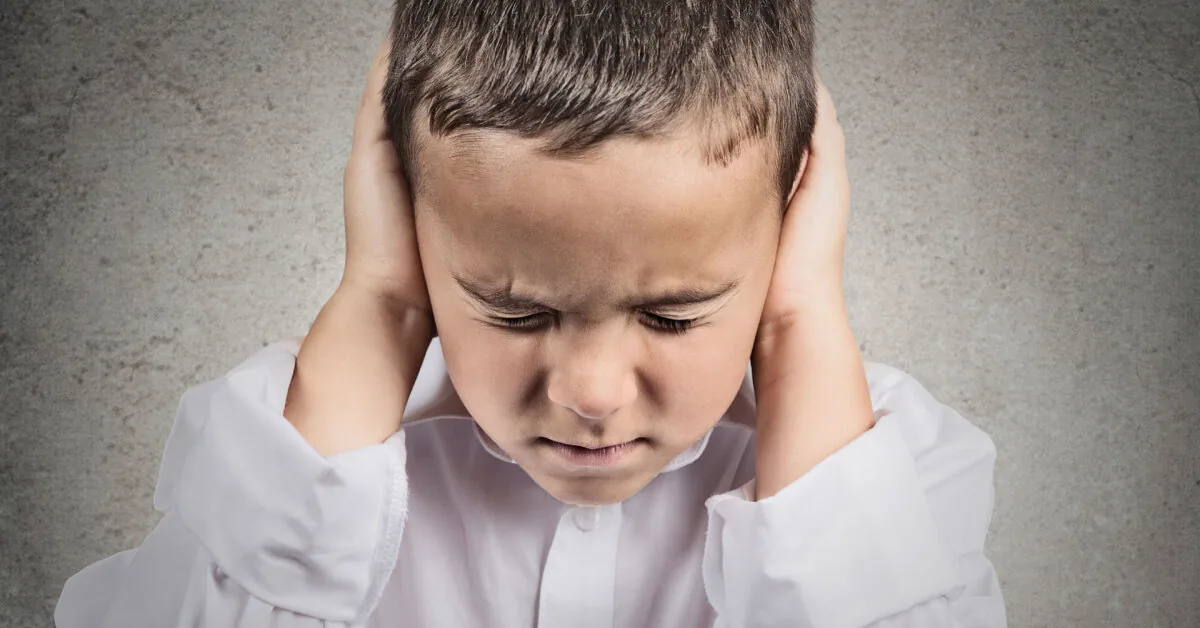
“We all basically have sensory needs. The difference is that our brains usually can receive and process information from the environment in a complex and organized way. But for a child facing vestibular, proprioceptive, or tactile difficulties, the central nervous system’s reactivity may be too high or too low. Because of this, it may be difficult for them to properly participate in the environment and educational process; they may make noise, disturb others. However, if the child’s sensory needs are met – their sensory cup will no longer be empty, so the problem will disappear or be significantly reduced.
Each child with sensory needs is individual. For one, too much noise may cause great discomfort, so they need headphones; another needs more movement breaks to concentrate better. A child with proprioception difficulties may find it very hard to sit at a desk for a long time – they get tired and can no longer concentrate or listen to the teacher,” said B. Kreivinienė.
Depending on the child’s needs, various tools can be used to meet them – children’s yoga, sensory diet cards, movement exercises, and other activities. Properly selected movements provide the muscles with the necessary stimulus, help the child better feel their body, calm down, and later maintain attention for a longer time.
The project “Child’s Voice Without Borders” is administered by the Open Lithuania Foundation and funded by the European Union. However, the expressed views or opinions are those of the author only and do not necessarily reflect the views or opinions of the European Union or the European Education and Culture Executive Agency (EACEA). Neither the European Union nor the funding institution is responsible for them.
Read more Viešvilė surroundings – without electricity: people are urged to purchase generators