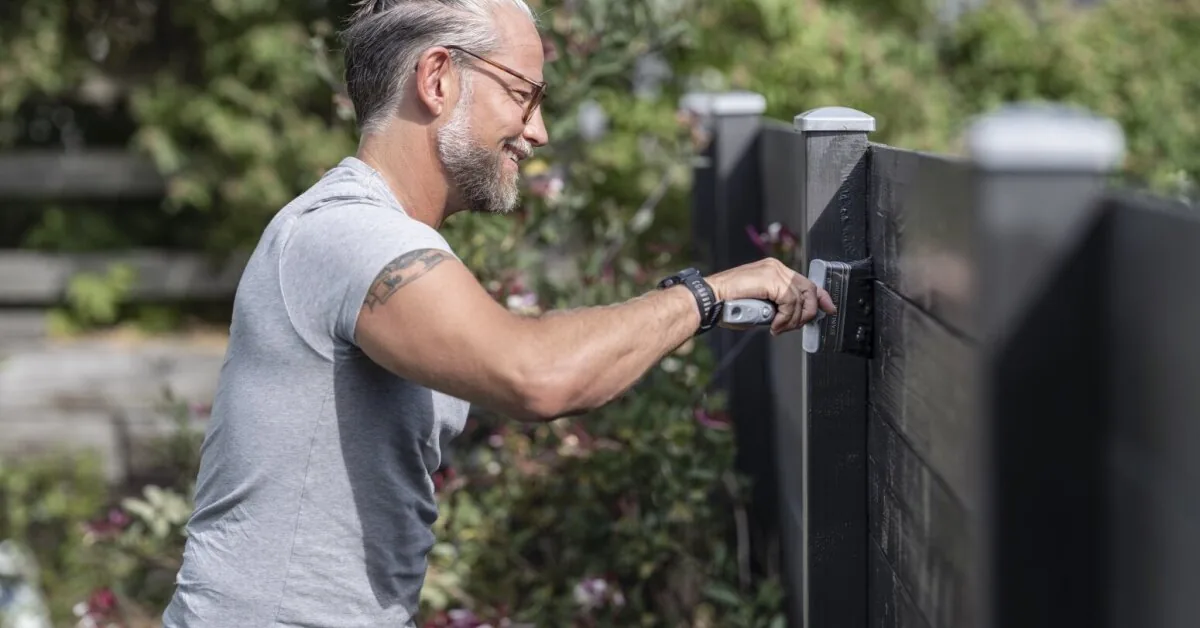
It is believed that painting wooden surfaces requires a lot of time, careful preparation, and the right tools, but after learning the cost of painting work, many individual homeowners choose to do the work themselves. This decision is often rational because, with time and willingness, quality painting or oiling work can be done independently.
Read more Kremlin reacted to the French operation against the Russian tanker: «This is piracy»
The essence is simple – such work requires preparation: properly cleaning the surfaces, choosing not only quality paints, stains, or oils but also the right tools. The tools determine whether the work will go smoothly or turn into a tiring marathon of mistakes and corrections.
Painting tools are not secondary
It is not always worth painting yourself. If the wooden house facade is tall, has complex architecture, or the coating is severely damaged and old, or if there is a lack of time – professional painters may be a better choice.
However, if the surface is accessible, no climbing high is needed, you want to save money, and can dedicate a weekend or two to the work, self-painting is definitely a realistic option, especially since much of the result depends not on “innate talent” but on very practical decisions. One of them is understanding that it is not enough to buy just paint, stain, or oil. Tools are also needed.

Audrius Dryžas, head of the “Tikkurila” academy, clearly describes the importance of tools: “Often one of the most important factors determining the quality of painting or oiling is the tools. Other important factors are preparation, product quality, and painting skills. However, even good paints, stains, or oils will not reveal their full potential if inappropriate or worn-out tools are used. A ‘hardened’ brush or poorly cleaned roller will leave streaks, unevenly distribute oil or paint, and it will end with another trip to the store looking for proper painting tools.”
What tools will you need?
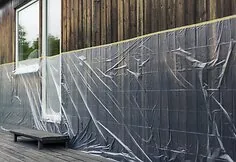
A. Dryžas recommends purchasing not only the tools you will paint with but also other supplies that will help avoid extra work or cleaning: “You need to think not only about painting but also about how to cover unpainted areas. Those confident in their hand precision do not use painter’s tape, but if you paint rarely, it is better to buy quality painter’s tape, which should have the right stickiness: from weak, for newly painted or sensitive surfaces, to stronger, allowing greater accuracy.
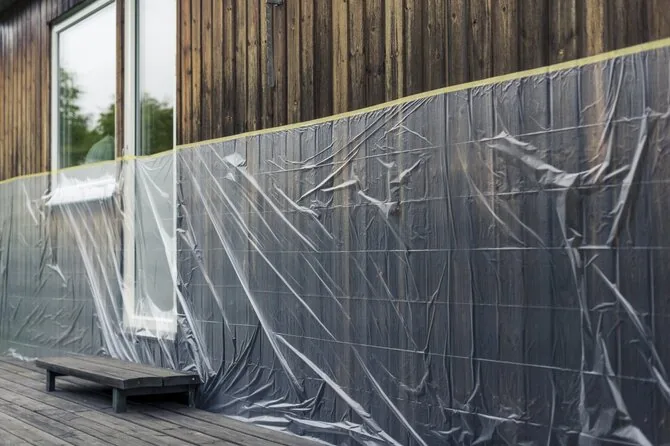
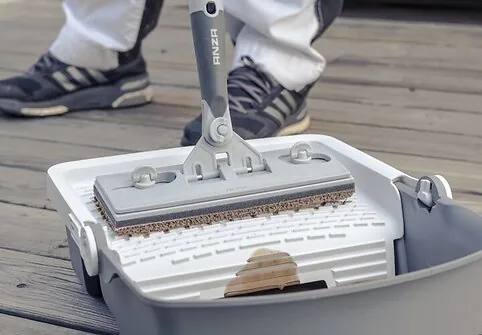
The second tool is the painter’s “mat.” This is paper or cardboard: non-slip, absorbent, and with a film underneath that holds even larger amounts of liquid: “You can find painter’s mats in many stores. And of course, the main tools needed for the specific job: brush, roller and its handle, sponge or their combination, a suitable paint tray, extension pole. I highly recommend Swedish painting tools ‘Anza,’ which are really easy to work with because they do not shed bristles, are durable, easy to clean, and have many other advantages.
You will also need a spatula for mixing paint, think about how to open metal paint lids; also a sanding sponge, and after finishing the work, you will need household soap or a special detergent to wash the tools. Don’t forget safety – goggles and gloves should also be in your shopping basket.”
Which tool to choose for which surface?
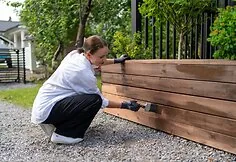
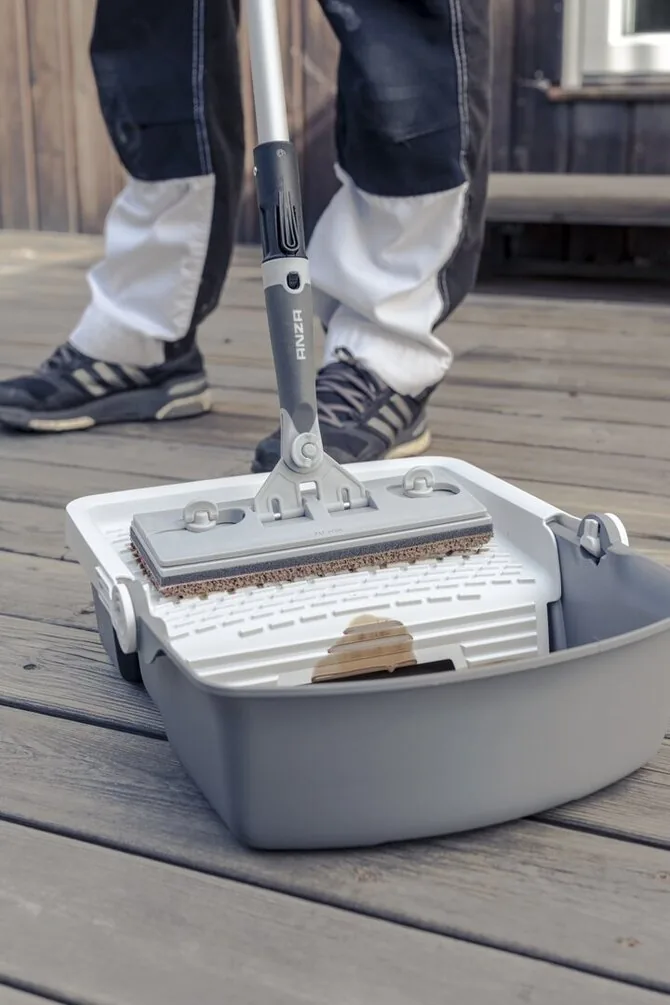
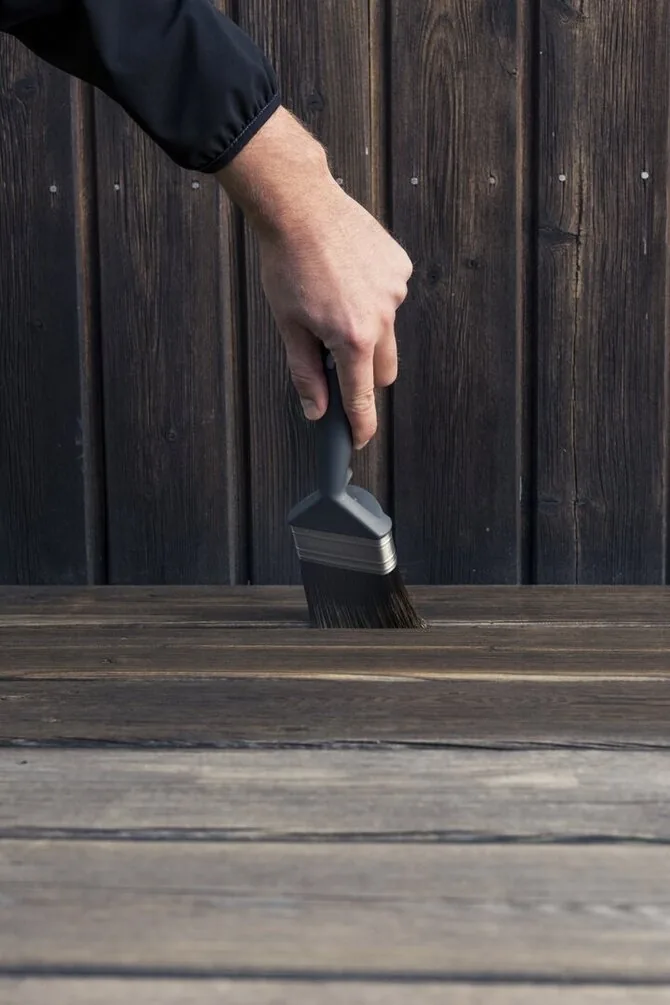
Wooden facade, fence, and terrace are different surfaces. Not only the products used differ but also how they should be applied. According to A. Dryžas, the choice of painting tools primarily depends on the smoothness of the painted surface. For grooved terrace boards, the indispensable tool is the curved “Anza” oiling brush designed specifically for terraces.
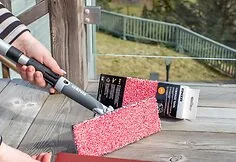
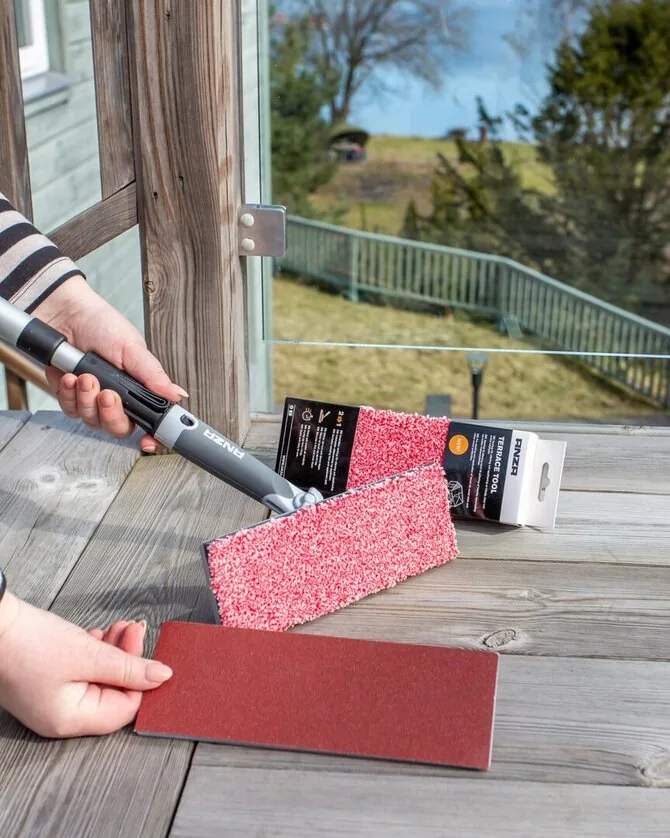
For smooth wood or painting larger areas, the “Anza” oiling sponge, which comes with two pads: one for sanding, the other for oiling, is perfect. If the terrace is very small, a few square meters, or a small balcony is being painted, often a brush is enough.
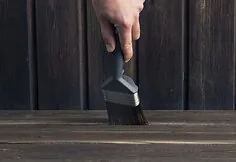
When painting a facade with rough boards, the “Tikkurila” specialist recommends a combination of roller and brush: the “Anza Pro Wistex” roller (usually 10 cm wide) and the outdoor brush “Anza Pro Super Effective” or “Anza Pro Elite.” The roller can quickly and fairly evenly apply paint, and the brush can work it into micro cracks and holes near knots. The brush also helps evenly distribute the paint or stain layer while highlighting the wood structure. A roller alone is not enough because outdoors, where surfaces are rarely perfectly smooth, every uncoated spot can later become the weakest point.
Read more Lithuanian Rifleman – European Championship Bronze and Prestigious Trophy
“When choosing a brush, you need to consider the product’s consistency: if the paint is thick and thinning only partially helps reduce thickness, then a brush with stiffer bristles will be needed, and vice versa. However, you must consider that very hard brush bristles scrape paint off the edges of boards, which are the places that get the most sun, rain, and dirt. It is precisely in these places that paint starts peeling first,” advises A. Dryžas.
Why can the appearance of the same surface differ?
The speaker points out that different results can be caused by different tools: “The roller creates a distinctive, wavy surface texture, while the brush can smooth the waves but leave brush marks. The longer the roller nap, the more pronounced the waves and dimples. For example, a long 22 mm nap roller will paint ‘fatter,’ with a more expressive wave structure, the paint layer on the surface will be quite thick but uneven, so a brush touch will be needed.
Some people say that facades can be painted well with just a brush, but this is an influence of old traditions: painting with a roller or spraying and immediately spreading the paint with a brush will be faster and of higher quality. It is important that the widths of the roller and brush are chosen according to the widths of the boards being painted – they should be close.
For facades, which usually have large areas, the fastest option is spraying. But still, most paints require smoothing with a brush; they need to be worked in, spread, drips removed, and, importantly, air bubbles formed during spraying removed: so spraying is followed immediately by brushing the wood surface. Only for “Tikkurila Ultra Classic” paints is brushing not necessary because, due to manufacturing technology, they almost do not trap bubbles.
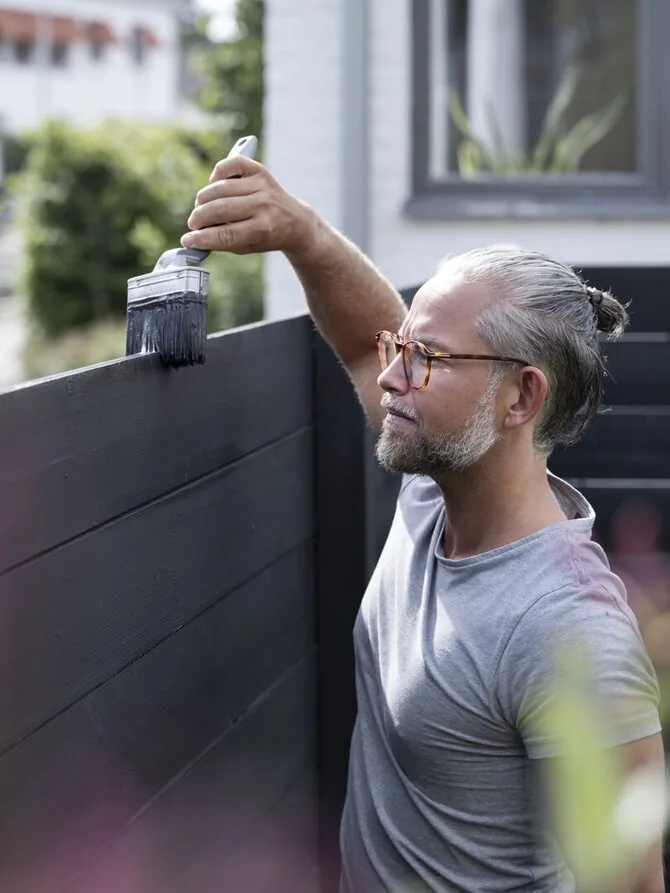
A. Dryžas does not recommend choosing the cheapest tools because, according to the expert, professional painters can paint quite well even with lower-quality tools, but an ordinary person needs to choose higher-quality tools because they are more forgiving of mistakes and allow faster work. Slowness when working with water-based products often results in uneven color, which later stands out.
Streaks, spots, incorrect layer thickness, and other mistakes
A. Dryžas says that most mistakes are made during preparation: dirt is not removed, the UV-faded layer, weakly adhered old paint; a big mistake is painting when the base is still wet.
“When painting, it should be considered that the first layer is recommended to use more diluted paint than the second layer because thinner paint is easier to work into micro cracks, pores, and holes. Since current water-based paints or stains dry quickly, painting tools also dry out and lose their working properties, so you need to have a simple garden sprayer with water at hand and occasionally spray water mist on the tools – this will refresh the brush or roller. It is a mistake to try to save paint when painting outdoors: painting should be done with the recommended layer thickness and as evenly as possible, so before painting, you should check the consumption recommendations,” advises the specialist.
Work finished, what to do with the tools?
After painting a fence, terrace, or facade, do the tools become useless?
“I like to say that a properly washed brush after painting should be better than before. Rough, porous, flaky surfaces damage tools, but a brush should last for more than one oiling or painting season. After finishing the work, paint off the remaining paint on the brush onto a board or cardboard scrap, and the remaining paint residues can be washed with soapy water and a stiffer bath brush. Wash only in the direction of the bristles. For dried paint, special brush cleaners like ‘Tikkurila Penselipesu’ will be needed. If you washed the brush moderately, let it dry bristles up; paint residues will not accumulate on the brush tips and harden them,” advises A. Dryžas.
Read more Kaunas officers are investigating who took money from someone else’s handbag