Why do stereotypes about exotic countries often fall apart upon arrival, what fascinates about traveling without organized groups, and why do people, not celebrities, leave the biggest impression – Aurelija Urbonienė told “Vakarų ekspresas” about this.
Read more Gitanas Nausėda in Kyiv: only Ukraine’s victory will bring peace to all of Europe
– Your trips rarely resemble typical tourist vacations. What attracts you more – the unknown, adventure, or the opportunity to see the real local life?
– First of all, I am attracted by the travel destination itself. Just choosing it gives an indescribable feeling of freedom. Every new country is an unknown that fascinates me rather than scares me. I am curious not only about what I will see but also how I will get there, how I will reach remote places, and what kind of people I will meet.
The biggest impression for me is not made by the most famous sights but by the everyday life of the locals – their lifestyle, traditions, customs. It is precisely such experiences that allow you to get to know the true face of the country.
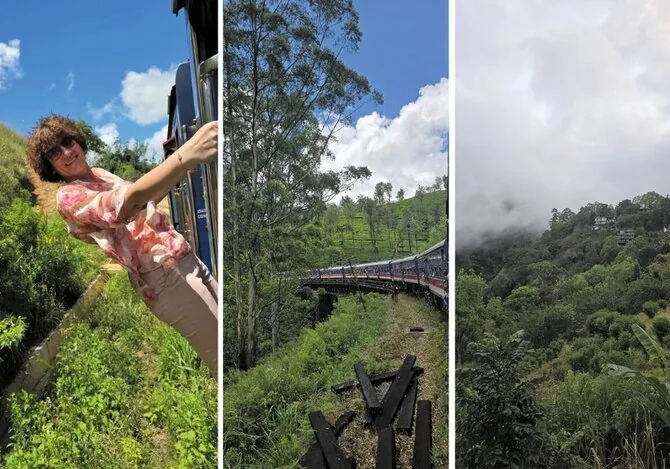
– The last countries you visited – Sri Lanka and the Maldives – are associated with exoticism by many, but you probably saw a very different side of them. What discovery surprised you the most and shattered preconceived stereotypes?
– I have long stopped relying on typical tourist reviews. Often a person visits only a few popular places and then says, “There is nothing to do there.” I think a country should not just be visited but experienced.
The biggest discovery in Sri Lanka was traveling around the island itself. Many said that traveling independently is difficult, that you can be cheated or disappointed when dealing with locals. I admit, I had such doubts too.
Before leaving, I arranged with a local driver who, together with a friend, accompanied us for all nine days. From the first to the last day of the trip, they not only followed the planned route but also became part of our journey. Thanks to them, we had lunch in local eateries, visited ordinary people’s homes, and got to know their life and traditions better.
After this trip, I realized that sometimes the biggest stereotypes are born out of fear.
When my sister had an accident during the trip and fell down the stairs, they accompanied us to the hospital, helped communicate with the medical staff, and took care of us without even asking for extra payment.
After this trip, I realized that sometimes the biggest stereotypes are born out of fear. My experience was completely the opposite – we met sincere, helpful, and caring people.
The Maldives shattered another of my beliefs. I always thought it was a place only for very wealthy people. But after looking deeper, I realized that this is more of a myth than reality.
It turned out that vacationing in the Maldives is indeed possible at a price accessible to many – the key is to responsibly choose the island, hotel, and to estimate in advance how much it will cost and how you will get there. Getting to the island often makes up a significant part of the travel budget, so it is worth finding out this information while planning the trip.
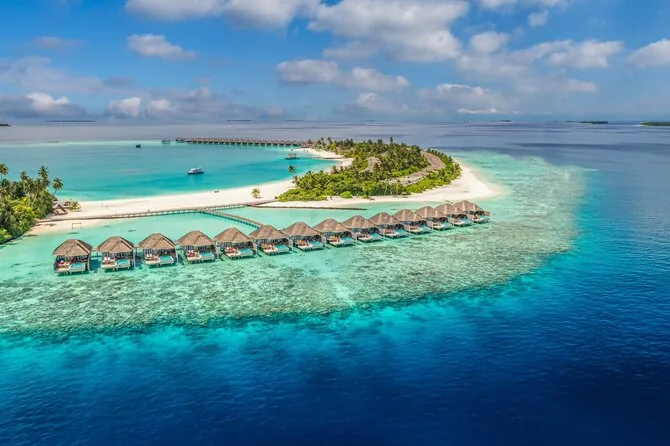
After writing a letter to the hotel about my family’s dream to visit the Maldives, I received a much more favorable offer than was publicly advertised.
I always thought it was a place only for very wealthy people.
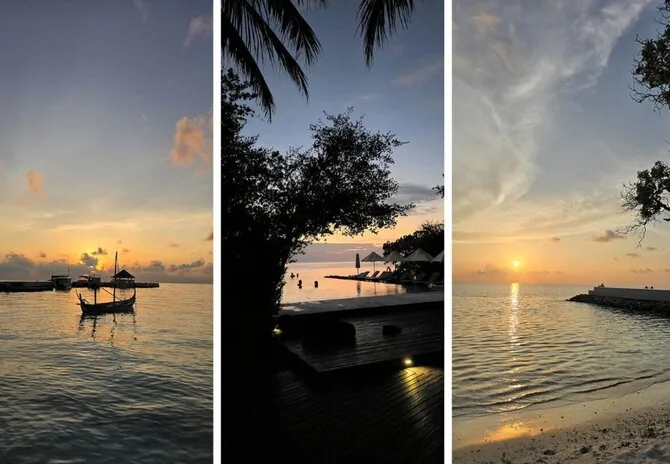
After intense traveling in Sri Lanka, a few days of peace in the Maldives became a perfect contrast. I realized that dreams are often closer than we allow ourselves to believe.
– You travel independently. Were there moments when you realized that traveling without an organized group opened doors to experiences you would not have had otherwise?
– Independent travel in my life started in 2012 on the island of Rhodes. At that time, we still traveled with a travel agency. At the hotel, we met a young couple who told us they bought flights independently and booked the hotel online. Comparing prices, we realized that we paid almost twice as much for the same trip.
That evening I promised myself that I would plan the next trip myself.
First was Tenerife and La Gomera, and soon we dared to travel to Asia – Thailand and Cambodia. At that time, travel organizers mostly offered rest in Pattaya, but after researching, I realized that the real beauty of Thailand lies elsewhere. Planning the route independently allowed us to travel where we wanted, not where tourist buses take you.
One story still makes me smile. While traveling in Cambodia, we wanted to cross the border to Thailand on foot. At that time, many travel forums said it was possible, but I also heard many stories that tourists are stopped at the border, told to return to Siem Reap, or even to go to Bangkok by another route.
For me, this meant not only inconvenience but also an additional 6–8 hours of travel. So I decided to prepare in advance. I printed official information about pedestrian border crossing points approved by local authorities, gathered all necessary documents, and decided to try. The most interesting thing is that I did not fully tell my travel companions about my plan – I did not want to worry them unnecessarily.
Each such story only reminds once again that the greatest gift of independent travel is freedom.
In the end, we successfully crossed the border on foot. We saved a lot of time, and once again I was convinced that independent travel offers opportunities that you probably wouldn’t have on an organized trip. Such situations teach you not to be afraid to take responsibility for your decisions. When you plan the trip yourself, many more doors open – you just need to be prepared and dare to open them.
Determination, persistence, and pursuing your dreams opened the door to a wide world for me. Each such story only reminds once again that the greatest gift of independent travel is freedom – the ability to make decisions yourself and discover places and experiences that cannot be planned according to a standard tourist route.
Read more The 17th «Velomarathon» will take place in the capital

– Let’s return to your last trip. Sri Lanka is colorful, noisy, and full of contrasts, while the Maldives are often depicted as a symbol of perfect relaxation. Which of these countries touched you more emotionally and why?
– I have always been more attracted to countries where there is still less civilization. Therefore, Sri Lanka touched me more emotionally.
Traveling across the entire island of Sri Lanka, we saw not only impressive nature but also the real life of people – their everyday life, traditions, history. High in the mountains, I experienced that hard-to-describe feeling when you feel both adrenaline and complete freedom at the same time. Sometimes you don’t need a luxury hotel – a simple room, mountain silence, and sincere people are enough.

It is the people who leave the biggest impression on me. In Sri Lanka, many live very modestly, but their smiles, kindness, and willingness to help make you think about what is truly important in life.
High in the mountains, I experienced that hard-to-describe feeling when you feel both adrenaline and complete freedom at the same time.
The Maldives were an old dream for me. It is an extraordinarily beautiful place where everything is created for rest – for the eyes, body, and soul. There you can completely relax and forget everyday life. However, personally, I missed the human closeness that I experienced in Sri Lanka.
It seemed that some vacationers come here not only to rest but also to show a certain lifestyle – this is reflected in clothing, behavior, and communication. The most sincere attention and warmth I usually felt from the service staff, who were incredibly helpful and caring.
But it is definitely worth visiting the Maldives at least once in your life. Not just for postcard-worthy beaches or the turquoise lagoon. This trip allows you to understand how diverse the world is, how differently people choose to travel and rest, and how broad life opportunities can be.
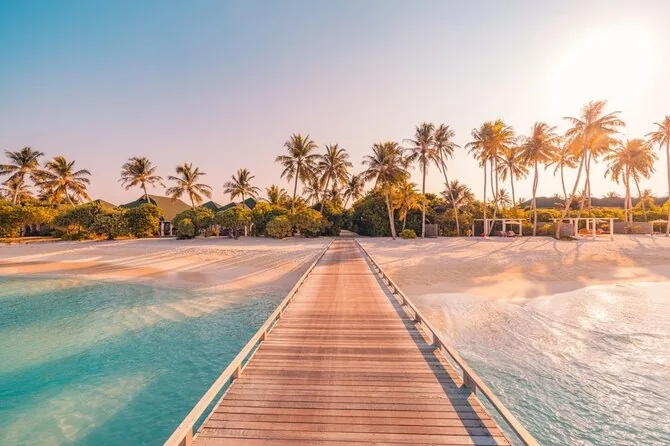
A few days of such rest were enough for me. My heart still leans more towards places with more movement, surprises, real encounters, and authentic local life.
– Many plan trips based on lists of sights. How do you plan your routes – intuition, people’s recommendations, chance, or careful preparation?
– For me, the trip starts much earlier than the plane takes off. I always say I travel twice – the first time planning, the second time after departure.
Sometimes I choose the travel destination quite unexpectedly – I take a globe, look at the world, and allow myself to dream about where I would like to be, sometimes I let my husband choose. Sometimes a view or photo catches my eye, and I think: “I don’t know where this is, but one day I will go there.”
But once the tickets are bought, careful preparation begins. I read other travelers’ experiences, compare routes, look not only for popular places but also those discovered by curious travelers.
I always think: if others can, why can’t I?
A great example is the Philippine island of Siargao. On social networks, I found a very precisely described route by a traveler to a secluded natural pool by the ocean. Upon arrival, I could almost recite to my sister where to turn and where to go. When after all the turns the exact view I had seen in photos appeared before my eyes, I realized that careful preparation can open doors to places you won’t find in any official tourist guides.
Another challenge for me in Siargao was traveling freely without knowing English. I always think: if others can, why can’t I? Every trip I complete gives me more confidence. Today I already plan routes not only for myself but also for a group of eight people. It is a big responsibility but also a great joy.
Every new country is another challenge overcome for me. With each trip, I trust myself more and more. Planning routes teaches me not only to find the most beautiful places but also to solve problems, adapt to unexpected situations, and take responsibility for the whole team.
– Today, social networks often show an idealized side of travel. What do people not see behind the beautiful shots when traveling independently?
– On social networks, we usually see the most beautiful moments of a trip – sunsets, palm-fringed beaches, or impressive mountains. But behind each such shot lie many hours of preparation.
When planning a trip independently, you need to anticipate routes, transport, flight times, accommodation, and have a backup plan in case something changes. Sometimes you have to make decisions within minutes, and sometimes you have to accept that not everything will go according to plan.
People also do not see the fatigue. Early mornings, long layovers, hours spent searching for information or solving unexpected problems. But this is the real part of the trip. For me, trips are not a collection of perfect photos – they are experiences that develop patience, flexibility, and self-confidence.